
Percocet vs. Pure Oxycodone: Acetaminophen Synergy, Hepatotoxicity Limits, Equianalgesic Ratios, and Clinical Selection

Percocet vs. Pure Oxycodone: Acetaminophen Synergy, Hepatotoxicity Limits, Equianalgesic Ratios, and Clinical Selection
A comparative clinical pharmacokinetics study evaluating combination Percocet (oxycodone/APAP) versus single-entity pure oxycodone (Roxicodone).
CLINICAL COMPARATIVE PHARMACOKINETICS
EXECUTIVE CLINICAL SUMMARY
A vital clinical distinction in acute and chronic pain management is the pharmacological difference between combination oxycodone with acetaminophen (marketed as Percocet®, Endocet®, and generic E712) and single-entity pure oxycodone hydrochloride (marketed as Roxicodone®, Oxy IR, and generic M30). While both utilize the identical semi-synthetic μ-opioid molecule, Percocet adds 325mg of acetaminophen (APAP) to produce peripheral and central pain threshold elevation. However, this APAP component imposes an absolute daily dosage ceiling (maximum 4,000mg APAP/day, capping Percocet at 8 to 12 tablets), whereas pure oxycodone can be titrated to higher analgesic thresholds in severe trauma, oncology, and post-surgical care without liver toxicity risks.
01. Pharmacokinetic and clinical characteristics matrix: Percocet vs. Pure Oxycodone
The comparative matrix below details the crucial pharmacological divergences between combination and single-entity oxycodone formulations.
| PHARMACOLOGICAL PARAMETER | PERCOCET® (OXYCODONE / APAP) | PURE OXYCODONE (ROXICODONE® / M30) | CLINICAL IMPLICATION |
|---|---|---|---|
| Active Formulation | Oxycodone (2.5mg – 10mg) + APAP (325mg) | Pure Oxycodone HCl (5mg, 10mg, 15mg, 20mg, 30mg) | Percocet contains dual synergistic analgesics; Oxy is pure opioid |
| Analgesic Mechanism | Central MOR agonism + Central COX/peroxidase inhibition | Direct μ-Opioid Receptor (MOR) Agonism | Percocet provides synergistic non-opioid pain threshold elevation |
| Daily Dosage Ceiling | Strictly Capped by APAP (≤4,000mg APAP/day) | No Fixed Organ Ceiling (Governed by tolerance/respiration) | Percocet cannot be titrated upward indefinitely without liver failure |
| Maximum Safe Daily Tablets | Max 6 to 8 tablets of 10/325mg per 24 hours | Titrated individually under specialist supervision | Percocet carries severe unintentional APAP toxicity risk |
| Primary Organ Toxicity Risk | Hepatotoxicity (Centrilobular liver necrosis from NAPQI) | Respiratory Depression & Central Nervous System Apnea | Percocet requires strict liver monitoring; pure Oxy requires airway monitoring |
| Ideal Clinical Indication | Acute moderate-severe somatic/musculoskeletal trauma | Severe post-operative trauma, oncology breakthrough pain | Pure oxycodone is favored when non-opioid APAP is contraindicated |
02. The acetaminophen synergy advantage: Opioid-sparing analgesia
In acute moderate-to-severe pain (such as dental extraction or uncomplicated orthopedic fractures), adding 325mg of acetaminophen provides clear multimodal synergy. Acetaminophen elevates the pain threshold in the central nervous system through inhibition of peroxidase/COX pathways, allowing a lower dose of oxycodone (e.g., 5mg or 10mg) to achieve pain control equivalent to 15mg of pure oxycodone. This “opioid-sparing” effect reduces the incidence of severe opioid side effects, including motor sedation, nausea, and rapid tolerance development.
03. The liver toxicity bottleneck: Why pure oxycodone is preferred in high-dose pain
When patients suffer from extensive polytrauma, severe burn injuries, or advancing cancer pain, opioid doses must frequently be titrated upward. If a patient is prescribed Percocet 10/325mg, taking 10 tablets per day delivers 3,250mg of acetaminophen—dangerously close to the toxic 4,000mg threshold. If the patient also takes an over-the-counter cold remedy or headache pill, acute centrilobular hepatic necrosis can occur. In contrast, pure oxycodone (such as 15mg or 30mg tablets) has no acetaminophen bottleneck, allowing oncologists and pain specialists to titrate the opioid dose to match pain severity without endangering the liver.
04. Clinical selection guidelines: Choosing the right formulation
Prescribing algorithms follow clear organ-risk guidelines:
- Choose Percocet When: The patient has acute, short-term pain (3 to 5 days), normal hepatic baseline, and benefits from multimodal synergy at modest doses.
- Choose Pure Oxycodone When: The patient has pre-existing liver disease (cirrhosis, hepatitis), consumes alcohol regularly, is already taking full-dose acetaminophen separately, or requires high-dose opioid titration for severe surgical or cancer pain.
05. Equianalgesic conversion and rotational safety
Converting between Percocet 10/325mg and pure Oxycodone 10mg is a direct 1:1 milligram conversion regarding the opioid component. However, when switching from Percocet to pure oxycodone, clinicians must instruct the patient that their non-opioid fever and inflammatory coverage will drop, recommending scheduled standalone ibuprofen if somatic inflammation is present.
06. Detailed Receptor Neurobiology, CYP2D6 Hydromorphone Bioactivation & APAP Synergy
At the molecular and clinical level, Oxycodone combines two distinct, synergistic analgesic compounds designed to attack nociceptive signaling through dual central and peripheral mechanisms:
1. Hydrocodone Component: Hydrocodone is a semi-synthetic phenanthrene opioid agonist that binds selectively to the μ-opioid receptor (MOR) on primary afferent neurons in the dorsal horn substantia gelatinosa and brainstem periaqueductal gray (PAG). Receptor coupling to inhibitory Gi/o proteins inhibits adenylyl cyclase, closes N-type voltage-gated calcium channels, and stimulates inward-rectifying potassium channels. This hyperpolarizes neuronal membranes, dramatically inhibiting presynaptic release of substance P, glutamate, and neurokinins.
Furthermore, hydrocodone undergoes critical hepatic O-demethylation catalyzed by cytochrome P450 2D6 (CYP2D6) into hydromorphone. Hydromorphone exhibits a 6- to 10-fold higher binding affinity for μ-opioid receptors than parent hydrocodone, contributing significantly to clinical analgesia. Patients who are CYP2D6 poor metabolizers experience diminished pain relief, whereas ultra-rapid metabolizers risk exaggerated sedation and respiratory depression.
2. Acetaminophen (APAP) Component: Acetaminophen produces analgesia primarily through central inhibition of cyclooxygenase (COX-1, COX-2, and putative central COX-3/peroxidase variants) and modulation of endogenous cannabinoid and descending serotonergic inhibitory pathways. Unlike NSAIDs, APAP lacks peripheral anti-inflammatory effects and does not cause gastric ulceration or platelet inhibition.
| PHARMACOLOGICAL AGENT | PRIMARY MOLECULAR TARGET | HEPATIC METABOLIC ENZYME | CLINICAL ANALGESIC ROLE | CRITICAL CLINICAL HAZARD |
|---|---|---|---|---|
| Hydrocodone | μ-Opioid Receptor (MOR) Agonism | CYP2D6 (to Hydromorphone) & CYP3A4 (to Norhydrocodone) | Blocks ascending nociceptive pain signaling in spinal cord | Respiratory depression, physical dependence, constipation |
| Acetaminophen (APAP) | Central COX / Peroxidase Site Inhibition | Glucuronidation (55%), Sulfation (30%), CYP2E1 (to NAPQI) | Synergistic pain threshold elevation; opioid-sparing effect | Hepatotoxicity / Centrilobular necrosis at >4,000mg/day |
| Hydromorphone (Metabolite) | High-Affinity μ-Opioid Agonist (Ki ~0.37 nM) | Phase II Glucuronidation via UGT2B7 | Potent amplification of central analgesic efficacy | Toxicity in CYP2D6 ultra-rapid metabolizers |
| NAPQI (Reactive Metabolite) | Hepatocyte macromolecules | Detoxified by intracellular glutathione (GSH) | None (Toxic intermediate) | Glutathione depletion leads to irreversible liver failure |
The combination of hydrocodone with acetaminophen creates potent therapeutic synergy, enabling lower doses of the opioid component while maximizing relief for moderate to severe acute musculoskeletal and post-surgical pain.
07. Hepatic Clearance, Renal Impairment & Beers Criteria Safety
Pharmacokinetic clearance of Oxycodone involves dual metabolic pathways for both hydrocodone and acetaminophen, requiring strict clinician oversight across specific organ impairment subgroups:
| PATIENT POPULATION | PHARMACOKINETIC KINETICS | DOSING MODIFICATION DIRECTIVE | CRITICAL CLINICAL MANDATE |
|---|---|---|---|
| Hepatic Impairment (Mild-Moderate) | Impaired APAP glucuronidation and reduced hydrocodone clearance | Cap APAP ≤2,000mg / 24 hours; extend dosing intervals to Q8H-Q12H | Monitor transaminases; avoid in acute hepatitis or liver decompensation |
| Severe Hepatic Cirrhosis (Child-Pugh C) | Glutathione depletion; severe hydrocodone metabolic shunting | CONTRAINDICATED: Extreme hepatotoxicity & encephalopathy risk | NAPQI accumulation precipitates fatal hepatic centrilobular necrosis |
| CYP2D6 Poor Metabolizers (~7% Caucasians) | Minimal conversion of hydrocodone to active hydromorphone | Evaluate alternative analgesics; do not dangerously escalate dose | Escalating doses causes toxic hydrocodone/APAP buildup without pain relief |
| CYP2D6 Ultra-Rapid Metabolizers | Rapid, massive bioactivation into hydromorphone | Initiate at 50% standard starting dose; monitor breathing | High risk of sudden, life-threatening respiratory depression |
| Renal Impairment (CrCl < 30 mL/min) | Prolonged hydrocodone elimination half-life; APAP metabolite retention | Increase dosing intervals to every 8 to 12 hours | Monitor for severe cognitive blunting and respiratory depression |
| Geriatric Patients (≥ 65 Years) | Decreased hepatic mass, diminished renal clearance, CNS sensitivity | Start at lowest manufactured dose (e.g. 5/325mg); Beers Criteria oversight | Proactive bowel management mandatory to prevent severe fecal impaction |
Absolute Daily Acetaminophen (APAP) Ceiling: Under FDA regulations, the total cumulative daily dose of acetaminophen from all sources combined (including OTC cough/cold elixirs, sinus remedies, and headache pills) must never exceed 4,000mg per 24 hours. For chronic or elderly patients, clinicians recommend a safer conservative threshold of 3,000mg daily (or ≤2,000mg in chronic alcohol consumers) to protect hepatic glutathione reserves.
08. Comprehensive Patient Clinical Safety & Dispensing Checklist
Before initiating therapy or taking each scheduled dose of Oxycodone, patients, caregivers, and clinical teams must review this standardized clinical verification checklist to prevent life-threatening adverse drug events and fatal toxicities:
PATIENT PRE-ADMINISTRATION SAFETY CRITERIA
- Total Acetaminophen (APAP) Audit: Verify that the patient is not taking ANY other products containing acetaminophen (e.g., Tylenol, DayQuil, NyQuil, Excedrin, Percocet). Total APAP from all sources must never exceed 4,000mg/day (clinically target ≤3,000mg/day).
- Absolute Alcohol Prohibition: Strict zero-tolerance for alcohol. Ethanol massively accelerates liver glutathione depletion (triggering acute liver failure from APAP) while paralyzing brainstem respiratory drive alongside hydrocodone.
- Concurrent Benzodiazepine & Sedative Screen: Check for co-prescribed anti-anxiety drugs (alprazolam, diazepam, lorazepam) or sleep aids. The FDA Boxed Warning strictly advises against co-prescribing without active emergency naloxone on site.
- Emergency Naloxone (Narcan) Access: Ensure household members or caregivers know the location of emergency naloxone nasal spray and how to administer it in case of accidental overdose or respiratory collapse.
- Proactive Bowel Regimen Initiation: Opioids inevitably cause opioid-induced constipation (OIC) by paralyzing gastrointestinal motility. Daily fluid intake, dietary fiber, and scheduled osmotic or stimulant laxatives (senna, PEG 3350) should begin with the very first dose.
- Locked Storage & Disposal Safeguards: Store securely in a locked lockbox out of sight and reach of children, visitors, and pets. Accidental single-tablet ingestion of 10mg hydrocodone can cause fatal respiratory arrest in a toddler.
09. Verified Pharmaceutical Formulations & Prescribing Profiles
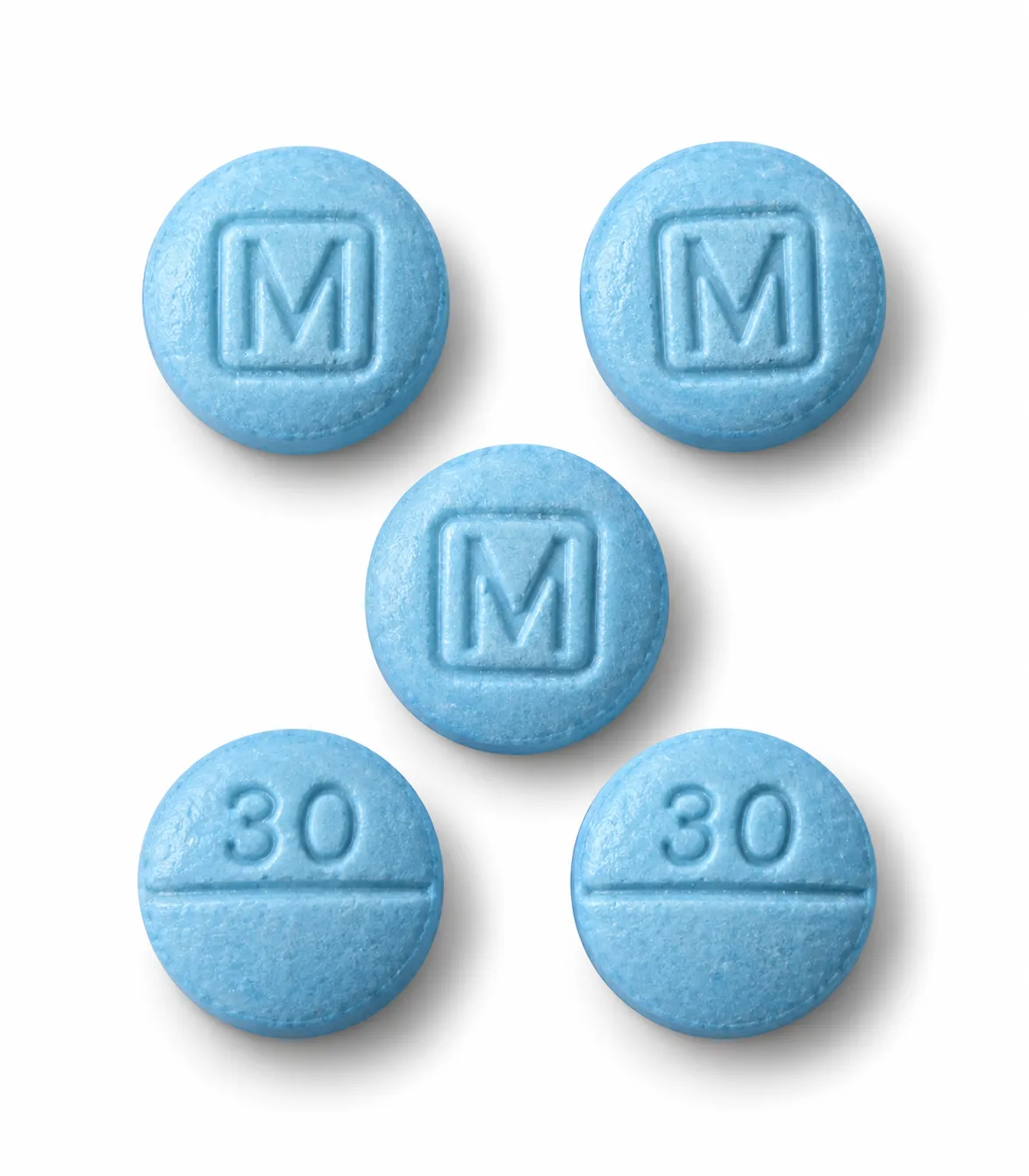
Oxy M30 (Oxycodone IR 30mg)
Immediate-release 30mg oral tablets for severe acute post-surgical and breakthrough cancer pain.
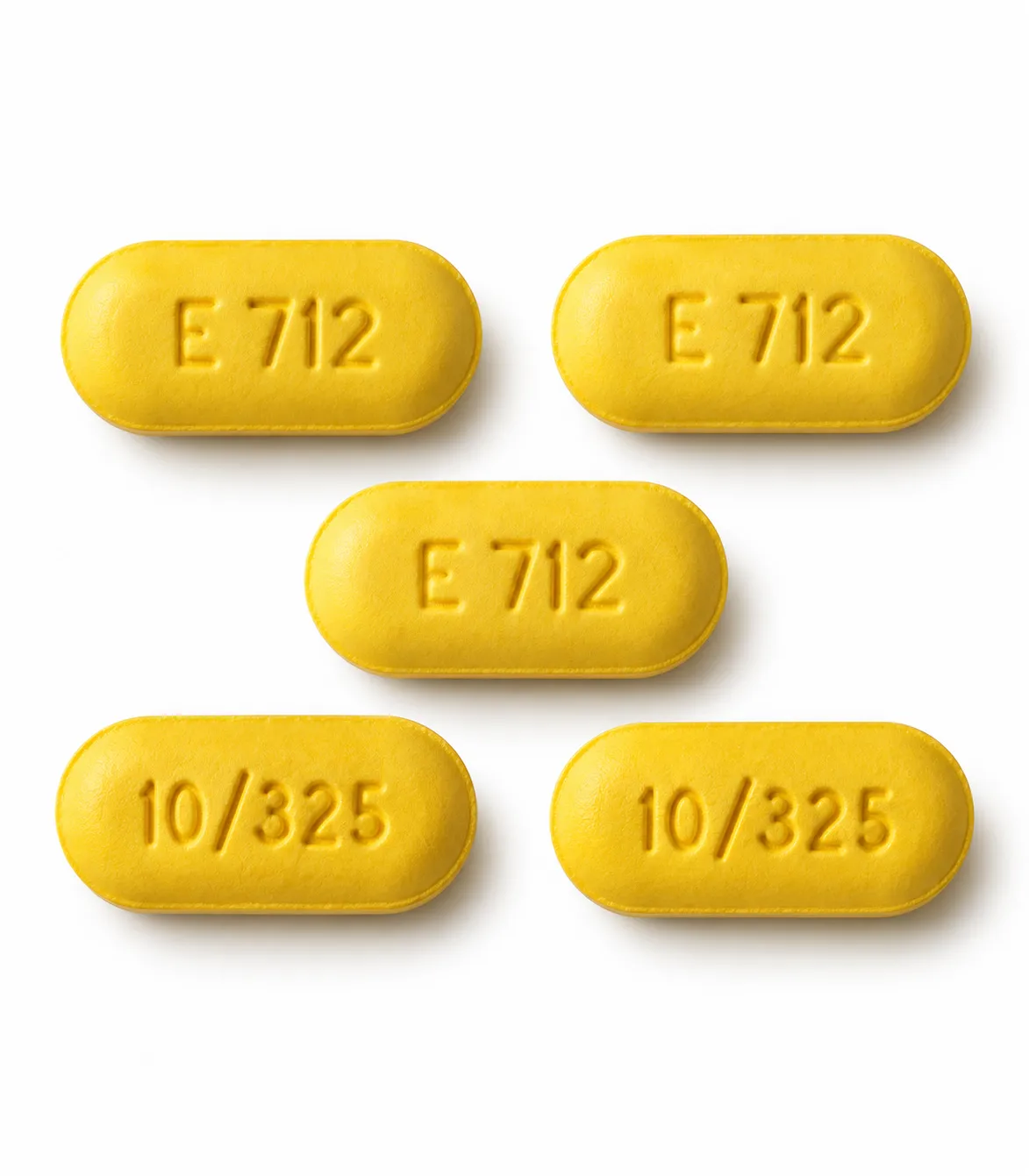
Percocet E712 (Oxycodone / APAP 10/325mg)
Dual-action combination analgesic for moderate to severe acute musculoskeletal trauma and surgical recovery.
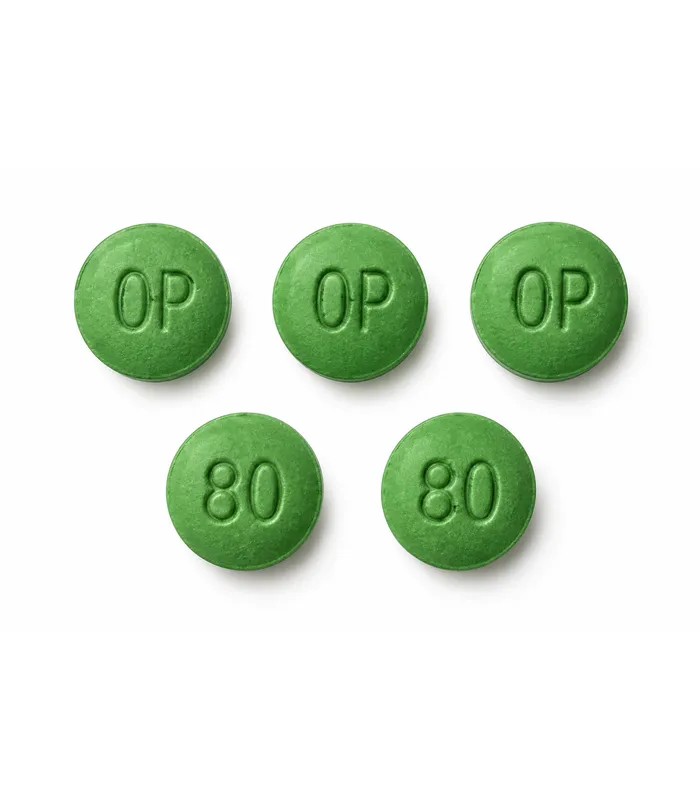
Oxy 80mg Green (Oxycodone ER)
Continuous 12-hour extended-release formulation indicated exclusively for opioid-tolerant chronic cancer pain.
10. Frequently Asked Questions
What is the main difference between Percocet and pure oxycodone?
Percocet is a combination pill containing oxycodone PLUS acetaminophen (the active ingredient in Tylenol). Pure oxycodone (like Roxicodone or M30) contains only the opioid without any acetaminophen.
Can you take Tylenol if you are taking pure oxycodone (M30)?
Yes, if your doctor approves. Because pure oxycodone contains zero acetaminophen, you can safely take Tylenol alongside it for extra pain relief, as long as you do not exceed 3,000mg to 4,000mg of Tylenol per day.
Can you take Tylenol if you are taking Percocet?
No! Percocet already contains 325mg of acetaminophen per pill. Adding extra Tylenol can cause dangerous liver damage.
Why would a doctor prescribe pure oxycodone instead of Percocet?
Doctors prescribe pure oxycodone for patients with severe pain who need higher doses that would deliver dangerous amounts of acetaminophen, or for patients with liver problems who cannot safely take acetaminophen.
11. Clinical References & Regulatory Sources
- FDA CDER. Roxicodone (Oxycodone Hydrochloride Tablets) and Percocet Comparative Review. Source Database.
- The Journal of Clinical Pharmacology. Multimodal analgesia: Synergy between acetaminophen and opioids in post-operative recovery. Source Database.
- Hepatology. Acetaminophen-induced hepatotoxicity in prescription opioid combination products. Source Database.
Consult a Clinical Pharmacy Specialist
Have questions regarding Oxycodone dosing intervals, CYP enzyme interactions, or physician-guided discontinuation protocols? Connect with our licensed clinical pharmacy team for patient safety guidance.
Related Patient Services & Verified Care
Every prescription order is verified by a licensed pharmacist in strict adherence to FDA BeSafeRx protocols.