

Modafinil: Approved Uses, Safety Warnings and Medication Interactions

Modafinil: Approved Uses, Safety Warnings & Drug Interactions
A clinically verified patient guide to modafinil (Provigil), hypothalamic orexin wakefulness mechanisms, severe cutaneous warnings (SJS/TEN), oral contraceptive interactions, and safe dosing.
MEDICATION GUIDE
CLINICAL SUMMARY
Modafinil (brand name Provigil®) is a prescription wakefulness-promoting agent (eugeroic) approved by the U.S. FDA to improve wakefulness in adults with excessive daytime sleepiness associated with narcolepsy, obstructive sleep apnea (OSA), and shift work sleep disorder (SWSD). Unlike traditional amphetamine stimulants, modafinil targets selective hypothalamic wake pathways (orexin, histamine, and dopamine reuptake). Critical patient safety issues include life-threatening Stevens-Johnson syndrome (SJS) skin rashes, significant reduction in hormonal contraceptive effectiveness via CYP3A4 induction, cardiovascular monitoring, and Schedule IV misuse precautions.
01. Quick medicine facts
A concise, source-verified clinical summary table based on official FDA Prescribing Information and National Library of Medicine documentation:
| INFORMATION | CLINICAL DETAILS |
|---|---|
| Generic Name | Modafinil |
| Brand Name (US) | Provigil® |
| Pharmacological Class | Non-Amphetamine Wakefulness-Promoting Agent (Eugeroic) |
| Chemical Designation | 2-[(diphenylmethyl)sulfinyl]acetamide (Racemic mixture of [S]- and [R]-enantiomers) |
| Controlled Schedule | DEA Schedule IV Controlled Substance (Rx Only) |
| Elimination Half-Life | Approximately 15 hours ([R]-enantiomer half-life ~15 hours; [S]-enantiomer ~4 hours) |
| Critical Enzymatic Effects | Induces CYP3A4/5 (inactivates hormonal birth control); Inhibits CYP2C19 (elevates phenytoin/diazepam) |
| Serious Cutaneous Warning | Stevens-Johnson Syndrome (SJS), Toxic Epidermal Necrolysis (TEN), DRESS syndrome |
02. What is modafinil?
Modafinil is a novel wakefulness-promoting agent synthesized by Lafon Laboratories in France in the 1970s and approved by the U.S. FDA in 1998. Designed specifically as a selective eugeroic to treat excessive daytime somnolence without inducing the profound peripheral sympathomimetic stimulation (tremors, palpitations, severe hypertension) or rebound crashing characteristic of classic amphetamines, modafinil transformed clinical sleep medicine.
Modafinil consists of an equal racemic mixture of two enantiomers: (S)-modafinil and (R)-modafinil. While both enantiomers exhibit pharmacological activity, the (R)-enantiomer clears significantly slower (half-life of 15 hours versus 4 hours for the S-enantiomer), maintaining sustained wakefulness throughout the active waking day.
Because modafinil enhances wakefulness through selective subcortical pathways rather than massive dopamine flood in the mesolimbic reward system, its abuse potential is lower than Schedule II psychostimulants. However, because it still binds to dopamine transporters and can produce euphoria at high doses, it is regulated as a DEA Schedule IV controlled substance.

03. Uses and approved indications
The U.S. FDA has approved modafinil strictly for improving wakefulness in adults experiencing diagnosed sleep disorders:
| APPROVED INDICATION | CLINICAL PRACTICE MANDATE & BOUNDARY |
|---|---|
| Narcolepsy (Type 1 & Type 2) | FDA-approved for improving wakefulness in adults with narcolepsy. Narcolepsy involves hypothalamic orexin-producing cell loss; modafinil restores alertness without treating cataplexy. |
| Obstructive Sleep Apnea (OSA) | FDA-approved as an adjunct to continuous positive airway pressure (CPAP). Modafinil does not treat underlying airway obstruction; CPAP must be continued diligently. |
| Shift Work Sleep Disorder (SWSD) | FDA-approved for excessive sleepiness in adults with confirmed SWSD working night or rotating shifts. Administered approximately 1 hour before the work shift begins. |
| Off-Label Use: Multiple Sclerosis Fatigue | Used off-label by neurologists for profound central fatigue associated with MS, Parkinson’s disease, or post-stroke lethargy. |
04. How does modafinil work?
Patient-Friendly Explanation
Classic stimulants like amphetamines work like an emergency alarm system, forcing your entire body and cardiovascular system into overdrive with adrenaline and massive dopamine surges. Modafinil works like a smart daylight sensor in your brain. It gently enhances natural wake-signaling chemicals (orexin, histamine, and dopamine) specifically in the alertness centers of your brain, while quieting the natural sleep switch. This gives you clear, calm wakefulness without jittery anxiety, heart palpitations, or an afternoon crash.
Advanced Neurochemical & Circuit Pharmacology
Modafinil’s unique eugeroic profile is driven by multi-transmitter subcortical network modulation:
- Dopamine Transporter (DAT) Inhibition: Modafinil binds with low micromolar affinity to dopamine transporters, weakly inhibiting reuptake and elevating tonic dopamine concentrations in the prefrontal cortex and nucleus accumbens.
- Hypothalamic Orexin Activation: Modafinil stimulates orexinergic (hypocretin) neurons in the lateral hypothalamus. Orexin acts as the master stabilization switch for wakefulness.
- Histaminergic Neurotransmission: Orexinergic signaling triggers intense histamine release from the tuberomammillary nucleus (TMN), projecting wakefulness across the cerebral cortex.
- GABA / Glutamate Balance: Modafinil reduces inhibitory GABA release in the cerebral cortex while elevating excitatory glutamate neurotransmission in hippocampal and thalamic circuits.
05. Available forms and strengths
Modafinil is manufactured in oral compressed tablet forms:
| STRENGTH | PHYSICAL DESCRIPTION | CLINICAL ADMINISTRATION |
|---|---|---|
| Modafinil 100 mg Tablets | White to off-white, capsule-shaped, debossed tablets | Starting strength for geriatric patients, hepatic impairment, or initial dose titration. |
| Modafinil 200 mg Tablets | White to off-white, capsule-shaped scored tablets (Provigil 200) | Standard therapeutic adult daily dose for narcolepsy and OSA taken as a single morning dose. |
PRESCRIPTION REQUIRED (Rx)
Verified Modafinil Formulations Dispensed by Licensed US Pharmacies
Patients holding a verified clinical prescription can view authentic manufacturer specifications, packaging markers, and dispensing safety protocols for authorized oral formulations:
06. Dosage and administration principles
Clinical Prescribing Mandate: Dosing must strictly follow prescriber orders. Never take modafinil late in the day, as its 15-hour half-life will cause severe insomnia.
- Narcolepsy and Obstructive Sleep Apnea: Recommended dose is 200 mg once daily taken in the morning. Doses up to 400 mg/day have been evaluated, but clinical trials show no consistent additional benefit over 200 mg.
- Shift Work Sleep Disorder: Recommended dose is 200 mg taken approximately 1 hour before the start of the scheduled work shift.
- Severe Hepatic Impairment (Cirrhosis): Dosing must be reduced by 50% (100 mg once daily) due to substantially decreased clearance.
- Administration Timing: May be taken with or without food. Taking with food can delay onset of action by approximately 1 hour.
07. Common side effects
Adverse effects frequently involve central nervous stimulation and autonomic changes:
| BODY SYSTEM | REPORTED ADVERSE EFFECTS | MANAGEMENT STRATEGY |
|---|---|---|
| Neurological | Headache (most common, ~34% in trials), dizziness, nervousness | Adequate daytime hydration; mild OTC analgesics; symptoms frequently resolve after 1–2 weeks. |
| Psychiatric | Insomnia, anxiety, irritability, agitation | Ensure dose is taken early in the morning; discuss dose reduction with prescriber. |
| Gastrointestinal | Nausea, diarrhea, dyspepsia, dry mouth, anorexia | Take doses with breakfast; maintain adequate caloric intake. |
| Cardiovascular | Palpitations, mild tachycardia, modest elevation in blood pressure | Regular blood pressure and heart rate monitoring; avoid excess caffeine. |
08. FDA boxed warnings and serious reactions
FDA WARNING: SEVERE CUTANEOUS ADVERSE REACTIONS (SJS/TEN) & PSYCHIATRIC RISKS
The U.S. FDA mandates serious warnings regarding rare but life-threatening hypersensitivity reactions:
- Stevens-Johnson Syndrome (SJS) & Toxic Epidermal Necrolysis (TEN): Modafinil can cause life-threatening severe cutaneous adverse reactions. Symptoms typically emerge within 1 to 5 weeks of starting therapy, presenting as rash, blistering, mucosal peeling (mouth, eyes, genitals), and high fever. Discontinue modafinil immediately at the very first appearance of any rash; medical hospitalization is required.
- DRESS Syndrome (Drug Rash with Eosinophilia and Systemic Symptoms): Multi-organ hypersensitivity presenting with fever, lymphadenopathy, facial swelling, hepatitis, and myocarditis.
- Psychiatric Exacerbations: Modafinil can precipitate acute psychiatric episodes, including hallucinations, aggressive behavior, mania, severe anxiety, and suicidal ideation, even in patients without prior psychiatric history.
09. Precautions and contraindications
Modafinil is strictly contraindicated in patients presenting with:
- Known hypersensitivity to modafinil or armodafinil (including previous drug-induced rashes)
- History of left ventricular hypertrophy or mitral valve prolapse with previous stimulant-associated ischemic symptoms
- Unstable angina, recent myocardial infarction, or severe uncontrolled hypertension
- Severe active psychosis, bipolar disorder with mania, or severe depression
10. Critical drug and substance interactions
Modafinil displays complex bidirectional cytochrome P450 enzyme effects: it acts as a potent inducer of CYP3A4/5 and an inhibitor of CYP2C19:

| INTERACTING MEDICATION | MECHANISM & CLINICAL EFFECT | CLINICAL ACTION |
|---|---|---|
| Hormonal Contraceptives (Pills, Patches, Implants, Rings) | High / Contraceptive Failure: Modafinil induces CYP3A4, dramatically accelerating estrogen/progestin clearance and causing ovulation. | Alternative or non-hormonal barrier birth control methods are mandatory during therapy and for 2 months after stopping modafinil. |
| CYP2C19 Substrates (Diazepam, Phenytoin, Omeprazole) | Moderate-High: Inhibits CYP2C19 clearance, resulting in elevated serum concentrations and toxicity. | Dose reductions of co-administered CYP2C19 substrates; monitor plasma phenytoin levels closely. |
| Cyclosporine (Immunosuppressant) | High / Organ Rejection Risk: Accelerates cyclosporine metabolism, reducing blood levels by ~50%. | Frequent therapeutic drug monitoring of cyclosporine blood levels; adjust dose accordingly. |
| Warfarin (Anticoagulant) | Moderate: Altered CYP2C9/3A4 metabolism can unpredictably change prothrombin time (INR). | Monitor INR regularly upon starting, adjusting, or discontinuing modafinil. |
11. Special populations & Beers criteria
Geriatric Patients (65+ Years)
Elimination of modafinil and its metabolites is significantly reduced in elderly patients; clearance can be reduced by 20% to 50%. A lower initial dose of 100 mg daily is recommended. Close cardiovascular surveillance is required, as older adults are more susceptible to stimulant-induced tachycardia and blood pressure elevations.
Pregnancy and Nursing Mothers
Clinical data from pregnancy registries indicates an increased risk of major congenital malformations (including congenital heart defects and orofacial clefts) following in utero modafinil exposure. Modafinil should not be used during pregnancy unless the potential maternal benefit clearly justifies the potential fetal risk. Breastfeeding is not recommended.
12. Patient safety checklist
Review this patient safety checklist before taking modafinil:
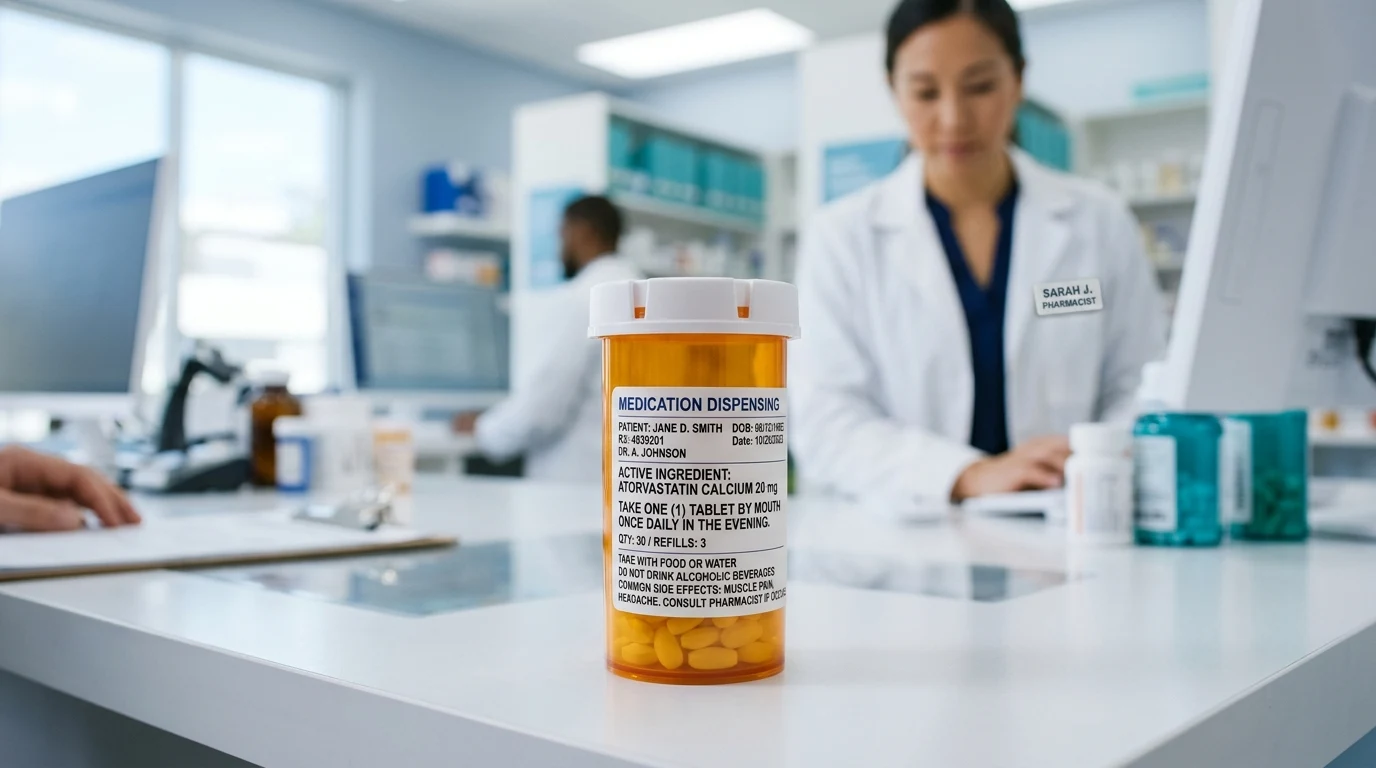
- Morning Administration: Are you taking your dose early in the morning to prevent severe nighttime insomnia?
- Birth Control Protocol: If using hormonal birth control, are you using an effective barrier or alternative non-hormonal contraceptive method?
- Skin Rash Surveillance: Do you recognize that any new skin rash, hives, mouth sores, or fever requires immediate medication cessation and medical evaluation?
- Blood Pressure Monitoring: Are you routinely checking your blood pressure and heart rate with your healthcare provider?
- CPAP Adherence: If prescribed for sleep apnea, are you continuing your nighttime CPAP machine therapy diligently?
13. Storage and safe disposal
Responsible storage prevents accidental pediatric exposure and medication diversion:

- Controlled Room Temperature: Store between 20°C and 25°C (68°F–77°F) away from heat and moisture.
- Dedicated Medication Lockbox: As a DEA Schedule IV substance, keep modafinil locked away from teenagers, students, and visitors.
- DEA Take-Back Disposal: Promptly return leftover medication to community DEA take-back kiosks or pharmacy drop-off boxes.
14. Frequently asked questions
Is modafinil considered an amphetamine?
No. Modafinil is chemically and pharmacologically distinct from amphetamines. While amphetamines cause massive body-wide adrenaline and dopamine flooding, modafinil selectively targets hypothalamic wakefulness pathways (orexin and histamine), creating clean daytime alertness without jittery restlessness.
Why does modafinil reduce birth control effectiveness?
Modafinil stimulates liver enzymes (CYP3A4) that break down estrogen and progestin hormones in contraceptive pills, patches, and implants. This significantly lowers blood hormone levels and can cause unintended pregnancy. Barrier contraception is required during treatment and for 60 days after stopping.
Can modafinil replace my CPAP machine for sleep apnea?
No. Modafinil only treats daytime sleepiness; it does not keep your airway open during the night. Untreated airway collapse causes severe oxygen drops and cardiac damage. Modafinil is an adjunct to CPAP, not a substitute.
What is the difference between Modafinil (Provigil) and Armodafinil (Nuvigil)?
Modafinil contains two mirror-image molecules (R- and S-enantiomers). Armodafinil contains only the longer-lasting R-enantiomer. Armodafinil stays active in the body longer, providing smoother wakefulness later into the afternoon and evening.
15. References and verification sources
- U.S. Food and Drug Administration (FDA). Provigil (modafinil) Tablets Prescribing Information. Reference ID: 3681429.
- National Library of Medicine. DailyMed. Modafinil Tablet Monograph. Bethesda, MD.
- American Academy of Sleep Medicine (AASM). Clinical Practice Guideline for the Treatment of Central Disorders of Hypersomnolence. J Clin Sleep Med. 2021;17(9):1881-1897.
- National Center for Biotechnology Information. StatPearls [Internet]. Modafinil Pharmacology & Toxicity. StatPearls Publishing.
- Drug Enforcement Administration (DEA). Schedules of Controlled Substances: Placement of Modafinil into Schedule IV. Federal Register.
Questions about medication safety?
Speak with a licensed clinical pharmacist or explore our verified educational resources before making any changes to your prescription.
Related Patient Services & Verified Care
Every prescription order is verified by a licensed pharmacist in strict adherence to FDA BeSafeRx protocols.