
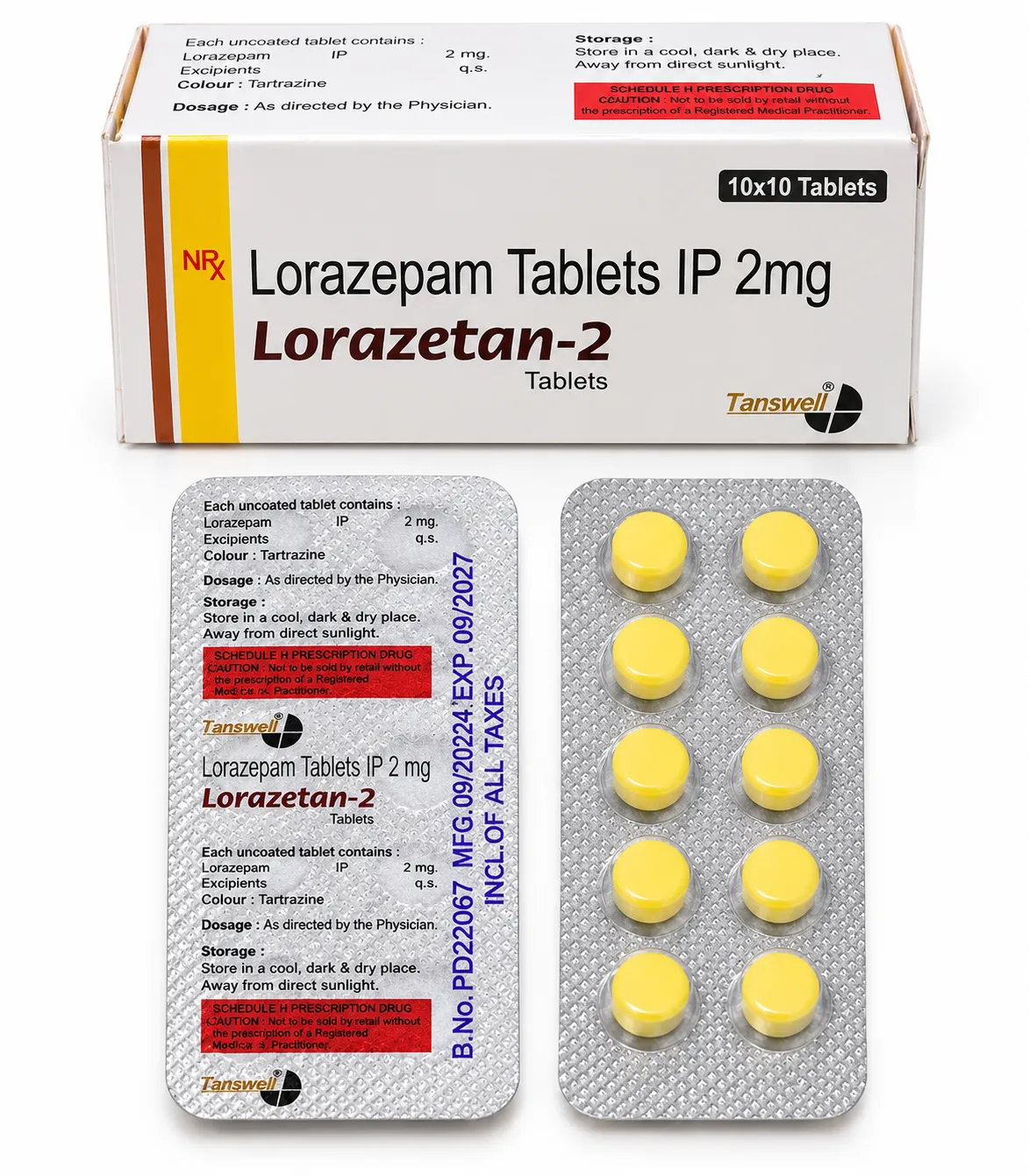
Lorazepam Glucuronidation & Hepatic Safety: Direct Phase II Conjugation, UGT2B7 Pathways, and Cirrhosis Pharmacology

Lorazepam Glucuronidation & Hepatic Safety: Direct Phase II Conjugation, UGT2B7 Pathways, and Cirrhosis Pharmacology
A molecular pharmacokinetics analysis of lorazepam’s unique direct Phase II glucuronidation, bypassing CYP450 enzymes for superior hepatic safety.
CLINICAL PHARMACOKINETICS MONOGRAPH
EXECUTIVE CLINICAL SUMMARY
Lorazepam occupies a uniquely advantageous clinical position within the benzodiazepine class due to its distinct metabolic clearance pathway. Unlike diazepam, alprazolam, and clonazepam—which rely heavily on hepatic Cytochrome P450 (CYP3A4 and CYP2C19) Phase I oxidative enzymes—lorazepam bypasses Phase I oxidation entirely, undergoing direct Phase II glucuronide conjugation via UDP-glucuronosyltransferase (specifically UGT2B7). Because hepatic glucuronidation capacity is remarkably preserved even in advanced liver cirrhosis, alcoholic hepatitis, and normal aging, lorazepam (along with oxazepam and temazepam, the clinical “LOT” mnemonic) is the first-line benzodiazepine of choice for patients with compromised hepatic function.
01. The molecular pathway: Direct Phase II glucuronidation vs. CYP450 oxidation
The comparative metabolic architecture between traditional oxidative benzodiazepines and lorazepam highlights why clearance half-life remains stable across liver disease states.
| BENZODIAZEPINE | PRIMARY CLEARANCE PATHWAY | ACTIVE METABOLITES | HALF-LIFE (HEALTHY LIVER) | HALF-LIFE (CIRRHOSIS / HEPATIC INJURY) | HEPATIC ACCUMULATION RISK |
|---|---|---|---|---|---|
| Lorazepam (Ativan®) | Direct Phase II UGT2B7 Glucuronidation | None (Inactive Glucuronide) | 12 – 16 hours | 14 – 18 hours (Minimal change) | Very Low (Preferred in liver disease) |
| Oxazepam (Serax®) | Direct Phase II Glucuronidation | None (Inactive Glucuronide) | 8 – 12 hours | 10 – 14 hours (Minimal change) | Very Low (Part of “LOT” safe group) |
| Diazepam (Valium®) | Phase I CYP2C19 / CYP3A4 Oxidation | Desmethyldiazepam (Active) | 20 – 50 hours | 100 – 200+ hours (Massive prolongation) | Extreme (Triggers hepatic encephalopathy) |
| Alprazolam (Xanax®) | Phase I CYP3A4 Oxidation | 4-OH-alprazolam (Weakly active) | 11 – 15 hours | 25 – 40+ hours (Substantial prolongation) | High (Accumulation and toxicity) |
| Clonazepam (Klonopin®) | Phase I CYP3A4 + Nitro-reduction | 7-amino-clonazepam (Inactive) | 30 – 40 hours | 60 – 90+ hours (Marked delay) | Moderate to High |
02. The clinical “LOT” mnemonic in hepatology and geriatric medicine
Medical training universally reinforces the “LOT” mnemonic (Lorazepam, Oxazepam, Temazepam) as the only three benzodiazepines safe for administration in patients with acute liver injury, end-stage cirrhosis, or advanced geriatric frailty. Phase I oxidative pathways located within hepatic microsomes are vulnerable to hepatocellular necrosis and fibrosis, whereas cytosolic and microsomal glucuronyl transferase enzymes remain resilient, preventing catastrophic drug accumulation.
03. Formation of lorazepam-glucuronide: Complete absence of active metabolites
Lorazepam possesses a 3-hydroxyl moiety on its seven-membered diazepine ring. UGT2B7 directly conjugates this hydroxyl group with glucuronic acid to form lorazepam-glucuronide, a highly water-soluble, pharmacologically completely inert metabolite. Once formed, lorazepam-glucuronide is rapidly excreted by the kidneys into urine (accounting for >85% of the administered dose). Because there are zero active intermediate metabolites, clinical effects terminate cleanly once the parent molecule is conjugated.
04. Preventing benzodiazepine-induced hepatic encephalopathy
In cirrhotic patients with portosystemic shunting, administering long-acting oxidative benzodiazepines like diazepam or chlordiazepoxide frequently precipitates overt hepatic encephalopathy, coma, and respiratory failure due to prolonged central nervous system depression. Lorazepam’s consistent 14- to 18-hour clearance and lack of active metabolites dramatically reduces encephalopathy risks when anxiolytic therapy or alcohol withdrawal stabilization is medically necessary.
05. Drug-drug interactions targeting UGT2B7: Valproate and probenecid warnings
Although lorazepam is free from CYP450 food and drug interactions (such as grapefruit juice, clarithromycin, or ketoconazole), it is susceptible to specific UGT inhibitors. Co-administration of sodium valproate (Depakote®) or probenecid strongly inhibits UGT2B7 enzyme activity, reducing lorazepam clearance by 40% to 50% and doubling plasma concentrations. When prescribing lorazepam alongside valproate, the initial lorazepam dose must be decreased by 50% to prevent excessive sedation.
06. Detailed Receptor Neurobiology & Direct Phase II Glucuronidation Pharmacology
At the molecular level, Lorazepam (lorazepam) functions as a potent positive allosteric modulator of the gamma-aminobutyric acid type A (GABA-A) receptor complex. Lorazepam binds with high stereospecific affinity to the α/γ2 allosteric interface, inducing a conformational shift that augments the frequency of channel opening bursts in response to endogenous GABA, evoking postsynaptic chloride influx and neuronal hyperpolarization.
Crucially, lorazepam is distinguished from long-acting benzodiazepines (such as diazepam and chlordiazepoxide) by its metabolic simplicity. As an intermediate-acting 3-hydroxy benzodiazepine, lorazepam bypasses Phase I hepatic cytochrome P450 oxidation entirely. Instead, it undergoes direct Phase II glucuronidation catalyzed by UDP-glucuronosyltransferase UGT2B7, converting directly into lorazepam-glucuronide—a polar, pharmacologically completely inactive metabolite excreted cleanly via the kidneys.
| GABA-A SUBUNIT ISOFORM | ANATOMICAL DISTRIBUTION | PRIMARY CLINICAL EFFECT | METABOLIC / CLEARANCE ADVANTAGE |
|---|---|---|---|
| α1 Subunit | Cerebral cortex, cerebellum, thalamus | Sedation, anterograde amnesia, anticonvulsant | Direct UGT2B7 glucuronidation (No CYP reliance) |
| α2 Subunit | Limbic system, amygdala, striatum | Rapid suppression of acute panic, emotional calming | Zero active metabolites (No cumulative toxicity) |
| α3 Subunit | Spinal motor neurons, reticular system | Central skeletal muscle relaxation | Unchanged kinetics in hepatic cirrhosis / hepatitis |
| α5 Subunit | Hippocampus, temporal lobe circuits | Temporary memory encoding modulation | Elimination half-life remains stable (~12 to 14 hours) |
Because it generates zero active desmethyl metabolites and does not depend on hepatic microsomal CYP enzymes, lorazepam is recognized as the clinical benzodiazepine of choice (alongside Oxazepam and Temazepam—the clinical “LOT” triad) for elderly patients and individuals with compromised liver function.
07. Hepatic Clearance, Renal Impairment & Beers Criteria Safety
Because Lorazepam undergoes simple direct Phase II glucuronidation without requiring hepatic cytochrome P450 oxidation, its clearance profile exhibits exceptional clinical reliability in vulnerable patient populations:
| PATIENT POPULATION | PHARMACOKINETIC KINETIC IMPACT | DOSING TITRATION DIRECTIVE | CLINICAL ADVANTAGE / RATIONALE |
|---|---|---|---|
| Normal Adults | Direct UGT2B7 glucuronidation (t½ ~12 to 14 hours) | 1mg to 2mg BID or TID PRN | Predictable intermediate duration, no cumulative active metabolites |
| Hepatic Cirrhosis / Hepatitis | Clearance rate remains virtually unimpaired | 0.5mg to 1mg BID with monitoring | Gold Standard: Does not accumulate like diazepam or chlordiazepoxide |
| Renal Impairment (CrCl < 30 mL/min) | Inactive glucuronide accumulates; active drug stable | Standard initial dose; monitor sedation | Glucuronide metabolite is completely non-sedating and non-toxic |
| Geriatric Patients (≥ 65 Years) | Volume of distribution increases slightly | 0.5mg to 1mg daily maximum initial | Preferred over long-acting benzos, but Beers Criteria fall precautions apply |
Under the American Geriatrics Society (AGS) Beers Criteria®, all benzodiazepines carry risks of sedation and falls in older adults; however, when benzodiazepine therapy is medically necessary, lorazepam is strongly preferred over long-acting agents due to its lack of active metabolites and predictable clearance.
08. Comprehensive Patient Clinical Safety & Dispensing Checklist
Before initiating therapy or taking each scheduled dose of Lorazepam, patients, caregivers, and healthcare providers must review this standardized clinical verification checklist:
PATIENT PRE-ADMINISTRATION SAFETY CRITERIA
- Alcohol Abstinence Verification: Confirm zero consumption of alcohol or ethanol-containing elixirs. Co-ingestion exponentially raises fatal respiratory depression and motor collapse risks.
- Concurrent Opioid Assessment: Ensure no simultaneous dosing with prescription opioids unless specifically authorized under multi-specialist clinical oversight with an active naloxone kit on hand.
- Sublingual vs. Oral Administration: Tablets may be swallowed with water or placed under the tongue for rapid sublingual absorption during acute panic emergencies.
- Driving & Machinery Abstinence: Confirm that no driving, hazardous equipment operation, or critical decision-making is scheduled for at least 8 to 12 hours post-dose.
- Safe Storage & Child Resistance: Store in its original labeled container inside a locked medicine cabinet at controlled room temperature (20°C to 25°C / 68°F to 77°F).
09. Verified Pharmaceutical Formulations & Prescribing Profiles

Ativan Pfizer 2mg (Lorazepam)
Original manufacturer formulation for acute panic attacks, severe anxiety states, and pre-anesthetic sedation.

Lorazepam 2mg Generic
Therapeutically equivalent generic 2mg oral tablets in tamper-evident sealed packaging.
10. Frequently Asked Questions
Why is lorazepam considered safer for the liver than Valium or Xanax?
Lorazepam is processed through a direct liver pathway called Phase II glucuronidation, which remains functional even in damaged or cirrhotic livers. Valium and Xanax require delicate CYP enzymes that fail during liver disease, causing dangerous drug buildup.
Does lorazepam have active metabolites that stay in the body for days?
No. Lorazepam is converted directly into an inactive, water-soluble compound (lorazepam-glucuronide) that is easily flushed out in the urine. It does not produce long-lasting active chemicals like diazepam does.
Can patients with cirrhosis take lorazepam safely?
Yes, if clinically necessary and under specialist supervision. Lorazepam is part of the “LOT” group (Lorazepam, Oxazepam, Temazepam) specifically recommended for patients with compromised liver health.
Does drinking grapefruit juice affect lorazepam?
No. Grapefruit juice blocks CYP3A4 enzymes, which affects medications like Xanax, Valium, and statins. Because lorazepam does not rely on CYP3A4, grapefruit juice has no impact on its metabolism.
11. Clinical References & Regulatory Sources
- Hepatology. Benzodiazepine pharmacokinetics and safety in patients with cirrhosis and hepatic insufficiency. Source Database.
- Clinical Pharmacology & Therapeutics. Characterization of human UDP-glucuronosyltransferase UGT2B7 in lorazepam clearance. Source Database.
- New England Journal of Medicine. Treatment of alcohol withdrawal syndrome in acute hepatic failure cohorts. Source Database.
Consult a Clinical Pharmacy Specialist
Have questions regarding Lorazepam dosing intervals, CYP enzyme interactions, or physician-guided discontinuation protocols? Connect with our licensed clinical pharmacy team for patient safety guidance.
Related Patient Services & Verified Care
Every prescription order is verified by a licensed pharmacist in strict adherence to FDA BeSafeRx protocols.