
Clonazepam Side Effects & Motor Ataxia: Somnolence, Cognitive Blunting, Disinhibition, and Driving Safety Protocols

Clonazepam Side Effects & Motor Ataxia: Somnolence, Cognitive Blunting, Disinhibition, and Driving Safety Protocols
A detailed neuropharmacological evaluation of clonazepam adverse reactions, cerebellar ataxia, memory impairment, and strict vehicular operating guidelines.
CLINICAL SAFETY REVIEW
EXECUTIVE CLINICAL SUMMARY
Clonazepam (Klonopin®) is an exceptionally effective long-acting anticonvulsant and panic-suppressing agent, but its profound GABA-A allosteric enhancement inevitably produces significant central nervous system adverse events. The most common dose-limiting side effects observed in clinical trials include daytime somnolence (up to 50% during initiation), cerebellar motor ataxia, postural instability, and cognitive processing slowing. Less frequently, vulnerable patients (especially children and older adults with underlying organic brain disease) may experience paradoxical disinhibition, presenting with aggressive hostility, agitation, and emotional volatility. Understanding these adverse reactions is paramount to preventing fall-related trauma, vehicular crashes, and medication non-compliance.
01. Clinical trial incidence of common and serious adverse reactions
In controlled clinical trials across seizure disorder and panic disorder cohorts, central nervous system depression accounts for the overwhelming majority of reported adverse events.
| ADVERSE EVENT | INCIDENCE (CLONAZEPAM 1mg – 4mg) | INCIDENCE (PLACEBO) | NEUROLOGICAL MECHANISM | CLINICAL ACTION |
|---|---|---|---|---|
| Somnolence / Drowsiness | 37% – 50% | 5% – 10% | Thalamocortical arousal inhibition via GABA-A α1 | Dose titration slowing; administer total dose at bedtime |
| Motor Ataxia / Unsteadiness | 15% – 30% | 1% – 3% | Cerebellar Purkinje cell GABA-A hyperpolarization | Fall risk precautions; physical therapy balance review |
| Dizziness / Lightheadedness | 8% – 12% | 4% | Vestibular reflex damping and mild orthostasis | Slow postural transitions (sit before standing) |
| Cognitive Blunting / Amnesia | 5% – 10% | 1% | Hippocampal CA1 long-term potentiation blockade | Avoid multi-tasking or signing legal contracts post-dose |
| Hyper-Salivation / Drooling | 3% – 7% | <1% | Pharyngeal swallowing reflex blunting (children/elderly) | Monitor airway; reduce dose; assess aspiration hazard |
| Paradoxical Disinhibition | <1% – 2% | <0.5% | Cortical disinhibition of subcortical aggressive drives | Taper and discontinue clonazepam; switch drug class |
02. Cerebellar motor ataxia: The biomechanics of balance impairment
Clonazepam exerts intense inhibitory control over cerebellar Purkinje neurons, which are responsible for coordinating fine motor movement, proprioceptive balance, and rapid postural reflexes. As a result, patients taking 2mg doses frequently exhibit broad-based gait ataxia, dysmetria (overshooting hand movements), and intention tremors. In geriatric patients, this motor unsteadiness is the leading cause of fall-related femoral neck fractures, subdural hematomas, and loss of independent living.
03. Cognitive processing slowing and memory consolidation defects
Neuropsychological testing in patients on chronic clonazepam therapy demonstrates measurable slowing in psychomotor processing speed, divided attention, and verbal memory consolidation. While the drug effectively suppresses pathological panic signaling in the amygdala, it simultaneously suppresses normal physiological alertness in prefrontal networks. Patients should be informed that complex academic or executive tasks may take longer to execute during the initial weeks of treatment.
04. Paradoxical behavioral reactions: Rage, aggression, and impulsivity
In approximately 1% of patients, clonazepam produces paradoxical excitation rather than sedation. Manifestations include acute verbal rage, destructive hostility, extreme impulsivity, and sexual disinhibition. This reaction mirrors the disinhibition seen in acute alcohol intoxication and occurs most commonly in individuals with baseline impulsive personality traits, intellectual disabilities, or traumatic brain injury. If paradoxical aggression emerges, clonazepam must be gradually tapered off; increasing the dose will severely worsen the behavioral storm.
05. Strict vehicular driving and heavy machinery prohibitions
On-road driving studies demonstrate that clonazepam significantly degrades driver lateral position control, hazard recognition time, and emergency braking reflexes. Due to its 35-hour elimination half-life, next-morning driving impairment remains profound even after a full night’s sleep. Operating a motor vehicle or heavy plant equipment while under the influence of clonazepam carries the same statistical collision risk as driving with a blood alcohol concentration above 0.08%. Patients must abstain from driving until clear clinical tolerance has been confirmed under physician review.
06. Detailed Receptor Neurobiology & GABA-A Subunit Pharmacology
At the molecular level, Clonazepam functions as a positive allosteric modulator of the gamma-aminobutyric acid type A (GABA-A) receptor complex, the primary inhibitory neurotransmitter system in the mammalian central nervous system. The pentameric GABA-A receptor spans the neuronal cell membrane, typically comprising two alpha (α), two beta (β), and one gamma (γ) subunit arranged around a central chloride ion pore.
Clonazepam binds stereospecifically to the high-affinity allosteric pocket located at the interface of the α and γ2 subunits. Crucially, binding does not directly open the chloride channel in the absence of GABA; rather, it induces a conformational change that increases the affinity of the receptor for endogenous GABA, significantly augmenting the frequency of chloride channel opening bursts.
| GABA-A SUBUNIT ISOFORM | ANATOMICAL DISTRIBUTION | PRIMARY CLINICAL EFFECT | THERAPEUTIC MANIFESTATION |
|---|---|---|---|
| α1 Subunit | Cerebral cortex, cerebellum, thalamus | Sedation, anterograde amnesia, ataxia | Hypnotic effect, sleep latency reduction |
| α2 Subunit | Limbic system, amygdala, striatum | Anxiolysis, emotional tranquility | Suppression of acute panic, fear extinction |
| α3 Subunit | Spinal cord motor neurons, reticular formation | Muscle relaxation, sensorimotor gating | Spasticity reduction, central tone relief |
| α5 Subunit | Hippocampus, temporal lobe circuits | Temporal memory encoding, cognition | Mild cognitive slowing, tolerance onset |
The resulting influx of extracellular chloride ions into the neuronal cytoplasm hyperpolarizes the postsynaptic resting membrane potential from approximately -70 mV to -85 mV. This electrical hyperpolarization elevates the threshold required to fire action potentials, fundamentally quieting hyperactive neural circuits within the amygdalar-cortical anxiety axis.
07. Hepatic Clearance, Renal Impairment & Beers Criteria Safety
Because Clonazepam undergoes extensive oxidative hepatic biotransformation and subsequent phase II conjugation before undergoing renal excretion, therapeutic drug monitoring and dose titrations must be carefully tailored in patients with compromised organ clearance:
| CLINICAL POPULATION | PHARMACOKINETIC ALTERATION | RECOMMENDED DOSING STRATEGY | PRIMARY RISK FACTOR |
|---|---|---|---|
| Hepatic Insufficiency (Child-Pugh A/B) | Decreased clearance, prolonged elimination half-life | Initiate at 50% standard adult dose; monitor hepatic enzymes | Severe medication accumulation, excessive daytime sedation |
| Severe Hepatic Cirrhosis (Child-Pugh C) | Profound metabolic impairment, shunting of portal blood | Contraindicated or strict specialist supervision only | Hepatic encephalopathy precipitation |
| Renal Impairment (CrCl < 30 mL/min) | Impaired clearance of active polar metabolites | Titrate slowly with prolonged inter-dose intervals | Metabolite accumulation, lingering psychomotor slowing |
| Geriatric Patients (≥ 65 Years) | Reduced volume of distribution, lower plasma albumin binding | Maximum initial dose: 50% of adult dose (Beers Criteria) | Ataxia, nocturnal confusion, hip fractures, motor vehicle accidents |
Under the American Geriatrics Society (AGS) Beers Criteria®, central nervous system depressants in this therapeutic class are designated as Potentially Inappropriate Medications (PIMs) in older adults due to heightened pharmacodynamic sensitivity, slower metabolic biotransformation, and markedly increased risk of falls, motor vehicle trauma, and acute delirium. Where clinical indications necessitate treatment, medical guidelines mandate starting at the lowest effective dose for the briefest possible clinical duration.
08. Comprehensive Patient Clinical Safety & Dispensing Checklist
Before initiating therapy or taking each scheduled dose of Clonazepam, patients, caregivers, and healthcare providers must review this standardized clinical verification checklist to prevent adverse drug events and dangerous interactions:
PATIENT PRE-ADMINISTRATION SAFETY CRITERIA
- Alcohol Abstinence Verification: Confirm zero consumption of wine, beer, spirits, or ethanol-containing over-the-counter elixirs within the past 24 hours. Co-ingestion exponentially raises fatal respiratory depression risks.
- Concurrent Opioid Assessment: Ensure no simultaneous dosing with prescription opioids (oxycodone, hydrocodone, tramadol, codeine) unless specifically authorized under dual-prescribing protocols with an active naloxone rescue kit on hand.
- Respiratory Function Check: Withhold administration and seek immediate medical evaluation if experiencing acute respiratory distress, severe sleep apnea hypopnea, or COPD exacerbation.
- Motor Vehicle & Machinery Clearance: Confirm that no driving, hazardous equipment operation, or critical decision-making is scheduled for at least 8 to 12 hours post-dose.
- Safe Storage & Child Resistance: Verify that medication is stored in its original labeled container inside a locked medicine cabinet at controlled room temperature (20°C to 25°C / 68°F to 77°F), completely out of reach of children and pets.
09. Verified Pharmaceutical Formulations & Prescribing Profiles

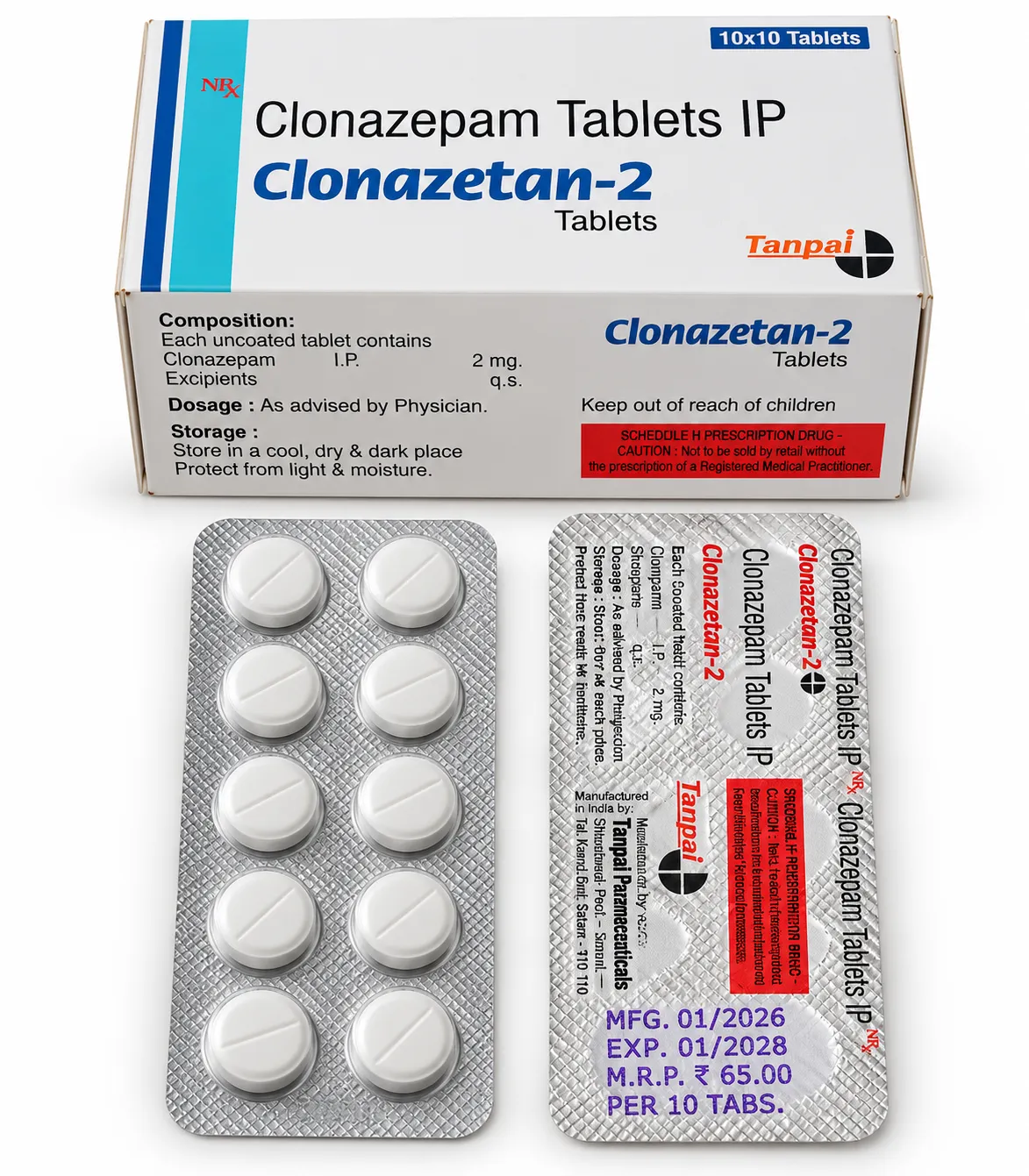
Clonazepam 2mg (Klonopin Lineage)
High-potency, long-acting anticonvulsant and anxiolytic indicated for panic disorder, Lennox-Gastaut syndrome, and seizure prophylaxis.
10. Frequently Asked Questions
Will the sleepiness from clonazepam 2mg go away over time?
Yes, for most patients. Daytime drowsiness is most intense during the first 1 to 2 weeks of therapy. As your brain adapts to the medication, sleepiness typically diminishes while panic and seizure protection remain steady.
Is it legal to drive while taking clonazepam?
Driving while impaired by prescription medications like clonazepam is illegal in all 50 states. Because the medicine stays in your body for over 30 hours, it significantly slows your reaction times even the following morning.
Why does clonazepam make me feel unsteady on my feet?
Clonazepam dampens the balance centers in your cerebellum. This can cause you to stumble, feel clumsy, or have trouble walking in a straight line, especially during the first few weeks or after a dose increase.
What should I do if clonazepam makes me feel angry or agitated?
Contact your prescribing physician immediately. You may be experiencing a rare paradoxical reaction. Do not increase your dose; your doctor will help you safely switch to a different medication.
11. Clinical References & Regulatory Sources
- Neurology. Adverse neurological and cognitive effects of long-term benzodiazepine therapy in epilepsy. Source Database.
- Accident Analysis & Prevention. Driving impairment associated with long-acting prescription benzodiazepines: Epidemiological analysis. Source Database.
- Journal of the American Geriatrics Society. Psychomotor impairment and fall hazards among older adults on anticonvulsant benzodiazepines. Source Database.
Consult a Clinical Pharmacy Specialist
Have questions regarding Clonazepam dosing intervals, CYP enzyme interactions, or physician-guided discontinuation protocols? Connect with our licensed clinical pharmacy team for patient safety guidance.
Related Patient Services & Verified Care
Every prescription order is verified by a licensed pharmacist in strict adherence to FDA BeSafeRx protocols.