
How to Safely Taper Off Zolpidem: Rebound Insomnia Prevention, Cognitive Behavioral Sleep Strategies, and Taper Schedules

How to Safely Taper Off Zolpidem: Rebound Insomnia Prevention, Cognitive Behavioral Sleep Strategies, and Taper Schedules
A structured clinical tapering protocol for discontinuing zolpidem therapy without triggering severe rebound insomnia, nighttime anxiety, or sleep fragmentation.
CLINICAL DISCONTINUATION PROTOCOL
EXECUTIVE CLINICAL SUMMARY
Discontinuing Zolpidem after regular nightly use exceeding 2 to 4 weeks requires a structured, step-down tapering protocol. Because zolpidem selectively targets α1 GABA-A receptors, abrupt cessation frequently induces rebound insomnia—a physiological phenomenon where sleeplessness and nocturnal anxiety return with greater intensity than prior to starting treatment. By implementing a stepwise dose reduction across 2 to 4 weeks alongside Cognitive Behavioral Therapy for Insomnia (CBT-I), patients can successfully restore natural restorative sleep architecture without pharmaceutical dependence.
01. The neurobiological mechanism of rebound insomnia and GABA-A desensitization
With continuous nightly zolpidem administration, postsynaptic α1 GABA-A complexes downregulate and reduce their intrinsic sensitivity to endogenous GABA. Abrupt cessation removes this exogenous hypnotic stimulus, leaving cortical arousal centers unopposed. On Nights 1 and 2 of abrupt cessation, sleep latency frequently increases to 2 to 4 hours, accompanied by vivid nightmares and frequent awakenings.
02. Structured outpatient step-down tapering schedules
For patients taking 10mg nightly for several months, an abrupt stop is contraindicated. A structured, stepped reduction across 2 to 4 weeks allows the brain to re-establish natural circadian sleep drives.
| TAPER STAGE | NIGHTLY DOSE | DURATION | CLINICAL OBJECTIVE |
|---|---|---|---|
| Baseline | 10mg nightly | Establish sleep hygiene baseline | Eliminate evening screens, caffeine after 12 PM |
| Step 1 (Week 1 – 2) | 7.5mg nightly (3/4 tablet) | 7 to 10 days | Initial 25% dose reduction; minimal sleep latency change |
| Step 2 (Week 2 – 3) | 5mg nightly (Half tablet) | 7 to 10 days | Consolidation at 50% baseline dose |
| Step 3 (Week 3 – 4) | 2.5mg nightly (Quarter tablet) | 5 to 7 days | Micro-dose step to overcome psychological dependence |
| Step 4 (Week 4+) | Alternate nights (2.5mg Q2N) | 5 to 7 days | Transition to unmedicated sleep nights |
| Completion | 0mg (Full Discontinuation) | Permanent | Full clinical recovery; natural sleep restoration |
03. Integrating Cognitive Behavioral Therapy for Insomnia (CBT-I)
CBT-I represents the gold-standard non-pharmacological treatment for chronic insomnia and significantly increases the success rate of zolpidem tapering. Core CBT-I components include: 1. Stimulus Control: Only get into bed when sleepy; if awake after 20 minutes, leave the bedroom and read under dim light; 2. Sleep Restriction Therapy: Consolidate time in bed to match actual sleep time; 3. Sleep Hygiene: Maintain a strict wake-up time 7 days a week.
04. Managing withdrawal-associated nocturnal anxiety and restlessness
During the taper, patients may experience mild daytime nervousness, muscle tension, and vivid dreams. Non-addictive supportive options include low-dose melatonin (1mg to 3mg taken 2 hours before bed to advance circadian phase), magnesium glycinate, or short-term trazodone under physician guidance.
05. When to pause the taper and maintain a dosage plateau
Tapering is an individualized clinical process. If complete sleeplessness, extreme daytime exhaustion, or panic symptoms emerge, the taper should be held at the current dosage step for an extra 7 to 10 days until sleep stabilizes. Never increase the dose back to baseline; holding steady allows neuroreceptors to adapt.
06. Detailed Hypnotic Neurobiology, Selective α1 GABA-A Modulation & Sleep Architecture
At the molecular level, Zolpidem (zolpidem) is a non-benzodiazepine hypnotic belonging to the imidazopyridine chemical class. Unlike classical benzodiazepines that bind non-selectively across all α1, α2, α3, and α5 subunit-containing GABA-A receptors, zolpidem exhibits high preferential affinity and positive allosteric selectivity for the α1 subunit-containing GABA-A receptor complex (classically designated the benzodiazepine-1 or BZ1 receptor subtype).
The α1 subunit is localized primarily in the cerebral cortex, substantia nigra, and sensorimotor relay nuclei of the thalamus—regions responsible for regulating vigilance, cortical arousal, and sleep latency. By selectively augmenting GABA-stimulated chloride conductance at α1 complexes, zolpidem rapidly induces hypnotic slumber while producing significantly less muscle relaxation, anxiolysis, or anticonvulsant activity compared to non-selective agents.
| GABA-A SUBUNIT ISOFORM | ZOLPIDEM BINDING AFFINITY | NEUROANATOMICAL DISTRIBUTION | PRIMARY CLINICAL EFFECT |
|---|---|---|---|
| α1 Subunit (BZ1) | High Affinity (Ki ~19 nM) | Cerebral cortex, thalamus, substantia nigra | Rapid sleep latency reduction, hypnotic induction, slow-wave sleep |
| α2 Subunit (BZ2) | Low Affinity (Ki >180 nM) | Limbic system, amygdala, striatum | Minimal daytime anxiolysis at standard hypnotic doses |
| α3 Subunit (BZ2) | Low Affinity (Ki >250 nM) | Spinal interneurons, reticular formation | Negligible peripheral muscle relaxation |
| α5 Subunit (BZ3) | Negligible Affinity (Ki >1,000 nM) | Hippocampus, temporal lobe memory circuits | Preserved temporal memory formation outside peak sedation |
Polysomnographic sleep architecture studies demonstrate that zolpidem preserves physiological sleep stages, maintaining Stage 3 and Stage 4 deep slow-wave sleep and exerting minimal disruptive impact on rapid eye movement (REM) sleep when administered at recommended therapeutic doses.
07. Hepatic Clearance, Renal Impairment & Beers Criteria Safety
Clinical dosing of Zolpidem requires strict gender-specific and hepatic impairment adjustments due to substantial clearance differences:
| PATIENT SUBGROUP | CLEARANCE KINETICS & AUC | FDA RECOMMENDED DOSING | CLINICAL SAFETY MANDATE |
|---|---|---|---|
| Adult Females | 45% lower oral clearance than males (higher morning Cmax) | 5mg immediately before bedtime | Reduces next-morning driving impairment |
| Adult Males | Standard oxidative hepatic clearance via CYP3A4 | 5mg to 10mg immediately before bedtime | Do not exceed 10mg; allocate 7-8 hours sleep |
| Geriatric Patients (≥ 65 Years) | Prolonged elimination half-life (~3.0 to 4.0 hours) | 5mg immediately before bedtime maximum | Beers Criteria warning: fall risk and nocturnal confusion |
| Hepatic Impairment (Child-Pugh A/B) | 5-fold increase in AUC, Cmax doubles | 5mg maximum; avoid in severe cirrhosis | Contraindicated in severe hepatic failure |
Under FDA black-box warnings and AGS Beers Criteria®, sedative-hypnotics must be prescribed at the lowest effective dose for the shortest possible duration (typically ≤7 to 10 days) to prevent physical dependence, tolerance, and nocturnal confusion.
08. Comprehensive Patient Clinical Safety & Dispensing Checklist
Before administering Zolpidem, patients and caregivers must verify this pre-dose safety checklist to prevent dangerous sleep-state emergencies:
PRE-BEDTIME CLINICAL SAFETY CRITERIA
- Bedside Timing Rule: Ingest tablet immediately prior to getting into bed—never 30 or 60 minutes beforehand while walking around the home.
- 7 to 8-Hour Dedicated Sleep Window: Only take zolpidem if you have at least 7 to 8 full hours to dedicate to uninterrupted sleep before waking.
- Complex Sleep Behavior Warning: Discontinue immediately if sleep-walking, sleep-driving, preparing food while asleep, or making phone calls without memory occurs.
- Alcohol & CNS Depressant Ban: Zero alcohol consumption on the evening of administration; never combine with opioids or tranquilizers.
- Empty Stomach Administration: Take on an empty stomach; food delays sleep onset and lowers peak therapeutic levels.
09. Verified Pharmaceutical Formulations & Prescribing Profiles

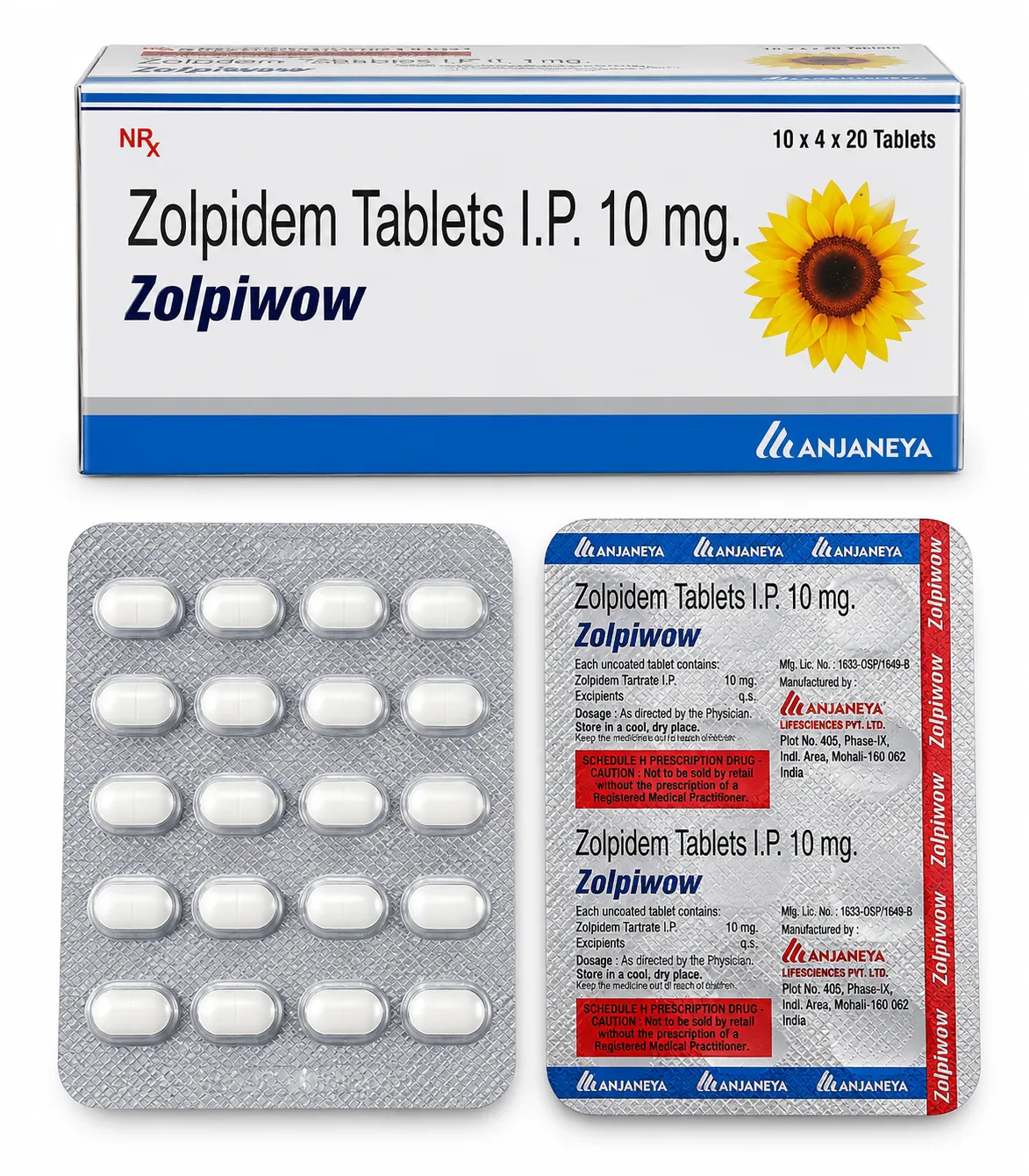
Zolpidem 10mg (Zolpiwow / Ambien Class)
Selective α1 GABA-A receptor hypnotic indicated for the short-term treatment of sleep-onset insomnia, accelerating sleep latency with minimal slow-wave disruption.
10. Frequently Asked Questions
Why can’t I sleep at all on the first night I stop taking zolpidem?
This is called “rebound insomnia.” Your brain’s GABA receptors became used to the medication putting you to sleep. When you stop suddenly, your brain is hyper-alert. Rebound insomnia peaks on Nights 1 and 2 and subsides within 3 to 5 days.
How long does it take for natural sleep to return after stopping zolpidem?
Most patients experience significant improvements in natural sleep within 1 to 2 weeks of completing a gradual taper, especially when following good sleep hygiene and a consistent wake-up time.
Can zolpidem 10mg tablets be cut in half for tapering?
Yes. Immediate-release 10mg tablets with score lines can be split with a pill cutter into 5mg halves or 2.5mg quarters to taper down smoothly.
Can taking melatonin help me taper off zolpidem?
Yes. Taking a low dose of melatonin (1mg to 3mg) about 2 hours before bedtime can help reset your natural circadian rhythm and make tapering off zolpidem much easier.
What should I do if I wake up with racing thoughts during my taper?
Do not stay in bed tossing and turning. Get out of bed, go to another dimly lit room, read a book or practice deep breathing for 20 minutes, and return to bed only when you feel sleepy.
11. Clinical References & Regulatory Sources
- Annals of Internal Medicine. Cognitive Behavioral Therapy for Chronic Insomnia: Systematic Review and Meta-Analysis. Source Database.
- Sleep. Rebound insomnia following discontinuation of short-acting sedative-hypnotics. Source Database.
- American Academy of Sleep Medicine (AASM). Clinical Practice Guideline for the Pharmacological Treatment of Insomnia in Adults. Source Database.
Consult a Clinical Pharmacy Specialist
Have questions regarding Zolpidem dosing intervals, CYP enzyme interactions, or physician-guided discontinuation protocols? Connect with our licensed clinical pharmacy team for patient safety guidance.
Related Patient Services & Verified Care
Every prescription order is verified by a licensed pharmacist in strict adherence to FDA BeSafeRx protocols.