
Zolpidem: Medication Safety, Complex Sleep Behaviors and FDA Warnings

Zolpidem: Patient Information, Safety Warnings & Drug Interactions
A clinically verified patient guide to zolpidem (Ambien), α1-selective GABA-A pharmacology, FDA boxed warnings for complex sleep behaviors, sex-specific dosing, and dependence risks.
MEDICATION GUIDE
CLINICAL SUMMARY
Zolpidem (brand name Ambien®) is a non-benzodiazepine Z-drug sedative-hypnotic indicated for the short-term treatment of insomnia characterized by difficulties with sleep initiation. By selectively binding to the α1 subunit of the GABA-A receptor complex, zolpidem induces rapid sleep onset with minimal daytime hangover when taken with a planned 7 to 8 hours of sleep. Key clinical safety issues include mandatory lower starting doses in women due to slower clearance, strict avoidance of alcohol and CNS depressants, and an FDA Boxed Warning for Complex Sleep Behaviors (sleep-driving, sleep-eating) that can cause catastrophic injury or death.
01. Quick medicine facts
A concise, source-verified clinical summary table based on official FDA Prescribing Information and National Library of Medicine documentation:
| INFORMATION | CLINICAL DETAILS |
|---|---|
| Generic Name | Zolpidem Tartrate |
| Brand Names (US) | Ambien®, Ambien CR®, Edluar®, Intermezzo®, Zolpimist® |
| Pharmacological Class | Non-Benzodiazepine Hypnotic (Imidazopyridine GABA-A α1-Selective Modulator) |
| Controlled Schedule | DEA Schedule IV Controlled Substance (Rx Only) |
| Elimination Half-Life | Mean ~2.5 to 2.6 hours (range: 1.4 to 4.5 hours; extended in hepatic impairment and elderly) |
| Sex-Specific Dosing Mandate | FDA-mandated 5 mg starting dose for females (vs. 5–10 mg for males) due to lower clearance |
| Primary Metabolic Clearance | Hepatic Cytochrome P450 CYP3A4 (primary) with contributions from CYP1A2, CYP2C9, CYP2D6 |
| FDA Boxed Warning | Complex Sleep Behaviors (sleep-walking, sleep-driving, and other activities while not fully awake) leading to serious injuries or death |
02. What is zolpidem?
Zolpidem is an imidazopyridine sedative-hypnotic agent developed in the late 1980s by Synthélabo (now Sanofi) and approved by the U.S. FDA in 1992 under the brand name Ambien. Synthesized specifically to provide effective hypnotic induction while overcoming the prolonged sedation, muscle weakness, and ataxia associated with non-selective classical benzodiazepines, zolpidem quickly became the most widely prescribed prescription sleep medication in North America.
Unlike benzodiazepines that bind broadly across α1, α2, α3, and α5 GABA-A receptor subunits, zolpidem exhibits high preferential selectivity for the α1 subunit. Because α1 subunits are concentrated within the cerebral cortex, thalamus, and cerebellum, zolpidem induces rapid hypnotic sleep while producing significantly less muscle relaxation and anticonvulsant activity at therapeutic doses.
Administered orally on an empty stomach immediately before getting into bed, immediate-release zolpidem is rapidly absorbed, reaching peak plasma concentration within 1.5 hours. It has an elimination half-life of approximately 2.5 hours, allowing the medication to clear from circulation by morning when taken with a full 7 to 8 hours dedicated to rest.
03. Uses and approved indications
The U.S. FDA has approved zolpidem formulations for specific insomnia diagnoses:
| INDICATION & FORMULATION | CLINICAL PRACTICE CRITERIA |
|---|---|
| Sleep-Onset Insomnia (Immediate-Release) | FDA-approved for short-term treatment of insomnia characterized by difficulties with sleep initiation. Clinical trials demonstrated reduction in sleep latency for up to 35 days. |
| Sleep Maintenance Insomnia (Ambien CR) | FDA-approved for treatment of insomnia characterized by difficulties with sleep onset and/or sleep maintenance (frequent middle-of-the-night awakenings). |
| Middle-of-the-Night Awakenings (Intermezzo) | FDA-approved for as-needed treatment of insomnia when a middle-of-the-night awakening is followed by difficulty returning to sleep, provided at least 4 hours of bedtime remain. |
04. How does zolpidem work?
Patient-Friendly Overview
When you prepare for sleep, your brain gradually ramps up production of a calming neurochemical called GABA, which acts like night-mode for your brain cells, dimming conscious thoughts and easing you into slumber. Insomnia occurs when awake brain signals remain overactive. Zolpidem acts as a precision key that fits into your brain’s sleep-switch receptors (the α1 GABA-A docking sites). It magnifies GABA’s natural calming effect, swiftly switching your brain into natural sleep stages.
Advanced Molecular Pharmacology & Receptor Subunit Binding
Zolpidem’s unique pharmacological profile is defined by subunit-selective positive allosteric modulation:
- Preferential α1-Subunit Selectivity: Pentameric GABA-A receptors contain various alpha subunits (α1 through α6). Zolpidem binds with high nanomolar affinity specifically to α1-containing receptors, which mediate sedation and anterograde amnesia.
- Low Affinity for α2, α3, α5 Subunits: Zolpidem exhibits significantly lower affinity for α2 and α3 subunits (which mediate anxiolysis and muscle relaxation) and negligible affinity for α5 subunits (which regulate temporal memory and cognition), minimizing widespread motor floppiness.
- Chloride Ion Hyperpolarization: Binding of zolpidem increases the affinity of the receptor for GABA, leading to increased channel opening frequency and chloride ion influx, hyperpolarizing neuronal membranes in the thalamocortical arousal system.
05. Available forms and strengths
Zolpidem is formulated across multiple oral and sublingual delivery platforms:
| DOSAGE FORM | STRENGTHS AVAILABLE | PHARMACOKINETIC PROFILE |
|---|---|---|
| Immediate-Release Oral Tablets (Ambien) | 5 mg (pink/oval), 10 mg (white/oval debossed) | Tmax: 1.5 hours; Half-life ~2.5 hours. Taken immediately at bedtime with 7–8 hours of rest. |
| Extended-Release Bilayer Tablets (Ambien CR) | 6.25 mg, 12.5 mg bilayer coated tablets | Bilayer tablet: outer layer dissolves rapidly for sleep onset; inner matrix releases slowly over 6 hours for sleep maintenance. Swallow whole. |
| Sublingual Tablets (Edluar, Intermezzo) | Edluar: 5 mg, 10 mg; Intermezzo: 1.75 mg (women), 3.5 mg (men) | Dissolves under the tongue without swallowing water; Intermezzo approved specifically for middle-of-the-night waking with ≥4 hours rest remaining. |
PRESCRIPTION REQUIRED (Rx)
Verified Zolpidem Formulations Dispensed by Licensed US Pharmacies
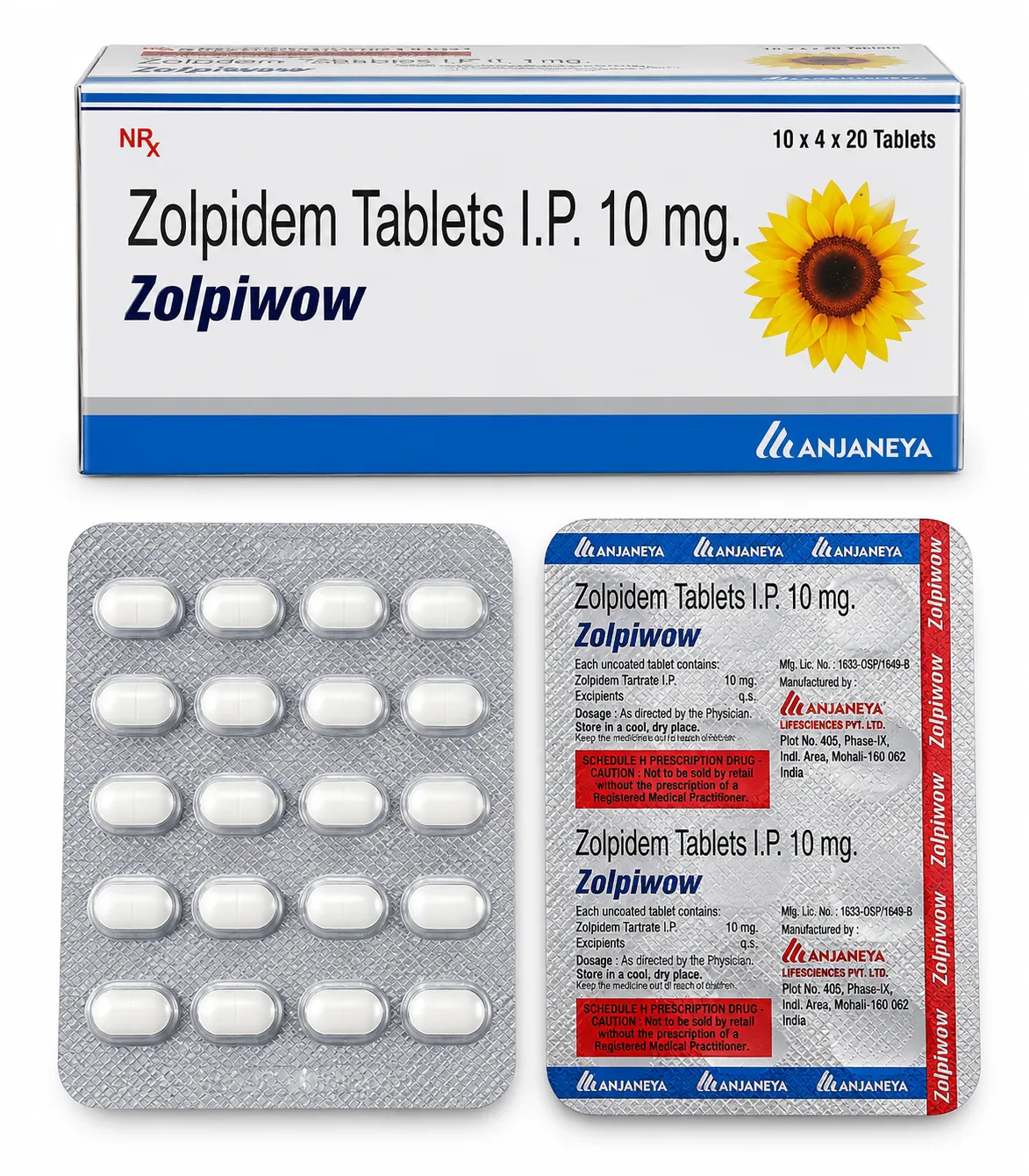
Patients holding a verified clinical prescription can view authentic manufacturer specifications, packaging markers, and dispensing safety protocols for authorized oral formulations:
06. Dosage and administration principles
FDA-Mandated Sex-Specific Dosing: Pharmacokinetic data demonstrates that women eliminate zolpidem substantially slower than men. Consequently, the FDA requires lower initial doses for women to prevent dangerous next-morning impairment.
- Adult Females: Recommended starting dose is 5 mg immediate-release (or 6.25 mg Ambien CR) taken once per night immediately before bedtime.
- Adult Males: Recommended starting dose is 5 mg or 10 mg immediate-release (or 6.25 mg to 12.5 mg Ambien CR). In clinical practice, starting at 5 mg is prudent.
- Geriatric Patients (65+ Years): Starting dose is 5 mg immediate-release (or 6.25 mg Ambien CR) once daily at bedtime to reduce ataxia and fall risks.
- Administration Rule: Take as a single dose immediately before getting into bed. Never re-dose during the same night. Take on an empty stomach; food significantly delays absorption.
07. Common side effects
Adverse effects reflect residual central nervous system depression and next-morning drowsiness:
| BODY SYSTEM | COMMON ADVERSE EFFECT | SAFETY INTERVENTION |
|---|---|---|
| Central Nervous System | Next-morning drowsiness, dizziness, “hangover” lethargy, lightheadedness | Ensure a full 8 hours in bed; do not drive the following morning if feeling drowsy. |
| Neurological / Memory | Anterograde amnesia, difficulty concentrating, slowed cognitive reflexes | Never take zolpidem unless in bed and ready for immediate sleep. |
| Gastrointestinal | Nausea, diarrhea, dyspepsia, dry mouth | Stay hydrated during daytime; discuss formulation adjustments with prescriber. |
08. FDA boxed warnings and serious reactions
FDA BOXED WARNING: COMPLEX SLEEP BEHAVIORS (CSBs)
The U.S. FDA mandates a black box warning on all zolpidem and Z-drug products regarding catastrophic sleep behaviors:
- Complex Sleep Behaviors: Zolpidem can cause complex sleep behaviors such as sleep-walking, sleep-driving, preparing and consuming food, making phone calls, or having sex while not fully awake.
- Fatal Injuries: Patients have suffered serious physical injuries, severe burns, motor vehicle collisions, falls from heights, hypothermia, and death during episodes.
- Complete Amnesia: Patients typically have zero memory or recall of the episode upon awakening.
- Absolute Discontinuation Mandate: Discontinue zolpidem immediately if a patient experiences even a single episode of complex sleep behavior. Contraindicated in anyone with a history of CSB.
Next-Morning Psychomotor Impairment
Driving simulation studies conducted by the FDA revealed that blood levels of zolpidem in some patients (especially women) remained high enough at 8 hours post-dose to impair driving performance and significantly increase motor vehicle crash risks. Patients must not drive or engage in hazardous occupations until feeling completely awake.
09. Precautions and contraindications
Zolpidem is contraindicated in patients presenting with:
- History of complex sleep behaviors after taking zolpidem or any Z-drug (eszopiclone, zaleplon)
- Known hypersensitivity to zolpidem (including angioedema and anaphylaxis)
- Severe hepatic impairment (risk of precipitating hepatic encephalopathy)
- Severe respiratory depression, advanced COPD, or sleep apnea syndrome
10. Critical drug and substance interactions
Zolpidem is cleared primarily by hepatic CYP3A4. Concomitant central nervous system depressants create dangerous synergistic impairment:

| INTERACTING AGENT | CLINICAL EFFECT & RISK LEVEL | SAFETY ACTION |
|---|---|---|
| Alcohol (Ethanol) | Severe / Contraindicated: Dramatically increases the incidence of complex sleep behaviors, sleep-driving, and fatal CNS depression. | Zero alcohol consumption on any evening when zolpidem is taken. |
| Opioid Analgesics (Oxycodone, Hydrocodone) | Fatal Synergy: Compounded depression of brainstem respiratory drive, coma, and fatal hypoxia. | Avoid concurrent use. If co-prescribed, reduce doses and prescribe naloxone. |
| Strong CYP3A4 Inhibitors (Ketoconazole, Clarithromycin) | Moderate-High: Blocks clearance, doubling peak plasma concentration and prolonging morning sedation. | Reduce zolpidem dose to 5 mg maximum and monitor for extended daytime impairment. |
| Strong CYP3A4 Inducers (Rifampin, St. John’s Wort) | Moderate: Accelerates zolpidem breakdown by 70%, rendering the drug clinically ineffective. | Avoid combination; select alternative sleep management strategy. |
11. Special populations & Beers criteria
Geriatric Patients (65+ Years)
The American Geriatrics Society Beers Criteria® strongly recommends avoiding all non-benzodiazepine receptor agonists (Z-drugs, including zolpidem) in older adults. Extensive clinical epidemiological evidence demonstrates that Z-drugs produce harm profiles comparable to benzodiazepines in elderly patients, including delirium, falls, hip fractures, motor vehicle accidents, and emergency hospitalizations, with minimal clinical improvement in total sleep time.
Pregnancy and Lactation
Zolpidem crosses the placenta and is excreted into human breast milk. Maternal use in late pregnancy can cause neonatal respiratory depression, flaccidity, and withdrawal symptoms. Breastfeeding is generally not advised while taking zolpidem.
12. Patient safety checklist
Review this patient safety checklist before taking zolpidem:
- Bedtime Timing: Are you taking zolpidem only when you are already in bed and ready for immediate sleep?
- Full 7–8 Hours: Do you have a full 7 to 8 hours dedicated to rest before needing to be active or drive?
- Empty Stomach: Did you avoid taking zolpidem with or immediately after a heavy meal (which delays onset)?
- Zero Alcohol Rule: Have you completely eliminated alcohol consumption for the evening?
- No Middle-of-the-Night Re-dosing: Do you understand that you must never take an extra pill if you wake up during the night?
13. Storage and safe disposal
Secure storage prevents accidental ingestion and protects your family:

- Controlled Room Temperature: Store at 20°C to 25°C (68°F–77°F) away from moisture, heat, and direct light.
- Locked Storage: As a DEA Schedule IV substance, keep zolpidem in a locked medication lockbox out of reach of teenagers, visitors, and children.
- DEA Take-Back Disposal: Dispose of leftover or expired tablets through community DEA Take-Back collection kiosks or pharmacy disposal envelopes.
14. Frequently asked questions
How fast does zolpidem put you to sleep?
When taken on an empty stomach, zolpidem typically begins working within 15 to 30 minutes, producing strong drowsiness and sleep onset. Take it only when in bed.
Why is the recommended starting dose lower for women than men?
The FDA established sex-specific dosing because pharmacokinetic trials proved women clear zolpidem from their bodies significantly slower than men. A 5 mg dose in women achieves blood levels comparable to a 10 mg dose in men, preventing dangerous next-morning driving impairment.
What should I do if I sleepwalk or eat during the night while taking zolpidem?
Stop taking zolpidem immediately and contact your doctor. Complex sleep behaviors (such as sleep-driving, sleepwalking, and preparing food while asleep) can be life-threatening and indicate that you must never take zolpidem again.
Is zolpidem habit-forming?
Yes. Zolpidem is a Schedule IV controlled substance. While chemically different from benzodiazepines, regular daily use beyond 2 to 4 weeks can cause psychological dependence, tolerance, and rebound insomnia upon discontinuation.
15. References and verification sources
- U.S. Food and Drug Administration (FDA). Ambien (zolpidem tartrate) Tablets Prescribing Information. Reference ID: 4425688.
- National Library of Medicine. DailyMed. Zolpidem Tartrate Tablet Monograph. Bethesda, MD.
- FDA Drug Safety Communication: FDA requires lower recommended doses for certain sleep medications (zolpidem). U.S. FDA, 2013.
- American Geriatrics Society 2023 Updated Beers Criteria® for Potentially Inappropriate Medication Use in Older Adults. J Am Geriatr Soc. 2023;71(7):2052-2081.
- National Center for Biotechnology Information. StatPearls [Internet]. Zolpidem Clinical Pharmacology & Toxicity. StatPearls Publishing.
Questions about medication safety?
Speak with a licensed clinical pharmacist or explore our verified educational resources before making any changes to your prescription.
Related Patient Services & Verified Care
Every prescription order is verified by a licensed pharmacist in strict adherence to FDA BeSafeRx protocols.