
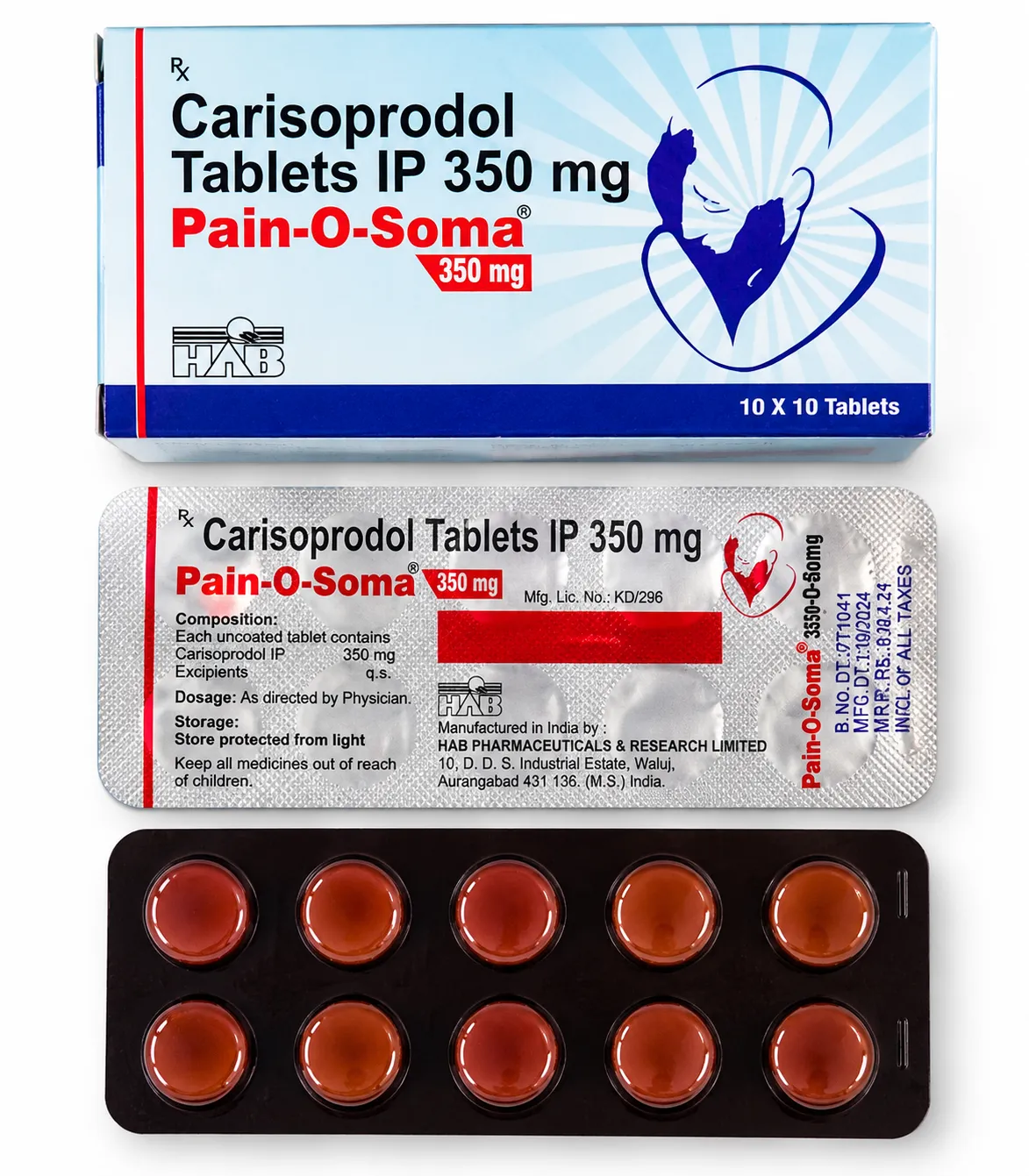
How to Safely Taper Off Carisoprodol: Preventing Meprobamate Withdrawal, Rebound Spasms, and Insomnia

How to Safely Taper Off Carisoprodol: Preventing Meprobamate Withdrawal, Rebound Spasms, and Insomnia
A step-down clinical tapering schedule for patients discontinuing carisoprodol after short-term or off-label use, avoiding autonomic rebound and withdrawal anxiety.
CLINICAL DISCONTINUATION PROTOCOL
EXECUTIVE CLINICAL SUMMARY
Discontinuing Carisoprodol after sustained use exceeding 2 to 3 weeks requires a structured, physician-guided tapering protocol. Because carisoprodol metabolizes into meprobamate (a controlled carbamate that acts on the GABA-A receptor complex), abrupt cessation can precipitate a severe sedative-hypnotic withdrawal syndrome. Symptoms include intense rebound anxiety, severe insomnia, muscle tremors, abdominal cramping, nausea, headache, and in severe cases, withdrawal seizures and delirium. A gradual dose reduction of 250mg to 350mg every 2 to 4 days ensures safe neurochemical equilibrium restoration.
01. Physiological basis of carisoprodol physical dependence and withdrawal neurobiology
Continuous exposure to meprobamate downregulates GABA-A receptor sensitivity and upregulates glutamatergic NMDA excitatory pathways. When carisoprodol is stopped abruptly, this compensatory brake is removed, resulting in profound central nervous system hyper-excitability, autonomic storm, and intense anxiety.
02. Structured outpatient step-down tapering schedules
For patients who have taken carisoprodol 350mg four times daily for several weeks, an abrupt stop is contraindicated. A structured, stepped reduction across 7 to 14 days allows the central nervous system to re-establish endogenous GABAergic tone.
| TAPER STAGE | DAILY CARISOPRODOL DOSE | ADMINISTRATION SCHEDULE | CLINICAL OBJECTIVE |
|---|---|---|---|
| Baseline | 1400mg daily (350mg QID) | Morning, Noon, Evening, Bedtime | Document baseline symptoms and establish comfort plan |
| Step 1 (Days 1 – 3) | 1050mg daily (350mg TID) | Morning, Evening, Bedtime (Drop midday) | Initial 25% dose reduction; monitor for anxiety |
| Step 2 (Days 4 – 6) | 700mg daily (350mg BID) | Morning and Bedtime only | Consolidation at 50% baseline dose |
| Step 3 (Days 7 – 9) | 350mg daily (350mg Bedtime) | Bedtime only | Protect sleep architecture; eliminate daytime exposure |
| Step 4 (Days 10 – 12) | 175mg daily (Half tablet Bedtime) | Bedtime only | Micro-dose step to prevent rebound insomnia |
| Completion (Day 13+) | 0mg (Full Discontinuation) | None | Full clinical recovery; transition to physical therapy |
03. Managing rebound muscle spasms and physical discomfort
During the taper, patients frequently experience a temporary return of muscle tightness (rebound spasms). This does not signify that the underlying injury has worsened; rather, it reflects temporary hyper-reflexic spinal motor neuron discharge. Non-sedating modalities—including heat wraps, gentle physical stretching, and non-steroidal anti-inflammatory drugs (ibuprofen 600mg TID or naproxen 500mg BID)—effectively bridge this phase.
04. Supportive pharmacotherapy for insomnia and autonomic agitation
Severe insomnia during carisoprodol cessation can be managed with short-term non-addictive sleep aids such as trazodone (25mg to 50mg) or melatonin. Autonomic symptoms such as heart palpitations, sweating, and tremors respond well to low-dose beta-blockers (propranolol 10mg to 20mg BID) or clonidine under physician oversight.
05. Recognizing severe withdrawal emergencies: Delirium and seizures
In individuals with protracted high-dose abuse, carisoprodol cessation can trigger delirium tremens-like hallucinations, profound disorientation, and generalized tonic-clonic seizures within 24 to 48 hours of the last dose. These patients require immediate emergency hospitalization and intravenous diazepam or phenobarbital stabilization.
06. Detailed Interneuronal Pharmacology, Spinal Reflex Inhibition & Meprobamate Biotransformation
Carisoprodol (carisoprodol) is a centrally acting skeletal muscle relaxant whose therapeutic relaxation and tranquilizing effects stem from complex interneuronal modulation rather than direct action on skeletal muscle contractile filaments. At the spinal and brainstem levels, carisoprodol interrupts multineuronal reflex arcs within the descending reticular formation and spinal cord gray matter, diminishing sustained hyperactive alpha and gamma motor neuron discharge.
Furthermore, carisoprodol undergoes extensive hepatic biotransformation via cytochrome CYP2C19 into its primary pharmacologically active metabolite, meprobamate. Meprobamate exhibits direct neurochemical properties similar to barbiturates, binding allosterically to the gamma-aminobutyric acid type A (GABA-A) receptor complex at distinct non-benzodiazepine sites. At therapeutic concentrations, it enhances GABA-mediated inhibitory neurotransmission; at elevated concentrations, it can directly open the chloride ion channel in the absence of GABA, inducing profound central sedation and motor ataxia.
| COMPOUND ENTITY | PRIMARY NEUROLOGICAL SITE | MOLECULAR MECHANISM | CLINICAL MANIFESTATION | ELIMINATION HALF-LIFE |
|---|---|---|---|---|
| Parent Carisoprodol | Spinal interneurons, reticular activating system | Interneuronal polysynaptic reflex attenuation | Immediate relief of acute muscle spasm and central stiffness | ~2.0 hours |
| Active Meprobamate | Subcortical limbic circuits, thalamus, GABA-A | Allosteric GABA-A activation (barbiturate-like site) | Anxiolysis, profound central sedation, muscle relaxation | ~10.0 hours |
| CYP2C19 Polymorphism | Hepatic microsomal enzymes | Rate-limiting Phase I oxidative dealkylation | Poor metabolizers retain higher parent drug; rapid metabolizers surge meprobamate | Genotype-dependent |
Because meprobamate possesses a prolonged terminal half-life of 10 hours (compared to 2 hours for parent carisoprodol), repeated daily dosing leads to significant metabolite accumulation. For this reason, clinical guidelines strictly restrict therapy duration to a maximum of 2 to 3 weeks.
07. Hepatic Clearance, Renal Impairment & Beers Criteria Safety
Because Carisoprodol relies heavily on hepatic biotransformation by CYP2C19 into meprobamate followed by renal clearance of polar glucuronides, pharmacokinetic disposition is dramatically altered in organ dysfunction:
| PATIENT POPULATION | PHARMACOKINETIC KINETIC IMPACT | CLINICAL DOSING DIRECTIVE | BEERS CRITERIA GUIDANCE |
|---|---|---|---|
| CYP2C19 Poor Metabolizers | 4-fold elevation in parent carisoprodol exposure | Avoid frequent dosing; monitor for extreme somnolence | Elevated ataxia and psychomotor impairment |
| Hepatic Dysfunction (Child-Pugh A/B) | Impaired clearance of both parent and active meprobamate | Dose reduction or avoid use; prolonged dosing intervals | Risk of hepatic encephalopathy and toxicity |
| Renal Impairment (CrCl < 30 mL/min) | Accumulation of active meprobamate metabolite | Contraindicated or extreme specialist monitoring only | Prolonged sedation and central depression |
| Geriatric Patients (≥ 65 Years) | Pronounced anticholinergic and sedative sensitivity | AVOID: Categorized as Potentially Inappropriate (PIM) | High risk of falls, hip fractures, and confusion |
Under the AGS Beers Criteria®, skeletal muscle relaxants like carisoprodol are strongly advised against in older adults due to poor tolerability, pronounced anticholinergic adverse effects, sedation, and a statistically validated threefold increase in fall-related fractures.
08. Comprehensive Patient Clinical Safety & Dispensing Checklist
Before taking Carisoprodol, patients and prescribers must verify this clinical safety checklist to prevent dangerous sedative synergy and dependence:
PATIENT SAFETY & USE LIMIT CRITERIA
- Strict Duration Limit: Therapy must not exceed 2 to 3 weeks. Long-term use results in physical dependence on meprobamate and difficult discontinuation.
- Zero Alcohol Tolerance: Completely avoid all alcohol and ethanol-containing elixirs. Co-ingestion causes severe psychomotor collapse and respiratory depression.
- The “Holy Trinity” Warning: Never combine carisoprodol with opioids and benzodiazepines. This triple combination carries an extreme risk of fatal overdose.
- Driving & Machinery Abstinence: Do not drive, operate forklifts, or engage in safety-critical tasks while on carisoprodol therapy.
- Seizure & Porphyria History: Contraindicated in patients with acute intermittent porphyria or past meprobamate hypersensitivity.
09. Verified Pharmaceutical Formulations & Prescribing Profiles

Soma 350mg (Carisoprodol)
Centrally acting skeletal muscle relaxant indicated for the acute relief of painful musculoskeletal spasms, strains, and spastic back injuries.
10. Frequently Asked Questions
What happens if you stop taking carisoprodol cold turkey?
Stopping abruptly after several weeks of use causes withdrawal within 24 to 48 hours, characterized by intense anxiety, insomnia, severe muscle twitches, sweating, stomach cramps, and potentially dangerous seizures.
How long do carisoprodol withdrawal symptoms last?
Acute withdrawal symptoms typically peak between Day 2 and Day 4 and resolve within 7 to 10 days. Mild sleep difficulty can persist for another week as your natural sleep cycles recover.
Can carisoprodol 350mg tablets be split for tapering?
Yes. Immediate-release tablets can be split along their score line using a pill cutter to create 175mg half-doses for the final phase of your tapering schedule.
Why do my back spasms feel worse when I stop taking carisoprodol?
This is called “rebound spasticity.” Your spinal nerves are temporarily hyper-sensitive after being suppressed by the medication. It usually subsides within 3 to 5 days with stretching and heat therapy.
What should I do if my anxiety is overwhelming during the taper?
Contact your prescribing physician. They can slow down your taper schedule or prescribe a non-addictive medication like propranolol or clonidine to calm down your nervous system.
11. Clinical References & Regulatory Sources
- Journal of Addiction Medicine. Withdrawal syndromes associated with carisoprodol and meprobamate discontinuation. Source Database.
- American Family Physician. Evaluation and management of skeletal muscle relaxant discontinuation. Source Database.
- Substance Abuse and Mental Health Services Administration (SAMHSA). Detoxification and Substance Abuse Treatment Guidelines. Source Database.
Consult a Clinical Pharmacy Specialist
Have questions regarding Carisoprodol dosing intervals, CYP enzyme interactions, or physician-guided discontinuation protocols? Connect with our licensed clinical pharmacy team for patient safety guidance.
Related Patient Services & Verified Care
Every prescription order is verified by a licensed pharmacist in strict adherence to FDA BeSafeRx protocols.