

Carisoprodol: What Patients Should Know About Sedation, Dependence and Interactions

Carisoprodol: Patient Information, Safety Warnings & Drug Interactions
A clinically verified patient guide to carisoprodol (Soma), active meprobamate metabolism, short-term prescribing limits, dangerous drug combinations, and dependence risks.
MEDICATION GUIDE
CLINICAL SUMMARY
Carisoprodol (brand name Soma®) is a centrally acting skeletal muscle relaxant approved by the U.S. FDA solely for short-term treatment (up to 2 to 3 weeks) of acute, painful musculoskeletal conditions. Unlike peripheral antispasmodics, carisoprodol relaxes muscle spasm via central nervous system sedation and interneuronal blockade. Its primary active metabolite is meprobamate, a potent Schedule IV sedative-anxiolytic with high dependence and addiction liability. Co-administration with opioids and benzodiazepines creates catastrophic synergistic respiratory depression.
01. Quick medicine facts
A concise, source-verified clinical summary table based on official FDA Prescribing Information and National Library of Medicine documentation:
| INFORMATION | CLINICAL DETAILS |
|---|---|
| Generic Name | Carisoprodol |
| Brand Name (US) | Soma® |
| Active Chemical Class | Carbamate Centrally Acting Skeletal Muscle Relaxant |
| Active Metabolite | Meprobamate (Schedule IV Sedative-Hypnotic) |
| Prescription Schedule | DEA Schedule IV Controlled Substance (Rx Only) |
| Elimination Half-Life | Carisoprodol: ~2 hours; Meprobamate metabolite: ~10 hours (up to 17 hours) |
| Primary Metabolic Enzyme | Hepatic CYP2C19 (bioactivates carisoprodol into meprobamate) |
| FDA Prescribing Limitation | Short-term duration only (maximum 2 to 3 weeks) due to rapid tolerance & dependence |
02. What is carisoprodol?
Carisoprodol is a centrally acting muscle relaxant first approved by the FDA in 1959. Synthesized to improve upon the pharmacological properties of meprobamate, carisoprodol alters interneuronal activity in the descending reticular formation and spinal cord, reducing muscle tone and autonomic perception of acute pain.
Crucially, carisoprodol is a prodrug-like compound whose clinical effects are strongly mediated by its major active hepatic metabolite: meprobamate. Meprobamate possesses potent sedative, anxiolytic, and muscle-relaxing properties similar to barbiturates. Because meprobamate has a significantly longer half-life (10 to 17 hours) than parent carisoprodol (~2 hours), multiple daily doses lead to progressive meprobamate bioaccumulation in body tissues.
In 2012, following rigorous DEA review and evidence of escalating abuse, carisoprodol was classified nationwide as a Schedule IV controlled substance. Prescriptions are legally limited, and therapy must never extend into chronic, open-ended regimens.
03. Uses and approved indications
The U.S. Food and Drug Administration (FDA) has strictly delimited carisoprodol’s approved role in clinical medicine:
| INDICATION STATUS | CLINICAL PRACTICE MANDATE |
|---|---|
| Acute Musculoskeletal Pain (FDA-Approved) | Approved as an adjunct to rest, physical therapy, and conservative measures for the relief of discomfort associated with acute, painful musculoskeletal conditions in adults. |
| Duration Restriction (2–3 Weeks Maximum) | Strictly restricted to 2 to 3 weeks maximum. Evidence of efficacy for long-term use is absent, and the risk of psychological and physiological dependence increases dramatically beyond 14 days. |
| Chronic Pain Syndromes (Not Recommended) | Not recommended for chronic back pain, fibromyalgia, or long-term spasticity due to tolerance, meprobamate accumulation, and severe withdrawal risks. |
04. How does carisoprodol work?
Patient-Friendly Overview
When you sustain an acute muscle strain or severe spasm, your body sends rapid distress signals up your spinal cord to your brain, causing reflexive, agonizing muscle tightness. Carisoprodol does not work directly on muscle fibers; instead, it acts inside your brain and spinal cord as a central nervous system depressant. It blocks communication between interneurons, dampening the pain-spasm feedback loop and creating widespread sedation and physical relaxation.
Advanced Biotransformation & CYP2C19 Pharmacogenetics
The molecular pharmacology of carisoprodol is characterized by dual activity between the parent molecule and its primary metabolite:
- Spinal Interneuronal Inhibition: Carisoprodol depresses polysynaptic spinal reflexes and descending reticular activating pathways.
- Metabolic Conversion: Carisoprodol is converted in the liver to meprobamate primarily by the cytochrome P450 CYP2C19 enzyme.
- GABA-A Receptor Activity: Meprobamate acts directly at GABA-A receptors at a site distinct from benzodiazepines (resembling barbiturate binding), directly opening chloride channels even at high concentrations without endogenous GABA.
- CYP2C19 Poor vs. Rapid Metabolizers: Patients who are CYP2C19 poor metabolizers exhibit a 4-fold increase in carisoprodol exposure, whereas ultrarapid metabolizers experience rapid conversion and elevated meprobamate toxicity.
05. Available forms and strengths
Carisoprodol is manufactured as oral compressed tablets in two standardized strengths:
| FORMULATION & STRENGTH | PHYSICAL DESCRIPTION | TYPICAL CLINICAL USE |
|---|---|---|
| Carisoprodol 250 mg Tablets | White, round, debossed film-coated tablets | Starting dose for patients vulnerable to profound daytime drowsiness or elderly adults. |
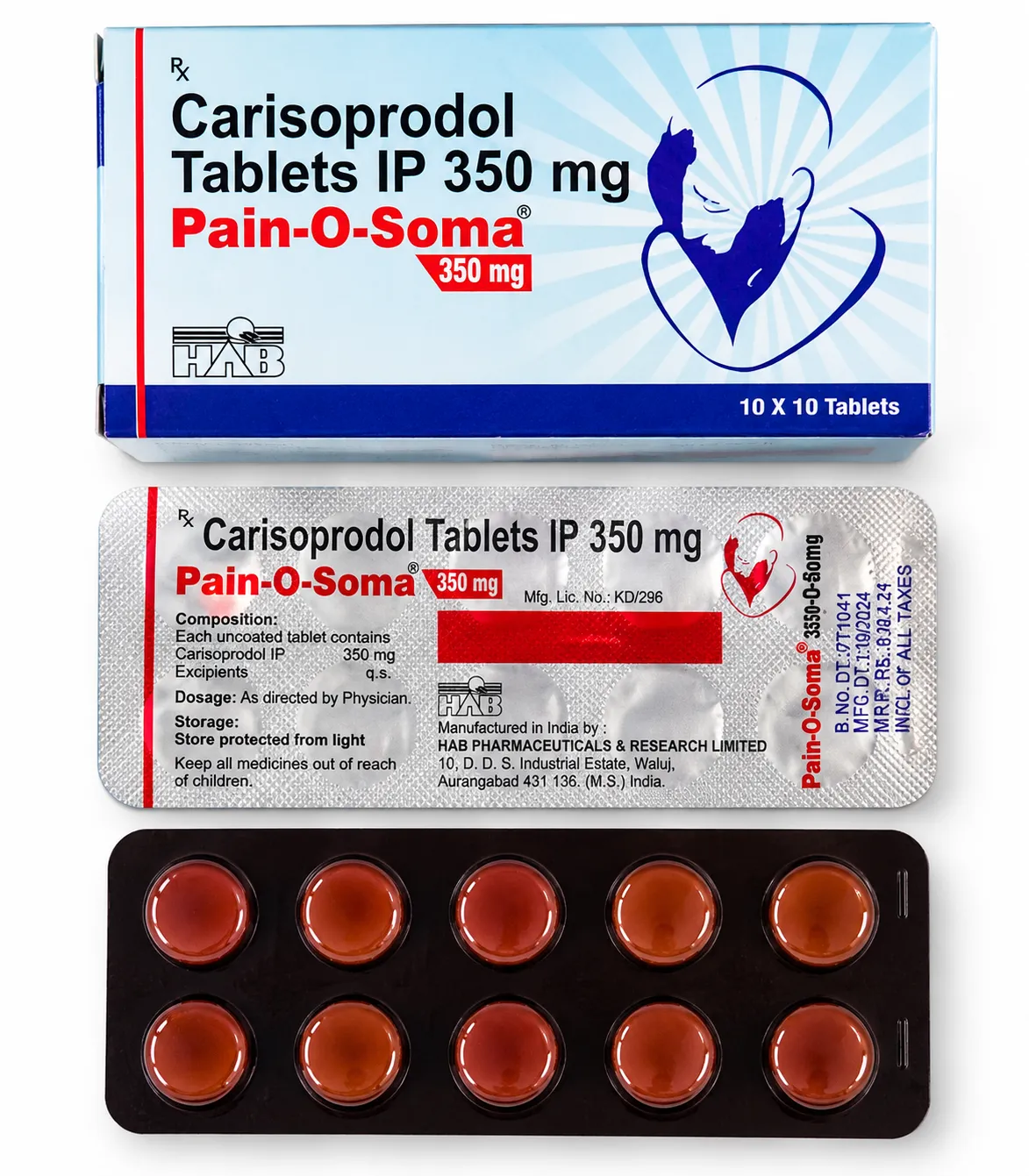
| Carisoprodol 350 mg Tablets | White, round, convex unscored or scored tablets (Soma 350) | Standard adult clinical strength prescribed for acute muscle spasms three times daily and at bedtime. |
PRESCRIPTION REQUIRED (Rx)
Verified Carisoprodol Formulations Dispensed by Licensed US Pharmacies
Patients holding a verified clinical prescription can view authentic manufacturer specifications, packaging markers, and dispensing safety protocols for authorized oral formulations:
06. Dosage and administration principles
Clinical Prescribing Mandate: Dosing must strictly follow prescriber orders and must never exceed authorized limits or durations. Never take carisoprodol for longer than 3 weeks without explicit medical re-evaluation.
- Standard Adult Dosing: 250 mg to 350 mg taken three times daily and at bedtime (maximum 1,400 mg/day).
- Treatment Duration Limit: Therapy should not exceed 2 to 3 weeks. Acute musculoskeletal spasms typically resolve within this window.
- Food Considerations: May be taken with or without food. Taking with meals can reduce mild stomach upset.
- Safe Discontinuation: If taken regularly for more than 2 weeks, carisoprodol should be gradually tapered to avoid unpleasant rebound symptoms and meprobamate withdrawal.
07. Common side effects
Centrally acting sedation is the primary pharmacological effect and the most common adverse reaction:
| ORGAN SYSTEM | ADVERSE REACTION | SAFETY ADVICE |
|---|---|---|
| Central Nervous System | Profound drowsiness, dizziness, lightheadedness, somnolence | Do not drive or operate equipment; take the evening dose immediately before bed. |
| Neurological / Motor | Ataxia, loss of balance, headache, motor uncoordination | Rise slowly from sitting or lying down; high fall risk in bathroom spaces. |
| Cardiovascular | Orthostatic hypotension, tachycardia, facial flushing | Maintain hydration; sit down immediately if feeling faint or lightheaded. |
| Gastrointestinal | Nausea, vomiting, epigastric discomfort | Administer doses with food or a full glass of milk. |
08. FDA boxed warnings and serious reactions
FDA WARNINGS: DEPENDENCE, MISUSE & THE “HOLY TRINITY” COCKTAIL
The U.S. FDA and DEA highlight severe clinical dangers associated with carisoprodol:
- Abuse & Dependence Liability: Carisoprodol’s active metabolite, meprobamate, creates significant psychological and physiological dependence. Tolerance develops quickly, prompting dangerous dose escalation.
- The Lethal “Holy Trinity” Combination: Carisoprodol is frequently abused in combination with an opioid (e.g., hydrocodone, oxycodone) and a benzodiazepine (e.g., alprazolam). This deadly cocktail suppresses brainstem breathing centers, frequently causing fatal respiratory arrest.
- Severe Withdrawal Syndrome: Abrupt cessation after continuous use can trigger severe withdrawal within 12 to 48 hours, presenting as chills, tremors, insomnia, abdominal cramps, hallucinations, and generalized seizures.
Recognizing Acute Carisoprodol / Meprobamate Toxicity
Overdose requires emergency 911 activation and emergency department resuscitation:
- Profound coma and unresponsiveness
- Severe respiratory depression, Cheyne-Stokes breathing, or apnea
- Severe hypotension, shock, and cardiovascular collapse
09. Precautions and contraindications
Carisoprodol is contraindicated in patients with:
- Acute intermittent porphyria: Carisoprodol can induce porphyrin synthesis and precipitate fatal porphyric crises.
- Known hypersensitivity to carisoprodol, meprobamate, or related carbamates (such as tybamate).
- Severe renal impairment (creatinine clearance <30 mL/min) or severe hepatic disease.
- History of substance use disorder or diversion.
10. Critical drug and substance interactions
Concomitant administration with other central nervous system depressants or CYP2C19 inhibitors creates profound clinical hazards:

| INTERACTING AGENT | SEVERITY & PHARMACOLOGICAL RISK | SAFETY ACTION |
|---|---|---|
| Opioid Analgesics (Hydrocodone, Oxycodone) | High / Lethal: Extreme synergistic respiratory depression and central apnea. | Avoid co-prescribing. If co-prescribed, reduce doses and provide naloxone. |
| Benzodiazepines (Alprazolam, Diazepam) | High: Synergistic GABA-A receptor activation leading to unarousable sedation and coma. | Strictly avoid concurrent use. |
| Alcohol (Ethanol) | Severe: Multiplies sedative potency, causing catastrophic motor impairment and memory loss. | Zero alcohol consumption throughout carisoprodol therapy. |
| CYP2C19 Inhibitors (Omeprazole, Fluconazole) | Moderate-High: Blocks carisoprodol clearance, leading to elevated parent drug toxicity. | Consider alternate proton-pump inhibitor (e.g., pantoprazole) and monitor sedation. |
11. Special populations & Beers criteria
Geriatric Patients (65+ Years)
The American Geriatrics Society Beers Criteria® lists carisoprodol under the category of Strongly Avoid in Older Adults. Muscle relaxants are poorly tolerated in older patients due to anticholinergic side effects, severe sedation, and cognitive blunting. Clinical trials demonstrate minimal efficacy in older adults paired with an unacceptably high rate of hip fractures, falls, and emergency room visits.
Pregnancy and Nursing
Carisoprodol and its metabolite meprobamate cross the placenta and enter breast milk at concentrations 2 to 4 times maternal plasma levels. Carisoprodol should not be used during pregnancy or while breastfeeding due to the risk of neonatal sedation and respiratory depression.
12. Patient safety checklist
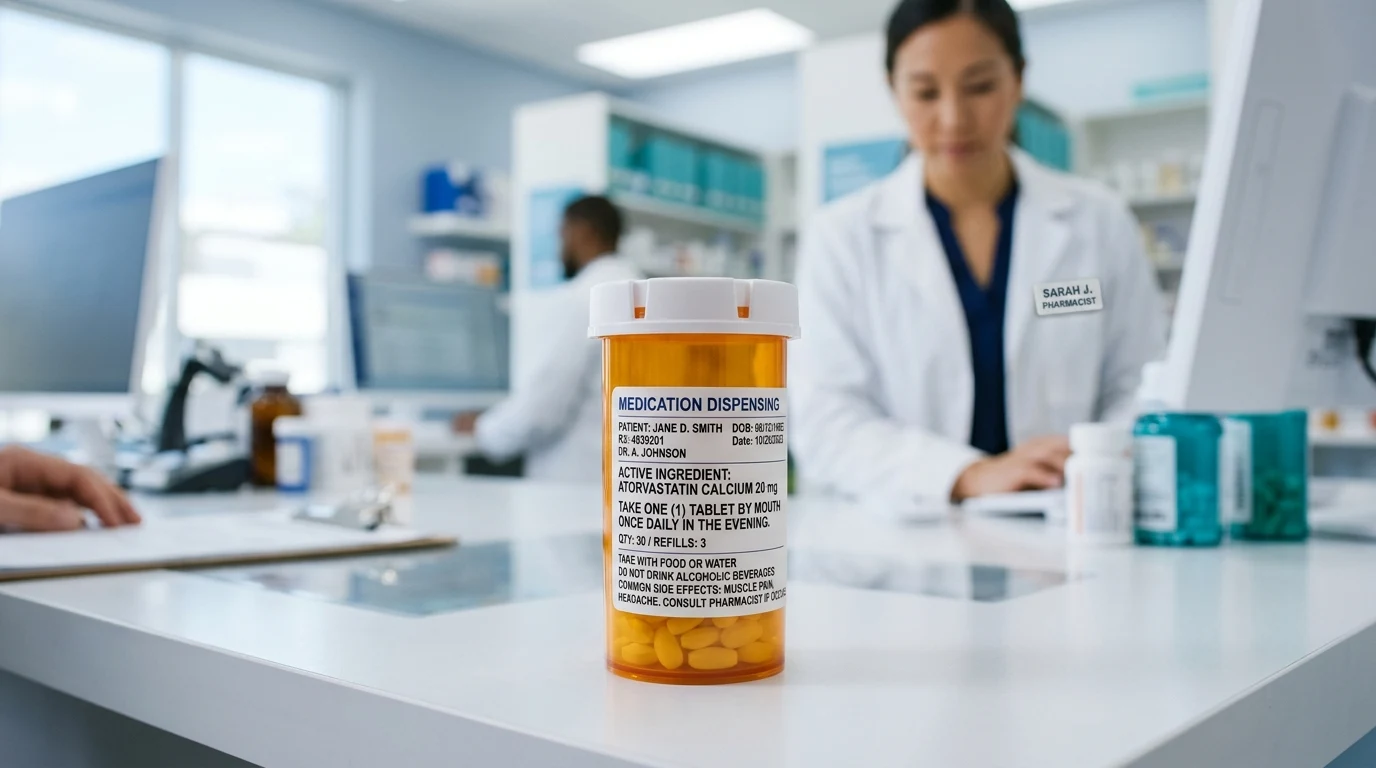
Review this patient safety checklist before initiating carisoprodol therapy:
- Short-Term Window: Do you understand that carisoprodol is strictly intended for 2 to 3 weeks maximum?
- Zero Alcohol Rule: Have you completely eliminated alcohol consumption while taking this medication?
- Driving Precaution: Are you avoiding driving, operating power tools, or performing hazardous tasks while taking carisoprodol?
- Combination Review: Have you confirmed with your pharmacist that you are not taking opioids, sleeping pills, or benzodiazepines?
- Gradual Discontinuation: If you have taken carisoprodol regularly for over 14 days, has your doctor planned a gradual step-down taper?
13. Storage and safe disposal
Controlled substance security protects your household from accidental exposure and misuse:

- Controlled Room Temperature: Store between 20°C and 25°C (68°F–77°F) in a dry, cool cabinet away from bathroom moisture.
- Lockbox Storage: Because carisoprodol is a DEA Schedule IV drug with high street abuse potential, keep it locked away from teenagers, guests, and visitors.
- DEA Take-Back Programs: Safely discard remaining tablets through DEA take-back collection kiosks or pharmacy drug return envelopes.
14. Frequently asked questions
How fast does carisoprodol relieve acute muscle spasm?
Onset of central muscle relaxation and sedation typically occurs within 30 minutes of oral administration, with peak therapeutic effect achieved at 1.5 to 2 hours.
Why is carisoprodol only prescribed for 2 to 3 weeks?
There is no clinical evidence that carisoprodol remains effective for chronic conditions. Prolonged use causes rapid tolerance, physiological dependence on active meprobamate, and severe withdrawal symptoms upon discontinuation.
Can I take ibuprofen or acetaminophen with carisoprodol?
Yes. Non-steroidal anti-inflammatory drugs (NSAIDs like ibuprofen) or acetaminophen do not cause CNS depression and are frequently recommended alongside carisoprodol to address local muscle inflammation.
What is the “Holy Trinity” and why is it dangerous?
The “Holy Trinity” is a dangerous illicit combination of an opioid, a benzodiazepine, and carisoprodol. Taking these three drugs together creates massive synergistic central nervous system and respiratory depression, which is frequently fatal.
15. References and verification sources
- U.S. Food and Drug Administration (FDA). Soma (carisoprodol) Tablets Prescribing Information. Reference ID: 3058291.
- National Library of Medicine. DailyMed. Carisoprodol Tablet Monograph. Bethesda, MD.
- American Geriatrics Society 2023 Updated Beers Criteria® for Potentially Inappropriate Medication Use in Older Adults. J Am Geriatr Soc. 2023;71(7):2052-2081.
- National Center for Biotechnology Information. StatPearls [Internet]. Carisoprodol Clinical Profile & Toxicity. StatPearls Publishing.
- Drug Enforcement Administration (DEA). Schedules of Controlled Substances: Placement of Carisoprodol into Schedule IV. Federal Register.
Questions about medication safety?
Speak with a licensed clinical pharmacist or explore our verified educational resources before making any changes to your prescription.
Related Patient Services & Verified Care
Every prescription order is verified by a licensed pharmacist in strict adherence to FDA BeSafeRx protocols.