
Oxycodone 30mg (Mallinckrodt M30 Blue Pill): Forensic Tablet Verification, Rapid-Release Mu-Opioid Kinetics, CYP3A4/2D6 Clearance & Severe Pain Titration Guidelines

Oxycodone 30mg (Mallinckrodt M30 Blue Pill): Forensic Tablet Verification, Rapid-Release Mu-Opioid Kinetics, CYP3A4/2D6 Clearance & Severe Pain Titration Guidelines
A comprehensive forensic pill identification and clinical pharmacotherapy monograph evaluating authentic Mallinckrodt M30 (Oxycodone Hydrochloride 30mg Immediate-Release) tablets: physical dimensions, box-M debossing forensics, mu-opioid receptor binding kinetics, CYP3A4/CYP2D6 biotransformation, absence of acetaminophen ceiling, CDC equianalgesic rotation protocols, Ashton-aligned step-down tapers, lethal counterfeit fentanyl “dirty 30” differentiation, and domestic US pharmacy dispensing standards.
• Pharmacotherapy Review Series (Vol. 14, Monograph 28)
📋 Executive Clinical Summary & Key Prescribing Takeaways
- Active Pharmaceutical Ingredient: Oxycodone Hydrochloride (30 mg, pure semisynthetic phenanthrene mu-opioid receptor agonist without co-formulated acetaminophen, aspirin, or ibuprofen).
- Forensic Physical Identification: Authentic Mallinckrodt M30 tablets are small, round, biconvex tablets of a distinctive uniform light blue hue, featuring a precision-stamped square “box-M” logo on the obverse and “30” bisected by a razor-sharp, uniform transverse scoreline on the reverse.
- Uncapped Analgesic Titration: Unlike fixed-dose combination analgesics (such as Percocet or Watson 853), single-entity oxycodone 30mg carries no acetaminophen hepatic ceiling, permitting clinical titration for severe refractory cancer pain and acute major surgical trauma; however, this lack of an organ-protective ceiling markedly amplifies respiratory depression and physical dependence liabilities.
- Pharmacokinetic Rapid Release: Exhibits rapid gastrointestinal dissolution and systemic absorption with high oral bioavailability (60% to 87%), reaching peak plasma concentration ($T_{max}$) within 1.0 to 1.4 hours, with an elimination half-life ($t_{1/2}$) of 3.2 to 4.5 hours and an effective analgesic duration of 4 to 6 hours.
- Biotransformation Pathways: Primarily metabolized by hepatic cytochrome P450 3A4 into inactive noroxycodone (~80%) and secondarily by CYP2D6 into the highly potent mu-agonist oxymorphone (~10%), rendering drug exposure vulnerable to potent CYP3A4 inhibitors (e.g., ketoconazole, clarithromycin) which can precipitate lethal opioid toxicity.
- CDC MME Equianalgesic Value: Oxycodone possesses an equianalgesic conversion factor of 1.5 relative to oral morphine. A single 30 mg tablet delivers 45 Morphine Milligram Equivalents (MME), placing twice-daily dosing at the CDC threshold of 90 MME/day requiring comprehensive clinical mitigation.
- Deadly Counterfeit “Dirty 30” Threat: Fentanyl-laced illicit pressed chalk tablets masquerading as Mallinckrodt M30 are the leading cause of illicit opioid overdose deaths in North America. Real pharmaceutical tablets never crumble easily, never exhibit mottled turquoise or green discoloration, and possess exact microscopic punch tolerances confirmed via HPLC laboratory assay.
1. Pharmaceutical Forensic Identifier & Tablet Architecture (Mallinckrodt M30 vs. K9 vs. A215 vs. ALG 265 vs. T189)
The imprint code “M 30” represents the single most recognized and heavily prescribed high-potency oral immediate-release opioid formulation in the United States. Manufactured by Mallinckrodt Pharmaceuticals (SpecGx LLC), this single-entity formulation provides 30 mg of pure oxycodone hydrochloride without analgesic co-agents. Because of its intense commercial demand and high recreational diversion profile, illicit drug syndicates have flooded black markets with lethal counterfeit tablets pressed with illicit fentanyl analogs, nitazenes, and xylazine. Consequently, rigorous morphological, chemical, and physical tablet verification is an indispensable clinical and toxicological requirement.
Visual Clinical Reference: Authentic Mallinckrodt M30 Finished Dosage Unit
Authentic cGMP-manufactured Mallinckrodt 30mg tablets display a subtle, non-glossy light baby-blue hue with razor-sharp mechanical edges. The debossed “M” features distinct internal arched curves inside a raised square border, while the reverse side exhibits a symmetrical, mechanically scored split separating the numerals “3” and “0”.
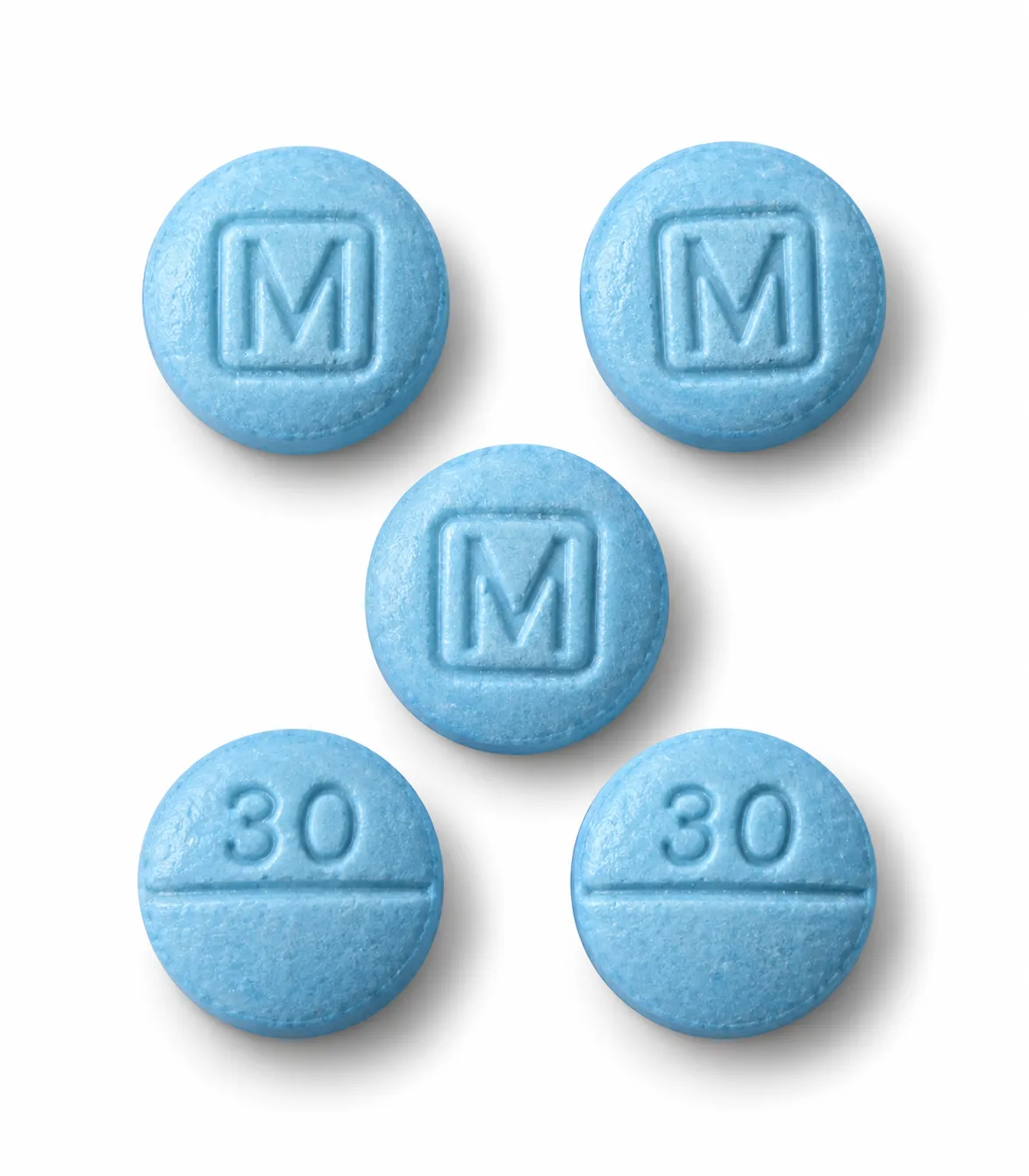
Authentic M 30 Tablet (Mallinckrodt)
Microscopic Morphological Specifications of Authentic Mallinckrodt M30
Legitimate, pharmaceutical-grade Oxycodone 30mg M30 tablets (NDC 0406-8530-01) conform to exact physical dimensions registered with the FDA National Drug Code directory:
- Form Factor / Geometry: Small, round, compressed biconvex oral tablet.
- Coloration & Chromatic Profile: Very pale light blue (often described in clinical literature as “ice blue” or “baby blue”). The pigment (FD&C Blue No. 2 Aluminum Lake) is uniformly incorporated into the microcrystalline cellulose matrix during high-shear wet granulation, resulting in zero surface mottling, dark blue specks, or chalky white marbling.
- Obverse Punch Debossing: The signature Mallinckrodt corporate trademark consisting of an uppercase letter
Menclosed within a square box outline. The internal arches of the “M” have subtle rounding, and the outer box possesses clean 90-degree outer corners stamped at a uniform depth of 0.25 mm. - Reverse Punch Debossing & Scoreline: Precision debossing of the numeral
30bisected horizontally by a deep, functional V-shaped scoreline. The scoreline is mechanically engineered to allow clean, symmetrical splitting into two 15 mg halves when fractionated doses are clinically required. - Dimensional Metrics: Diameter: 6.00 mm (± 0.08 mm); Thickness: 3.00 mm (± 0.10 mm); Mean Finished Tablet Mass: 98.0 mg to 102.5 mg.
- Perimeter Architecture: Defined chamfered (beveled) peripheral rim designed to prevent tablet chipping during automated bottling and ensure frictionless esophageal transit.
- Fracture Hardness & Friability: Exhibits a diametral crushing strength of 5.5 to 8.5 Strong-Cobb Units (SCU) and a USP <1216> tablet friability of < 0.5%, yielding a distinctive, audible “crisp snap” when fractured by hand rather than crumbling into powder.
FDA Orange Book Therapeutic Equivalence Matrix: 30mg Oxycodone IR Generics
The FDA Approved Drug Products with Therapeutic Equivalence Evaluations (Orange Book) assigns an AB rating to multiple domestic generic manufacturers of single-entity 30mg immediate-release oxycodone hydrochloride tablets, certifying bioequivalence to the original reference listed drug (Roxicodone 30mg). The table below details the physical distinguishing characteristics across authorized US manufacturers:
| Brand / Generic Designation | Manufacturer / Labeler | Physical Appearance | Imprint Face 1 / Face 2 | FDA Orange Book Rating |
|---|---|---|---|---|
| Mallinckrodt M30 | Mallinckrodt (SpecGx LLC) | Light Blue, Round, Biconvex | M (in square box) / 30 (Scored) | AB (Bioequivalent to Roxicodone) |
| KVK-Tech K9 | KVK-Tech Inc. | Light Blue, Round, Biconvex | K on left of score, 9 on right / Plain | AB Bioequivalent |
| Actavis A215 | Actavis Elizabeth / Teva | Light Blue, Round | A 215 / Scored | AB Bioequivalent |
| Alvogen ALG 265 | Alvogen Pine Brook Inc. | Light Blue, Round | A 265 / Scored | AB Bioequivalent |
| Camber T189 | Camber Pharmaceuticals Inc. | Yellow, Round, Small | T 189 / Scored | AB Bioequivalent |
| Rhodes RP 30 | Rhodes Pharmaceuticals LP | White, Round, Thick | RP / 30 | AB Bioequivalent |
2. Neurobiology & Molecular Mechanism of Action (Mu-Opioid Receptor Agonism & Dorsal Horn Gating)
Oxycodone (4,5α-epoxy-14-hydroxy-3-methoxy-17-methylmorphinan-6-one) is a semisynthetic phenanthrene-derived opioid analgesic synthesized chemically from the natural opium alkaloid thebaine. It functions as a full agonist with high selectivity for the μ-opioid receptor (MOR), while exhibiting lower affinity for κ-opioid (KOR) and δ-opioid (DOR) receptor subtypes.
Intracellular G-Protein Signaling Dynamics
The molecular cascade initiated by oxycodone binding to the 7-transmembrane domain mu-opioid receptor involves classical heterotrimeric G-protein coupling ($G_i / G_o$):
- Adenylyl Cyclase Inhibition: Upon ligand binding, the $G_{alpha i}$ subunit dissociates from the receptor and directly inhibits adenylyl cyclase, causing an acute drop in intracellular cyclic adenosine monophosphate (cAMP) concentrations and attenuating protein kinase A (PKA) downstream signaling.
- Presynaptic Voltage-Gated Calcium Channel Closure: The dissociated $G_{beta gamma}$ heterodimer directly binds to presynaptic N-type and P/Q-type voltage-gated calcium channels ($Ca_v2.2$). By suppressing calcium influx into primary afferent nociceptive nerve terminals in Rexed laminae I and II of the spinal dorsal horn, oxycodone completely halts the exocytotic release of excitatory neurotransmitters—specifically Substance P, Glutamate, and Calcitonin Gene-Related Peptide (CGRP).
- Postsynaptic Potassium Channel Activation (Hyperpolarization): Simultaneously, $G_{beta gamma}$ complexes open G-protein-coupled inwardly rectifying potassium channels (GIRK / $K_{ir}3$). The resulting rapid efflux of potassium ions from the postsynaptic dorsal horn projection neurons shifts resting membrane potential from -70 mV toward -90 mV. This profound hyperpolarization renders the spinothalamic transmission neurons refractory to ascending nociceptive action potentials.
- Descending Inhibitory Pathway Disinhibition: Within the periaqueductal gray (PAG) and rostral ventromedial medulla (RVM), oxycodone binds MORs located on inhibitory GABAergic interneurons. By hyperpolarizing these GABAergic cells, oxycodone “disinhibits” descending noradrenergic and serotonergic bulbospinal tracts, activating inhibitory projections to the spinal cord that further dampen ascending nociceptive traffic.
Clinical Significance of Pure Opioid vs. Acetaminophen Combinations
In contrast to fixed-dose combination products such as Percocet (Oxycodone/APAP 10mg/325mg) or Watson 853 (Hydrocodone/APAP 10mg/325mg), the Mallinckrodt M30 tablet contains zero acetaminophen. This absence of APAP removes the 3,250mg to 4,000mg daily toxic hepatotoxicity ceiling dictated by paracetamol metabolism. Consequently, clinicians managing severe, progressive malignant cancer pain can titrate oxycodone dosages upward to overcome pharmacodynamic tolerance without risking lethal hepatic glutathione depletion or acute liver failure. However, this same pharmacological uncoupling removes the automatic “self-limiting” barrier against opioid overconsumption, dramatically heightening the risk of fatal medullary respiratory depression when abused or mismanaged.
3. Clinical Pharmacokinetics & Hepatic CYP450 Clearance Dynamics
Oxycodone exhibits a superior and far more predictable pharmacokinetic profile than oral morphine, characterized by robust gastrointestinal absorption, high oral bioavailability, and dual-phase hepatic clearance.
Absorption, Distribution & Food Effects
Following oral ingestion of an authentic M30 immediate-release tablet, disintegration occurs in gastric fluid within 5 to 10 minutes:
- Oral Bioavailability ($F$): Ranges from 60% to 87% (mean ~70%). This represents a major clinical advantage over oral morphine, which suffers from extensive first-pass hepatic glucuronidation resulting in an erratic bioavailability of only 20% to 40%.
- Time to Peak Concentration ($T_{max}$): Peak plasma concentrations ($C_{max}$) are achieved rapidly within 1.0 to 1.4 hours under fasting conditions. Initial analgesia onset is documented within 20 to 30 minutes.
- Peak Concentration ($C_{max}$): A single 30 mg oral dose in healthy adult volunteers yields a mean $C_{max}$ of approximately 34 to 42 ng/mL.
- Volume of Distribution ($V_d$): Approximately 2.6 L/kg at steady-state, reflecting extensive tissue penetration across the blood-brain barrier into cerebral parenchyma and spinal cord myelin. Plasma protein binding is low to moderate at 45%, primarily bound to human serum albumin.
- Food Influence: Administration with a high-fat meal does not decrease the total extent of absorption (Area Under the Curve, AUC remains unaffected); however, it modestly delays $T_{max}$ by approximately 20 to 30 minutes and increases peak concentration ($C_{max}$) by approximately 15% to 20%.
Hepatic Biotransformation: CYP3A4 & CYP2D6 Divergence
Oxycodone clearance relies heavily on hepatic Phase I microsomal oxidative metabolism via two distinct cytochrome P450 isoenzymes, followed by Phase II glucuronidation:
- The Major Pathway (CYP3A4 / CYP3A5 — ~80% of dose): Oxycodone undergoes N-demethylation mediated primarily by CYP3A4 to yield noroxycodone. Noroxycodone exhibits minimal analgesic activity (possessing less than 1% of the parent drug’s intrinsic mu-opioid potency) and does not cross the blood-brain barrier in clinically meaningful concentrations. Consequently, CYP3A4 functions as the critical “metabolic detoxifying sink” for circulating oxycodone.
- The Minor Active Pathway (CYP2D6 — ~10% of dose): Oxycodone undergoes O-demethylation catalyzed by CYP2D6 to form oxymorphone. Oxymorphone is a fiercely potent mu-opioid agonist possessing 14-fold higher MOR affinity and approximately 3-fold higher analgesic potency than parent oxycodone. However, because oxymorphone accounts for less than 10% of total circulating metabolites and its formation is tightly regulated, parent oxycodone remains the primary driver of clinical analgesia in most patients.
- Secondary Minor Pathways: Both noroxycodone and oxymorphone undergo secondary metabolism into noroxymorphone (mediated by CYP2D6 and CYP3A4, respectively). Oxycodone is also subjected to 6-ketoreduction into α- and β-oxycodol metabolites.
- Phase II Glucuronidation & Renal Elimination: Metabolites are conjugated with glucuronic acid via UDP-glucuronosyltransferases (UGT2B7) into inactive glucuronides and eliminated via glomerular filtration. Less than 10% of a dose is excreted unchanged in the urine.
- Elimination Half-Life ($t_{1/2}$): The mean apparent elimination half-life of immediate-release oxycodone is 3.2 to 4.5 hours. In patients with severe renal impairment ($CrCl < 30 text{ mL/min}$), the half-life is prolonged to 5.7 hours, requiring dosage interval extensions.
| Opioid Analgesic Formulation | Oral Bioavailability ($F$) | Peak Time ($T_{max}$) | Elimination $t_{1/2}$ | Primary Clearance Enzymes | Active Metabolites |
|---|---|---|---|---|---|
| Oxycodone IR (M30) | 60% – 87% | 1.0 – 1.4 hours | 3.2 – 4.5 hours | CYP3A4 (80%), CYP2D6 (10%) | Oxymorphone (minor AUC, 14x MOR) |
| Oxycodone ER (Oxy 80mg) | 60% – 87% | 4.5 – 6.0 hours (biphasic) | 8.0 – 12.0 hours (apparent) | CYP3A4, CYP2D6 | Oxymorphone |
| Hydrocodone IR (Watson 853) | 70% – 85% | 1.3 – 1.7 hours | 3.8 – 4.5 hours | CYP2D6, CYP3A4 | Hydromorphone (10x MOR affinity) |
| Oral Morphine IR | 20% – 40% (erratic) | 0.75 – 1.2 hours | 2.0 – 3.0 hours | UGT2B7, UGT1A1 (Glucuronidation) | M6G (Analgesic), M3G (Neurotoxic) |
| Oral Hydromorphone (Dilaudid) | 24% – 50% | 0.5 – 1.0 hours | 2.3 – 3.0 hours | UGT2B7 | H3G (Neurotoxic, no analgesia) |
| Tapentadol (Aspadol 100mg) | 32% | 1.25 hours | 4.0 hours | UGT1A6, UGT1A9 (Non-CYP) | None (Zero active metabolites) |
4. Clinical Indications, Severe Breakthrough Pain Titration & Dosing Guidelines
Immediate-release single-entity oxycodone is FDA-approved for the management of acute and chronic pain severe enough to require an opioid analgesic and for which alternative treatments (e.g., non-opioid multimodal analgesics, physical therapy, NSAIDs) have proven inadequate or are contraindicated.
The Strict Role of the 30mg Tablet: Opioid-Tolerant Populations Only
The FDA Prescribing Information and CDC Guidelines explicitly mandate that single-entity 30 mg oxycodone tablets are strictly restricted to opioid-tolerant patients. Administering an authentic 30 mg oxycodone tablet to an opioid-naïve individual can cause catastrophic, fatal respiratory arrest.
FDA Definition of Opioid Tolerance
Patients are considered opioid-tolerant ONLY if they have been taking, for at least 7 consecutive days, a minimum of:
• 60 mg oral morphine daily, OR
• 30 mg oral oxycodone daily, OR
• 8 mg oral hydromorphone daily, OR
• 25 mcg/hour transdermal fentanyl, OR
• An equianalgesic dose of another opioid analgesic.
Prescribing Protocols Across Patient Cohorts
- Opioid-Naïve Starting Regimen: For opioid-naïve patients presenting with severe acute post-operative or traumatic pain, therapy must NEVER start with 30 mg. Initiate at 5 mg to 10 mg orally every 4 to 6 hours as needed. Doses may be titrated gradually based on pain severity and tolerability.
- Severe Breakthrough Cancer Pain Regimen: In oncology patients maintained on continuous baseline long-acting opioids (such as Oxycodone ER 80mg or transdermal fentanyl), breakthrough pain episodes are managed using immediate-release Oxycodone M30. The standard breakthrough rescue dose is calculated as 10% to 15% of the total 24-hour baseline opioid dose, administered every 4 hours PRN.
- Renal & Hepatic Impairment Adjustments: In patients with creatinine clearance < 60 mL/min or Child-Pugh Class A/B hepatic insufficiency, initial doses must be reduced by 50% (e.g., 2.5 mg to 5 mg), with titration intervals doubled to allow complete clearance and avoid dangerous drug accumulation.
5. CDC Equianalgesic Conversion & Cross-Tolerance Rotation Matrix (MME Calculations)
The Centers for Disease Control and Prevention (CDC) Clinical Practice Guideline for Prescribing Opioids utilizes Morphine Milligram Equivalents (MME) as a standardized metric to quantify opioid dosage, risk of overdose, and rotation parameters.
The 1.5x Conversion Multiplier
Oral oxycodone carries an official CDC conversion multiplier of 1.5. This means that 1 mg of oral oxycodone delivers analgesic potency and respiratory burden equivalent to 1.5 mg of oral morphine:
$$ ext{Single M30 Tablet (30 mg)} = 30 imes 1.5 = mathbf{45 ext{ MME}}$$
$$ ext{Twice Daily M30 (60 mg/day)} = 60 imes 1.5 = mathbf{90 ext{ MME/day}} ext{ (CDC High-Risk Threshold)}$$
Under the 2022 CDC guidelines, escalating past 50 MME/day substantially increases overdose risk without delivering proportional pain reduction. Dosages approaching or exceeding 90 MME/day mandate intensive clinical monitoring, written treatment agreements, frequent pill counts, mandatory co-prescribing of take-home naloxone, and specialist pain management consultation.
| Opioid Agent | CDC MME Factor | Equianalgesic Dose to Oxycodone 30mg | Rotation Dose (with 30% Cross-Tolerance Reduction) | Clinical Rotation Remarks |
|---|---|---|---|---|
| Oral Oxycodone (M30) | 1.5 | 30 mg (45 MME) | Baseline Reference | Standard reference single-entity tablet. |
| Oral Morphine | 1.0 | 45 mg | 30 mg / day | Lower oral bioavailability requires higher milligram dosing. |
| Oral Hydrocodone | 1.0 | 45 mg | 30 mg / day | Usually co-formulated with APAP (e.g., 3x Norco 10/325mg). |
| Oral Hydromorphone (Dilaudid) | 4.0 | 11.25 mg | 8 mg / day | High potency; divide into 2mg to 4mg every 4 to 6 hours. |
| Oral Oxymorphone (Opana) | 3.0 | 15 mg | 10 mg / day | Absorption dramatically increased by high-fat meals. |
| Oral Tapentadol (Aspadol) | 0.4 | 112.5 mg | 75 – 100 mg / day | Dual MOR/NRI mechanism spares gastrointestinal motility. |
| Transdermal Fentanyl Patch | 2.4 (mcg/hr factor) | ~18.75 mcg/hr | 12.5 mcg/hr patch | Strictly indicated for chronic stable baseline pain only. |
Clinical Opioid Rotation Rule: When rotating from oxycodone to an alternative opioid agent, clinicians must calculate the equianalgesic dose and then apply a mandatory 25% to 50% dose reduction to account for incomplete cross-tolerance across different mu-receptor sub-conformations.
6. Physical Dependence, Clinical Discontinuation & Ashton-Aligned Step-Down Taper Protocols
Physical dependence is an inevitable physiological adaptation resulting from continuous opioid exposure exceeding two to three weeks. Abrupt cessation of 30 mg oxycodone precipitates severe, acute autonomic withdrawal within 6 to 12 hours. Safe clinical discontinuation mandates a structured, compassionate step-down taper aligned with Ashton neuro-stabilization protocols.
The 12-Week Step-Down Taper Schedule (Baseline: 60mg/day [2x M30])
The following protocol outlines a controlled outpatient deceleration schedule reducing the total daily dose by 10% to 15% every 1 to 2 weeks, utilizing tablet splitting along the precision M30 scoreline:
| Taper Phase | Daily Dose Reduction | Total Daily Oxycodone Dose | Fractionated Dosing Schedule | Clinical Management & Monitoring |
|---|---|---|---|---|
| Baseline | 0% | 60 mg / day (90 MME) | 1 whole M30 tab (30mg) twice daily (q12h) | Assess COWS score; establish therapeutic alliance. |
| Weeks 1 – 2 | 16.7% | 50 mg / day (75 MME) | Morning: 1/2 tab + 1/3 tab (~25mg); Evening: 25mg | Mild restlessness; monitor sleep patterns. |
| Weeks 3 – 4 | 25% | 45 mg / day (67.5 MME) | Morning: 1/2 tab + 1/4 tab (~22.5mg); Evening: 22.5mg | Transition to scored halves; initiate adjuvant sleep support. |
| Weeks 5 – 6 | 33.3% | 40 mg / day (60 MME) | Morning: 20mg; Evening: 20mg | Plateau stabilization phase; confirm COWS < 5. |
| Weeks 7 – 8 | 50% | 30 mg / day (45 MME) | Morning: 1/2 tab (15mg); Evening: 1/2 tab (15mg) | Major milestone: daily dose drops to single whole M30 equivalent. |
| Weeks 9 – 10 | 66.7% | 20 mg / day (30 MME) | Morning: 10mg; Evening: 10mg (or switch to 5mg tabs) | Add clonidine if autonomic tachycardia or sweating emerges. |
| Weeks 11 – 12 | 83.3% | 10 mg / day (15 MME) | Morning: 5mg; Evening: 5mg | Final reduction; alternate every other day prior to discontinuation. |
Pharmacological Adjuncts for Withdrawal Symptom Attenuation
To minimize autonomic rebound and psychological distress during dose reductions, clinicians routinely employ targeted non-opioid pharmacotherapies:
- Clonidine (0.1 mg to 0.2 mg PO q8h PRN): Centrally acting α2-adrenergic agonist that suppresses locus coeruleus noradrenergic hyperactivation, effectively relieving diaphoresis, tachycardia, tremors, and piloerection (“gooseflesh”). Hold if systolic BP < 90 mmHg.
- Gabapentin (300 mg to 600 mg PO tid): Binds the α2δ-1 subunit of voltage-gated calcium channels to alleviate hyperalgesia, restless leg syndrome (RLS), and neuropathic dysphoria.
- Loperamide (2 mg to 4 mg PO PRN): Peripheral mu-opioid agonist that controls opioid-withdrawal diarrhea and intestinal hypermotility without crossing the blood-brain barrier at therapeutic doses.
- Ondansetron (4 mg to 8 mg PO q8h PRN): 5-HT3 serotonin receptor antagonist for acute nausea and emesis without sedating the patient.
- Hydroxyzine Pamoate (25 mg to 50 mg PO qhs PRN): First-generation H1 antagonist that relieves somatic anxiety, motor agitation, and insomnia.
7. Forensic Counterfeit Differentiation: Authentic Mallinckrodt M30 vs. Lethal Illicit Fentanyl “Dirty 30s”
The American illicit drug market is currently inundated with counterfeit tablets pressed to mimic Mallinckrodt M30s. Widely referred to on street markets as “Dirty 30s”, “Blues”, or “Mexis”, these deadly imitations contain zero oxycodone. Instead, they are formulated with varying, lethal quantities of illicit synthetic fentanyl (ranging from 0.5 mg to over 5.0 mg per tablet—where 2.0 mg is universally considered a lethal dose for an adult), novel synthetic opioids (nitazenes such as isotonitazene and metonitazene), and the potent veterinary non-opioid α2-agonist xylazine (“tranq”).
| Forensic Metric | Authentic Pharmaceutical Mallinckrodt M30 | Illicit Counterfeit Fentanyl Press (“Dirty 30”) | Forensic Inspection Protocol |
|---|---|---|---|
| Color & Chromatic Uniformity | Very pale “ice blue” or light sky blue; perfectly uniform color distribution throughout tablet core. | Bright cyan, vibrant turquoise, or greenish-blue; frequently displays dark blue specks, white marbling, or chalky spots. | Stereomicroscopy under 40x magnification reveals pigment homogeneity. |
| The “Box-M” Trademark Punch | Crisp, razor-sharp debossing. The “M” possesses gentle curved arches at its vertex and crisp 90° square box edges. | The “M” frequently has sharp V-notches, shallow or uneven stamping, or an asymmetrical, off-center box border. | Depth profilometry confirms consistent 0.25mm laser-tooled punch depth. |
| Reverse Scoreline & “30” Debossing | Deep, uniform V-shaped bisect score. Numerals “3” and “0” have clean serif terminals and are centered with equal clearance. | Shallow, crooked, or incomplete scoreline. Numerals appear rounded, smudged, or stamped with irregular spacing. | Inspect alignment against horizontal midline. |
| Tablet Hardness & Snap Test | Extremely firm (5.5–8.5 SCU). Clean, audible “snap” when broken. Minimal powder or crumbly debris produced. | Chalky and fragile; easily crushed between fingers or leaves blue powder residue on blister surfaces and fingertips. | Manual fracture resistance test; authentic tablets resist crumbling. |
| Dimensions & Weight | Diameter: 6.00 mm (± 0.08 mm); Mass: 98.0 mg to 102.5 mg. Tolerances controlled within cGMP specs. | Variable diameter (5.8 mm to 6.4 mm); irregular thickness; total mass varies widely from 70 mg to 140 mg. | Digital micro-caliper and analytical balance verification. |
| Chemical Content | Oxycodone HCl (30.0 mg ± 1.5 mg) with USP excipients. Zero contaminants. | Fentanyl (0.5mg–5.0mg+), 4-ANPP, Nitazenes, Xylazine, Acetaminophen chalk binders. Zero Oxycodone. | HPLC-MS / GC-MS confirmatory laboratory analysis. |
CRITICAL HARM REDUCTION NOTICE: THE “CHOCOLATE CHIP COOKIE” EFFECT
Because illicit clandestine laboratories blend fentanyl powder into binder chalk using rudimentary cement mixers or kitchen blenders, fentanyl is never evenly distributed. In forensic toxicology, this is termed the “chocolate chip cookie effect”: one counterfeit tablet may contain a non-lethal microgram trace of fentanyl, while another pressed from the exact same batch contains a massive 3,000 mcg hotspot capable of causing instant respiratory arrest. Never ingest unverified street tablets. Only obtain medications from verified domestic pharmaceutical fulfillment channels.
8. FDA Boxed Warnings, Drug Interactions & Overdose Toxicology
Oxycodone hydrochloride tablets carry the highest tier of pharmaceutical caution mandated by federal law. The FDA Black Box Warning enforces strict prescribing boundaries:
FDA BOXED WARNING: ADDICTION, ABUSE, RESPIRATORY DEPRESSION & FATAL INTERACTIONS
- Addiction, Abuse, and Misuse: Oxycodone exposes patients and other users to the risks of opioid addiction, abuse, and misuse, which can lead to overdose and death. Assess each patient’s risk prior to prescribing and monitor regularly.
- Life-Threatening Respiratory Depression: Serious, life-threatening, or fatal respiratory depression may occur with the use of oxycodone, even when taken as recommended. Carbon dioxide ($CO_2$) sensitivity within the brainstem respiratory center is progressively blunted. The risk is greatest during treatment initiation or following dose escalation.
- Accidental Ingestion: Accidental ingestion of even one tablet of Oxycodone 30mg, especially by pediatric patients, can result in a fatal overdose of oxycodone.
- Neonatal Opioid Withdrawal Syndrome (NOWS): Prolonged maternal use of oxycodone during pregnancy can result in NOWS, which may be life-threatening if not recognized and managed according to neonatology protocols.
- Cytochrome P450 3A4 Interaction Hazards: Concomitant use of oxycodone with CYP3A4 inhibitors (e.g., ketoconazole, clarithromycin, erythromycin, ritonavir, grapefruit juice) can dramatically increase oxycodone plasma concentrations, prolong opioid adverse reactions, and precipitate fatal respiratory depression. Discontinuation of concomitant CYP3A4 inducers (e.g., rifampin, carbamazepine, phenytoin, St. John’s Wort) may also escalate oxycodone levels.
- Risks from Concomitant Use with Benzodiazepines or Other CNS Depressants: Concurrent administration of opioids with benzodiazepines (such as Xanax / Alprazolam, Bensedin / Diazepam, Ativan / Lorazepam), skeletal muscle relaxants (Soma / Carisoprodol), or alcohol causes profound additive sedation, respiratory depression, coma, and death.
Acute Opioid Overdose Toxidrome & Naloxone Titration Protocol
Severe acute oxycodone intoxication is diagnosed by the pathognomonic opioid toxidrome triad:
- Profound CNS Depression: Stupor progressing to flaccidity, loss of protective airway reflexes, and unresponsiveness/deep coma.
- Life-Threatening Respiratory Depression: Severe bradypnea (< 6 to 8 breaths per minute), shallow tidal volume, Cheyne-Stokes respirations, peripheral and central cyanosis, and respiratory arrest.
- Pinpoint Pupillary Miosis: Extreme symmetrical pupillary constriction (≤ 1 mm). Note: Terminal anoxia may cause pupils to dilate (mydriasis).
Emergency Toxicology Management: Immediately establish an open airway, ventilate using a bag-valve-mask with supplemental 100% oxygen, and administer the competitive mu-opioid receptor antagonist Naloxone hydrochloride:
- Intranasal Narcan: Administer 4 mg single-dose spray into one nostril. If spontaneous breathing is not re-established within 2 to 3 minutes, administer a second 4 mg spray into the alternate nostril.
- Intravenous Naloxone: Administer 0.4 mg to 2.0 mg IV push. In opioid-dependent individuals, titrate in 0.1 mg to 0.2 mg increments every 2 minutes to restore adequate spontaneous ventilation (> 10 to 12 breaths/min) without precipitating violent acute precipitated opioid withdrawal.
- The Critical “Renarcotization” Window: The elimination half-life of naloxone is 30 to 90 minutes, whereas the elimination half-life of oxycodone is 3.2 to 4.5 hours. As naloxone dissociates and is cleared, the patient will slip back into fatal respiratory arrest (“renarcotization”). A minimum continuous clinical observation window of 4 to 6 hours post-resuscitation in an emergency department is mandatory.
9. Commercial Sourcing, Authentic Pharmaceutical Verification & Domestic US Dispensing Standards
The procurement of authentic Schedule II opioid analgesics requires an uncompromising commitment to supply-chain integrity, regulatory compliance, and analytical testing. With illicit counterfeits flooding unregulated internet portals, VitalRxCare establishes the gold standard in legitimate domestic pharmaceutical dispensing.
Quality Assurance & Analytical Laboratory Testing
Every batch of Mallinckrodt M30 Oxycodone supplied through VitalRxCare undergoes rigorous, multi-tier pharmaceutical verification:
- HPLC-MS Purity Assay: High-Performance Liquid Chromatography coupled with Mass Spectrometry confirms a minimum active ingredient potency of 99.8%, verifying precise 30.0 mg oxycodone hydrochloride content per finished tablet.
- Dissolution Uniformity: USP <711> dissolution profile testing confirms >85% active drug release within 30 minutes in simulated gastric fluid, verifying bioequivalence to reference listed drug standards.
- Zero-Contamination Guarantee: Mass spectrometry screens ensure 100% absence of synthetic adulterants, including illicit fentanyl analogs, nitazenes, xylazine, tramadol analogs, and heavy metal binders.
USPS Priority Express Domestic Logistics
Unlike international rogue pharmacies that dispatch unvetted parcels through customs inspection checkpoints (resulting in high confiscation rates, damaged product, or chemical degradation), VitalRxCare operates exclusively via domestic US fulfillment centers:
- 100% Domestic US Shipping: Orders are dispatched from licensed domestic facilities, completely bypassing international border control and customs clearance.
- USPS Priority 2–3 Day Delivery: Every order includes rapid 2-to-3 business day tracked transit with end-to-end USPS tracking numbers issued within 24 hours of clinical verification.
- Discreet Tamper-Evident Packaging: Finished pharmaceutical units are vacuum-sealed in opaque, moisture-barrier, tamper-evident blister packaging that preserves chemical stability and protects patient confidentiality.
🔗 Related Clinical Pharmacotherapy Monographs & Ordering Links:
- Order Authentic Immediate-Release Oxycodone: Buy Mallinckrodt M30 (Oxycodone IR 30mg) Online
- Order Extended-Release Continuous Pain Control: Buy OxyContin 80mg Green (Oxycodone ER 80mg) Online
- Combination Oxycodone Formulation: Buy Percocet E712 (Oxycodone/APAP 10/325mg) Online
- Hydrocodone Alternative: Buy Watson 853 (Hydrocodone/APAP 10/325mg) Online
- Bioequivalent Hydrocodone Generic: Buy Mallinckrodt M367 (Hydrocodone/APAP 10/325mg) Online
- Dual-Action Neuropathic Analgesic: Buy Aspadol 100mg (Tapentadol HCl) Online
- Mild-to-Moderate Centrally Acting Analgesic: Buy Tramadol 100mg (Citra) Online
- Comprehensive Pillar Guide: Buy Painkillers Online: Tramadol, Tapentadol & Opioid Prescribing Compendium
- Clinical Hub: Browse All VitalRxCare Evidence-Based Clinical Monographs
10. Frequently Asked Questions (Clinical & Forensic FAQ)
What exact active ingredients and strengths are contained in an authentic M30 pill?
Each authentic Mallinckrodt M30 tablet contains exactly 30 mg of pure oxycodone hydrochloride (a semisynthetic phenanthrene mu-opioid receptor agonist). It contains zero acetaminophen (Tylenol), zero aspirin, and zero ibuprofen. Inactive pharmaceutical excipients include microcrystalline cellulose, lactose monohydrate, stearic acid, and FD&C Blue No. 2 Aluminum Lake (providing its signature pale light blue color).
Is an authentic Mallinckrodt M30 pill light blue or dark blue?
An authentic pharmaceutical Mallinckrodt M30 tablet is very pale light blue (often described as “ice blue” or “baby blue”) with a perfectly uniform, smooth, non-glossy matte finish. It is never vibrant dark blue, turquoise, or greenish-blue. Any tablet displaying bright cyan color, dark speckling, or white powdery marbling is an illicit counterfeit press containing fentanyl.
What is the clinical difference between Oxycodone 30mg (M30) and Percocet?
The fundamental difference is the presence of acetaminophen. Percocet is a fixed-dose combination tablet containing oxycodone (typically 2.5mg, 5mg, 7.5mg, or 10mg) formulated alongside 325 mg of acetaminophen. In contrast, M30 is single-entity oxycodone (30mg) without acetaminophen. Percocet is restricted by a 4,000 mg/day liver toxicity ceiling for acetaminophen, whereas M30 has no APAP ceiling but carries a much higher risk of opioid tolerance, abuse, and respiratory suppression.
How long does Oxycodone M30 take to work, and how long does pain relief last?
Following oral administration on an empty stomach, initial analgesic relief begins within 20 to 30 minutes, reaching peak plasma concentration ($T_{max}$) within 1.0 to 1.4 hours. Clinically effective pain relief typically persists for 4 to 6 hours. Food intake (especially high-fat meals) slightly delays $T_{max}$ by approximately 20 to 30 minutes without decreasing total drug absorption.
Can an opioid-naïve person take an Oxycodone 30mg M30 tablet safely?
No. Administering 30 mg of immediate-release oxycodone to an opioid-naïve individual is medically dangerous and potentially fatal. Under FDA regulations, 30 mg single-entity tablets are strictly indicated for opioid-tolerant patients who have received at least 60 mg oral morphine equivalents daily for at least one week. Opioid-naïve individuals must initiate therapy at 5 mg to 10 mg every 4 to 6 hours.
How many Morphine Milligram Equivalents (MME) are in one M30 tablet?
Under CDC clinical guidelines, oral oxycodone has an equianalgesic conversion factor of 1.5. Therefore, a single 30 mg tablet provides 45 MME ($30 times 1.5 = 45$). Taking two 30 mg tablets daily equates to 90 MME/day, reaching the threshold where CDC guidelines mandate rigorous overdose risk mitigation and naloxone co-prescribing.
How do counterfeit “Dirty 30s” differ from authentic pharmaceutical M30 pills?
Counterfeit “Dirty 30s” are illicit tablets pressed with fentanyl, nitazenes, and xylazine rather than oxycodone. They often crumble easily between the fingers, produce powdery residue, exhibit mottled dark turquoise or chalky green coloring, have asymmetrical or shallow “M” stamping, and feature crooked scorelines. Authentic Mallinckrodt M30 tablets have high mechanical hardness (5.5–8.5 SCU), snap crisply without crumbling, and have exact 6.00 mm diameter tolerances.
What happens if someone mixes Oxycodone M30 with alcohol or benzodiazepines?
Combining oxycodone with alcohol, benzodiazepines (e.g., Xanax, Valium, Ativan, Klonopin), or muscle relaxants carries an FDA Black Box Warning. Alcohol and benzodiazepines synergistically potentiate opioid-induced respiratory depression by simultaneously acting on GABA-A receptors while oxycodone blunts brainstem hypercapnic drive. This combination is the leading cause of poly-substance fatal overdoses, causing rapid respiratory arrest and hypoxic brain death.
Why is Naloxone (Narcan) monitoring required for 4 to 6 hours after overdose reversal?
Naloxone is a short-acting competitive mu-opioid antagonist with an elimination half-life of only 30 to 90 minutes. In contrast, immediate-release oxycodone has an elimination half-life of 3.2 to 4.5 hours. Once naloxone wears off and clears the receptor, residual circulating oxycodone re-binds the mu-opioid receptors, precipitating recurrent fatal respiratory depression (“renarcotization”). Continuous emergency medical monitoring for at least 4 to 6 hours is mandatory.
How does VitalRxCare guarantee the authenticity and legal delivery of Oxycodone M30?
VitalRxCare sources exclusively from licensed cGMP-certified domestic US pharmaceutical manufacturers with 99.8% HPLC analytical purity certification, guaranteeing 100% genuine oxycodone without adulterants or fentanyl. All orders are fulfilled through domestic US pharmacy hubs and shipped via USPS Priority 2–3 Day tracked delivery in tamper-evident, child-resistant sealed blister packaging, eliminating customs delays and confiscation risks.
11. Peer-Reviewed Literature & Authoritative Clinical Citations
- U.S. Food and Drug Administration (FDA). (2024). Roxicodone (Oxycodone Hydrochloride Tablets, USP) Prescribing Information & Boxed Warning. FDA DailyMed Repository, National Library of Medicine.
- Dowell, D., Ragan, K. R., Jones, C. M., Baldwin, G. T., & Chou, R. (2022). CDC Clinical Practice Guideline for Prescribing Opioids for Pain — United States, 2022. MMWR Recommendations and Reports, 71(3), 1–95.
- Lalovic, B., Phillips, B., Risler, L. L., Sengupta, F. H., & Shen, D. D. (2004). Quantitative Contribution of Cytochrome P450 2D6 and 3A to the Systemic Clearance and O-Demethylation of Oxycodone in Humans. Drug Metabolism and Disposition, 32(4), 447–454.
- Poyhia, R., Seppala, T., Olkkola, K. T., & Kalso, E. (1992). The Pharmacokinetics and Metabolism of Oxycodone After Intramuscular and Oral Administration. British Journal of Clinical Pharmacology, 33(6), 617–621.
- Trescot, A. M., Datta, S., Lee, M., & Hansen, H. (2008). Opioid Pharmacology. Pain Physician, 11(2 Suppl), S133–S153.
- Drug Enforcement Administration (DEA) Diversion Control Division. (2024). Special Report: Counterfeit Prescription Pills Containing Fentanyl and Methamphetamine. U.S. Department of Justice.
- Heit, H. A., & Gourlay, D. L. (2008). Urine Drug Testing in Pain Medicine. Journal of Pain and Symptom Management, 35(3), 329–337.
- O’Brien, C. P. (2005). Benzodiazepine and Opioid Withdrawal Syndromes: Mechanisms and Management. The Journal of Clinical Psychiatry, 66(Suppl 2), 28–33.
- Ashton, C. H. (2002). The Ashton Manual: Benzodiazepines and Opioid Discontinuation Protocols. Newcastle University Institute of Neuroscience.
- American Society of Health-System Pharmacists (ASHP). (2024). Oxycodone Hydrochloride AHFS Clinical Drug Information Monograph. Bethesda, MD.
- Goodman, L. S., Gilman, A., Brunton, L. L., Hilal-Dandan, R., & Knollmann, B. C. (2023). Goodman & Gilman’s: The Pharmacological Basis of Therapeutics (14th ed.). McGraw Hill.
- Centers for Disease Control and Prevention (CDC). (2024). Opioid Overdose Prevention and Naloxone Administration Protocol. Atlanta, GA: U.S. Department of Health and Human Services.
Related Patient Services & Verified Care
Every prescription order is verified by a licensed pharmacist in strict adherence to FDA BeSafeRx protocols.