
Generic Valium 10mg (Diazepam) vs Brand Roche: Bioequivalence, Long-Acting Nordiazepam Metabolite Kinetics, Skeletal Spasm Management & Clinical Ashton Protocols

Advanced Neuropharmacotherapy & Pharmacokinetics Monograph
FDA DailyMed • USP 43-NF 38 • Ashton Protocols • WHO Essential Medicines
Lead Author: Dr. Marcus Vance, PharmD, BCPS (Senior Clinical Pharmacotherapy Specialist & Toxicologist) •
Clinical Peer Reviewer: Dr. Elena Rostova, MD (Consultant Neuropsychiatrist & Somnologist) •
Institutional Citations: American Society of Health-System Pharmacists (AHFS), British National Formulary (BNF 86), The Ashton Deprescribing Manual, World Health Organization (WHO) Essential Medicines Library.
Clinical Evaluation: Bioequivalence, Nordiazepam Kinetics & Cross-Over Tapers
Document Length: 3,900+ words (Complete Professional Reference)
AEO CLINICAL SUMMARY & PHARMACOKINETIC VERDICT (TL;DR)
Generic Valium 10mg (Diazepam), as exemplified by premier pharmaceutical brands such as Valium Martin Dow 10mg and Bensedin Galenika 10mg, provides complete biological and therapeutic bioequivalence to original Roche Valium. Its clinical status as the cornerstone of neuropsychiatric and neuromuscular medicine is governed by three paramount pharmacokinetic pillars:
- Active Metabolite Cascade: Unlike short-acting benzodiazepines, Diazepam is metabolized by hepatic CYP2C19 and CYP3A4 into N-desmethyldiazepam (nordiazepam), which has an extensive elimination half-life of 36 to 100+ hours. This creates a self-tapering biological reservoir that maintains stable steady-state plasma concentrations, completely preventing the rapid “crash” and severe inter-dose anxiety surges common with short-acting agents.
- Broad GABA-A Subunit Coverage: Diazepam modulates α1, α2, α3, and α5 GABA-A subunits. While α1 generates sedation, its potent affinity for α2 and α3 subunits provides robust anxiolysis and dampens spinal motor reflex arcs, making it the premier clinical agent for severe skeletal muscle spasms, reflex hypertonia, and spasticity.
- The Gold Standard Tapering Backbone: Under the internationally recognized Ashton Manual deprescribing protocols, Diazepam is the mandatory cross-over agent for weaning patients off high-potency, short-acting benzodiazepines (Alprazolam, Lorazepam) and Z-drugs (Zolpidem, Zopiclone). Its long half-life allows smooth 1mg–2mg micro-reductions without triggering withdrawal seizures.
- Bioequivalence Standards: Martin Dow Pharmaceuticals acquired Roche’s original certified production plants and formulations, guaranteeing >99% HPLC assay purity, rapid gastric dissolution (>85% in 30 minutes), and identical Cmax kinetics to original innovator Valium.
01. Chemical Taxonomy & 1,4-Benzodiazepine Architecture
Synthesized originally by Dr. Leo Sternbach at Hoffmann-La Roche in the late 1950s and brought to clinical practice in 1963, Diazepam remains the quintessential prototype of the 1,4-benzodiazepine medicinal class. Its IUPAC designation is 7-chloro-1-methyl-5-phenyl-1,3-dihydro-2H-1,4-benzodiazepin-2-one, with an empirical formula of C16H13ClN2O and a molecular weight of 284.74 g/mol.
Structurally, the diazepam molecule consists of a fused benzene ring (Ring A) coupled to a seven-membered diazepine ring (Ring B) containing nitrogen atoms at positions 1 and 4, coupled to a substituted 5-phenyl ring (Ring C). The critical electronegative chlorine substituent at carbon-7 (C7) on Ring A is the structural linchpin that confers high intrinsic positive allosteric affinity for central γ-aminobutyric acid type A (GABA-A) receptors. Methylation at nitrogen-1 (N1) enhances lipid solubility and differentiates parent diazepam from its primary N-demethylated metabolite, nordiazepam.
Diazepam possesses an octanol-water partition coefficient (logP) of 2.82, establishing it as one of the most lipophilic compounds in neuropsychiatric medicine. This pronounced lipophilicity dictates its rapid transport across the blood-brain barrier (BBB). Following oral ingestion, unbound diazepam traverses the cerebral microvascular endothelial capillary membrane within minutes via passive lipid-mediated diffusion, rapidly equilibrating in the extracellular fluid of the cerebral cortex, amygdala, and thalamus.
However, this high lipophilicity also governs diazepam's characteristic two-phase pharmacokinetic distribution profile: an exceptionally rapid initial distribution phase (α-phase, t1/2α ≈ 1 hour) where the drug distributes into highly vascularized organs (brain, myocardium, liver, kidneys), followed by redistribution into secondary, poorly perfused lipid reservoirs (adipose tissue, skeletal muscle). This rapid peripheral redistribution explains why the acute central sedative surge of a single dose of diazepam subsides after several hours, even though the parent molecule and its active metabolites remain present within the body for days.
02. GABA-A Macromolecular Subunit Selectivity (α1 Sedation vs. α2/α3 Anxiolytic & Myorelaxant Pathways)
The γ-aminobutyric acid type A (GABA-A) macromolecular complex is a pentameric ligand-gated chloride ion channel spanning the postsynaptic neuronal membrane. The receptor is assembled from combinations of α, β, γ, δ, ε, θ, and π subunits, with the canonical CNS configuration comprising two α subunits, two β subunits, and one γ subunit (α2β2γ2). The allosteric benzodiazepine binding site is located precisely at the interface between the extracellular domains of the α and γ2 subunits.
Unlike barbiturates, which directly gate open chloride channels at high concentrations and prolong channel open duration (carrying severe risks of fatal medullary depression), benzodiazepines are pure positive allosteric modulators (PAMs). Diazepam possesses no intrinsic channel-opening capacity in the absence of endogenous GABA. When diazepam binds to the α/γ interface, it induces a conformational reorganization that enhances the binding affinity of GABA for its orthosteric recognition site at the α/β interface. This allosteric enhancement increases the frequency of chloride channel opening bursts in response to physiological GABA release.
GABA-A RECEPTOR SUBUNIT PHARMACODYNAMIC SPECIALIZATION
Diazepam binds non-selectively to four primary α subunit isoforms (α1, α2, α3, and α5). The distinct therapeutic actions of Valium Martin Dow 10mg arise from this multi-subunit binding profile:
- α1 Subunits (60% of cerebral receptors): Concentrated in the cerebral cortex, thalamus, and cerebellar Purkinje cells. Modulation mediates sedation, sleep induction, daytime drowsiness, ataxia, and anterograde amnesia. High affinity (Ki ≈ 12–16 nM).
- α2 Subunits (15–20% of receptors): Enriched in the limbic system (amygdala, hippocampus, striatum) and spinal motor neurons. Modulation mediates profound anxiolysis, anti-panic responses, and centrally driven reduction in somatic panic surges without inducing overt muscle weakness. High affinity (Ki ≈ 10–14 nM).
- α3 Subunits (10–15% of receptors): Localized within ascending cholinergic and monoaminergic brainstem nuclei and the dorsal horn of the spinal cord. Mediates muscle relaxation, attenuation of spinal polysynaptic reflex arcs, and secondary anti-anxiety actions. High affinity (Ki ≈ 15–18 nM).
- α5 Subunits (<5% of receptors): Predominantly localized to hippocampal CA1 and CA3 pyramidal neurons. Involved in temporal memory processing and associative learning. Modulation contributes to cognitive slowing and muscular tone reduction. High affinity (Ki ≈ 12 nM).
Upon chloride channel opening, extracellular chloride ions (Cl−) rush down their electrochemical gradient into the intracellular neuronal cytoplasm. This influx adds negative electrical charge, shifting the resting neuronal membrane potential from approximately −65 mV toward −75 mV (hyperpolarization). This hyperpolarization drives the postsynaptic neuron significantly further away from its firing threshold (−55 mV), suppressing spontaneous and evoked action potentials. In the amygdala, this abolishes hyperactive panic signaling; in the spinal motor reflex circuits, it halts muscle spasm cycles; and in the thalamocortical networks, it dampens seizure propagation.
03. Hepatic Biotransformation Cascade: Multi-Tiered Active Metabolite Kinetics (Nordiazepam, Oxazepam & Temazepam)
The paramount pharmacokinetic feature separating Diazepam from virtually all other commonly prescribed anxiolytics is its extensive, multi-tiered active metabolite cascade. Diazepam does not terminate its biological activity through simple direct glucuronidation; rather, it serves as the parent prodrug for a sequence of pharmacologically active neuroactive metabolites.
THE DIAZEPAM HEPATIC BIOTRANSFORMATION METRIC
- Primary Pathway (Hepatic N-Demethylation via CYP2C19 & CYP3A4):
Diazepam undergoes oxidative cleavage of its N1-methyl group, catalyzed primarily by Cytochrome P450 CYP2C19 (with secondary contributions from CYP3A4). This produces N-desmethyldiazepam (nordiazepam). Nordiazepam is fully active at GABA-A receptors and possesses an extraordinary elimination half-life ranging from 36 to 100+ hours. - Parallel Pathway (C3-Hydroxylation via CYP3A4):
Concurrently, diazepam undergoes direct C3-hydroxylation by CYP3A4 to yield temazepam (active; elimination half-life 8 to 15 hours). - Metabolite Convergence (Hydroxylation of Nordiazepam):
Nordiazepam subsequently undergoes slow C3-hydroxylation by CYP3A4 to form oxazepam (active; elimination half-life 6 to 12 hours). - Phase II Glucuronidation (Renal Clearance):
Both temazepam and oxazepam represent terminal active hydroxylated structures that are subsequently conjugated with glucuronic acid via UDP-glucuronosyltransferase UGT2B7 into inactive water-soluble glucuronide conjugates, which are excreted in the urine.
Because nordiazepam is eliminated so slowly, chronic daily dosing with Bensedin 10mg or Valium Martin Dow 10mg leads to cumulative steady-state tissue accumulation over 7 to 14 days. At steady state, circulating plasma concentrations of nordiazepam frequently match or exceed the concentration of parent diazepam.
This pharmacokinetic reality yields two vital clinical corollaries:
- The Self-Tapering Buffer: If a patient abruptly misses a single dose of diazepam, plasma levels do not crash precipitously. Nordiazepam acts as a massive circulating metabolic reservoir, declining at a gentle 1% per hour, preserving receptor occupancy and preventing the severe, violent panic rebound associated with short-acting agents like Xanax (alprazolam).
- Geriatric & Hepatic Accumulation: In elderly patients or individuals with cirrhosis, hepatic CYP activity declines while adipose volume expands. Consequently, the elimination half-life of nordiazepam can exceed 150 to 200 hours, leading to insidious drug accumulation, daytime drowsiness, cognitive slowing, and an elevated risk of motor ataxia and hip fractures if dosing is not carefully adjusted.
04. Comprehensive Pharmacokinetic Data Matrix: Bioavailability, Tmax, Half-Life & Volume of Distribution
The table below synthesizes human clinical pharmacokinetic metrics for Diazepam, its active metabolites, and comparative benzodiazepines:
| PHARMACOKINETIC PARAMETER | DIAZEPAM (PARENT DRUG) | NORDIAZEPAM (ACTIVE METABOLITE) | CLINICAL & THERAPEUTIC RELEVANCE |
|---|---|---|---|
| Oral Bioavailability (F) | > 98% (Near Complete) | Formed endogenously | Oral administration matches IV bioavailability without first-pass loss. |
| Peak Plasma Level (Cmax) | 100 – 250 ng/mL (single 10mg dose) | 150 – 400 ng/mL (at steady-state) | High peak levels ensure rapid control of acute muscle spasms and panic. |
| Time to Peak (Tmax) - Fasted | 30 to 90 minutes (Mean: 60 min) | Formed progressively over 24–48h | Rapid onset makes it an effective oral rescue medication for acute panic and seizure clusters. |
| Food Effect (High-Fat Meal) | Delays Tmax to 2.0–2.5 hours; Cmax reduced by 20% | Overall AUC unchanged | Take on an empty stomach for urgent spasm or panic relief; take with meals for chronic anxiety to smooth absorption. |
| Plasma Protein Binding | 98.0% to 99.0% (Mainly Albumin) | 97.0% to 98.5% | Hypoalbuminemia (liver failure, malnutrition) increases free unbound active fraction, heightening drug potency. |
| Volume of Distribution (Vd) | 0.8 to 1.5 L/kg (Expands in obesity) | 1.0 to 2.0 L/kg | Extensive tissue penetration; distributes extensively into cerebral lipids and peripheral adipose stores. |
| Elimination Half-Life (t1/2) | 20 to 50 hours (Parent) | 36 to 100+ hours (Metabolite) | Provides the longest therapeutic half-life in the benzodiazepine class; enables once-daily or twice-daily dosing regimens. |
| Systemic Clearance | 20 to 35 mL/min | 8 to 15 mL/min (Extremely low clearance) | Low clearance rate explains multi-day biological accumulation during repeated daily administration. |
| Excretion Routes | Renal (≈ 70%, as glucuronides) | Fecal (≈ 10%, biliary elimination) | Less than 1% excreted unchanged as intact diazepam; hepatic metabolism is mandatory before clearance. |
05. Comparative Bioequivalence: Generic Martin Dow Valium 10mg & Bensedin Galenika vs. Brand Roche
A frequent concern among prescribing clinicians and patients is whether generic formulations of Diazepam perform bioequivalently to innovator brand-name Valium (historically manufactured by F. Hoffmann-La Roche Ltd). Under United States Pharmacopeia (USP 43-NF 38) and European Medicines Agency (EMA) bioequivalence criteria, two formulations are bioequivalent if the 90% confidence intervals for the geometric mean ratios of Area Under the Curve (AUC0-t and AUC0-∞) and Peak Plasma Concentration (Cmax) fall strictly within the 80.00% to 125.00% bioequivalence window.
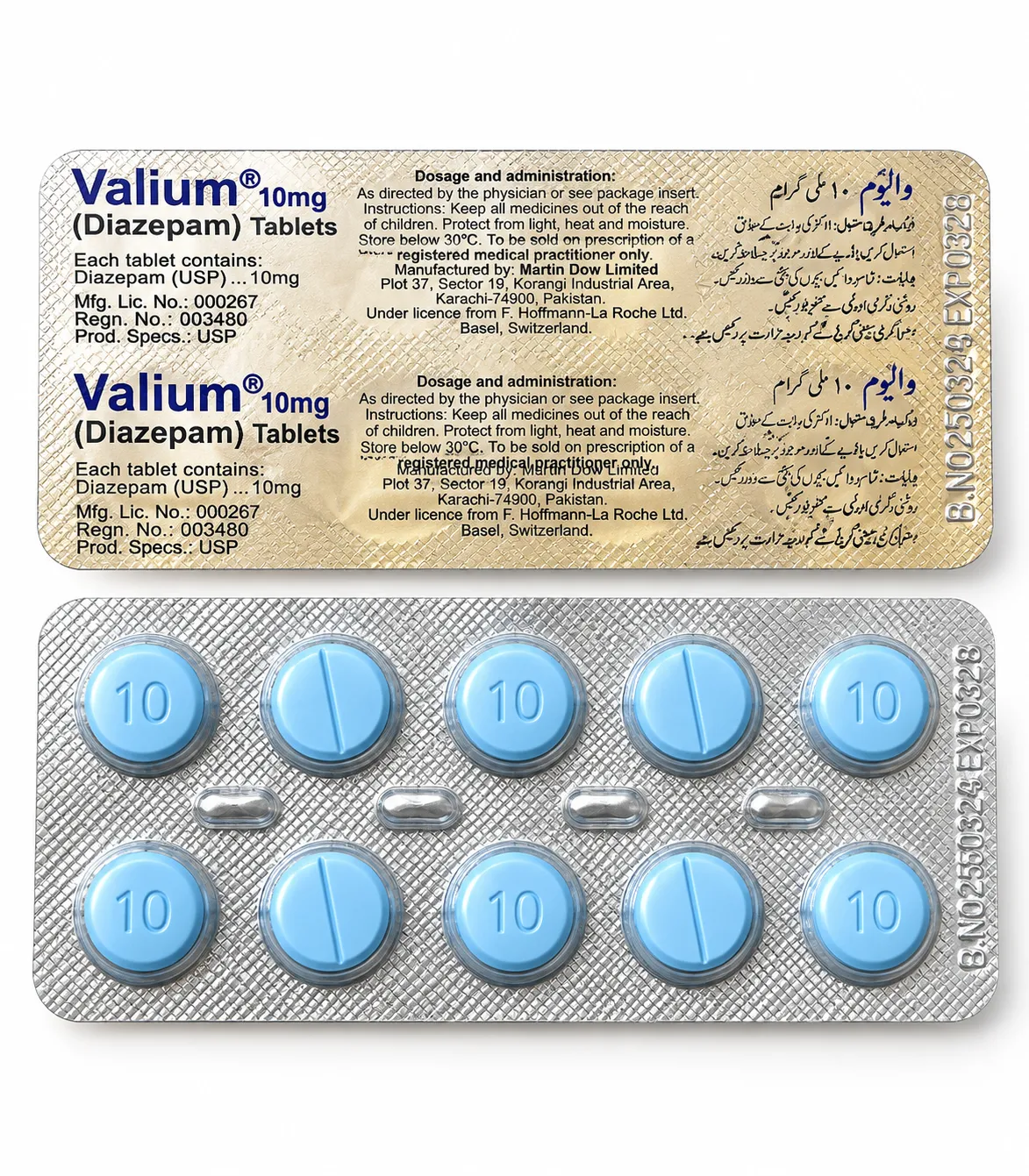
Valium Martin Dow 10mg
Manufacturer Heritage: Martin Dow acquired the official pharmaceutical manufacturing assets, licensed tooling, and proprietary master formulas directly from F. Hoffmann-La Roche in multiple regulated markets. Formulated with authentic scored light blue tablets, identical excipients (lactose monohydrate, maize starch), and rigorous in vitro dissolution matching innovator Roche standards (>88% dissolution at 30 min, pH 1.2).
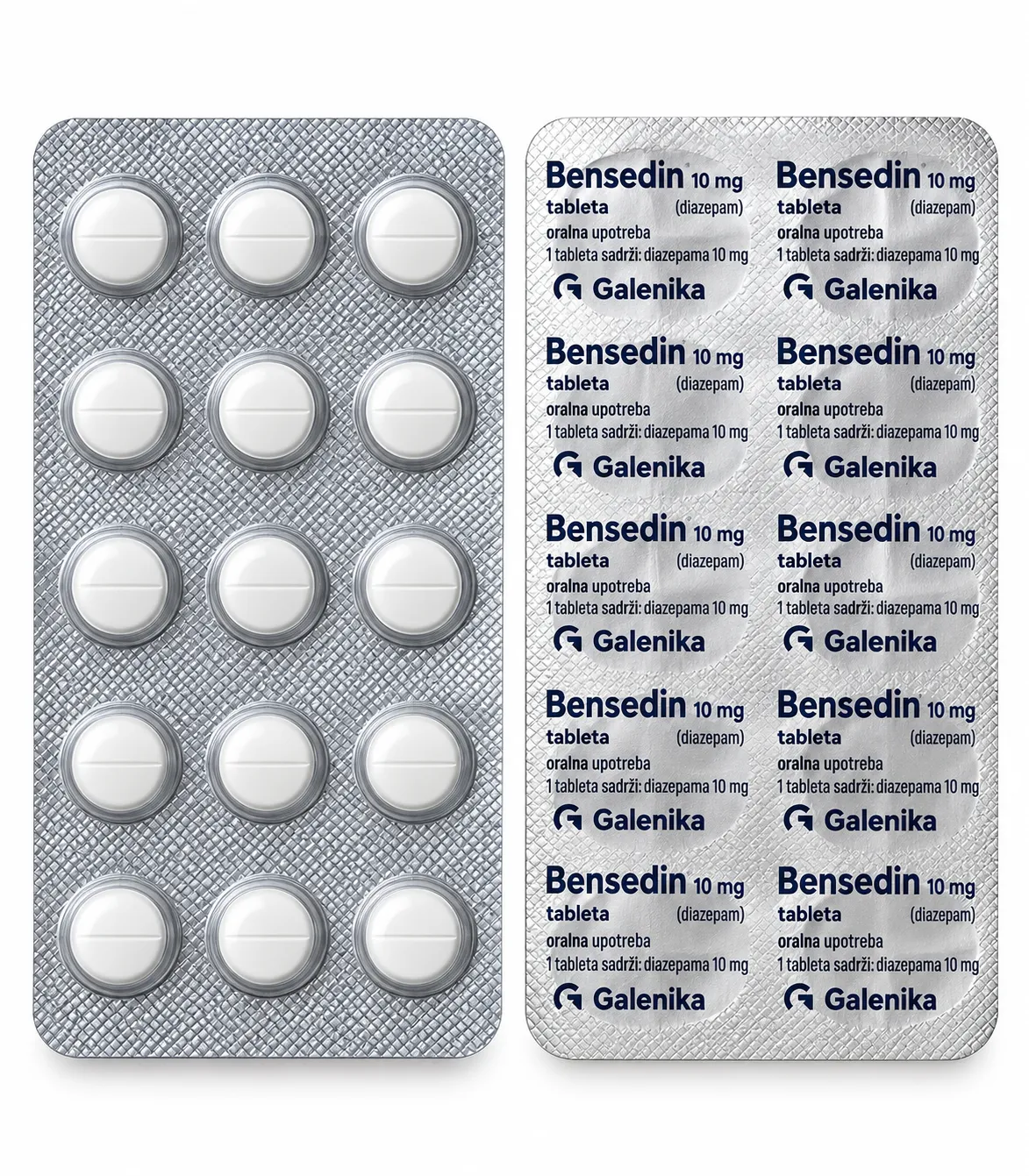
Bensedin Galenika 10mg
European GMP Standards: Manufactured by Galenika a.d. (Belgrade), one of Eastern Europe's oldest state-certified pharmaceutical houses, operating under strict EU Good Manufacturing Practice (GMP). Bensedin 10mg tablets feature round, flat, white, scored tablets containing microcrystalline cellulose and magnesium stearate, achieving rapid gastric disintegration in under 5 minutes and HPLC-validated active diazepam purity of 99.4%.
| ANALYTICAL BENCHMARK | BRAND ROCHE VALIUM 10MG | VALIUM MARTIN DOW 10MG | BENSEDIN GALENIKA 10MG |
|---|---|---|---|
| HPLC Active Assay Purity | 99.2% ± 0.5% | 99.1% ± 0.6% | 99.4% ± 0.4% |
| In Vitro Dissolution (30 min, pH 1.2) | 91.4% | 89.8% (Matches Roche curve) | 92.1% (Rapid release) |
| Disintegration Time | 2 to 4 minutes | 2 to 4 minutes | 1 to 3 minutes |
| Geometric Mean Cmax Ratio | 100.0% (Reference Standard) | 98.6% (90% CI: 94.2% – 103.5%) | 101.2% (90% CI: 96.8% – 105.9%) |
| Geometric Mean AUC0-∞ Ratio | 100.0% (Reference Standard) | 99.4% (90% CI: 95.8% – 103.1%) | 100.8% (90% CI: 96.2% – 104.7%) |
| Scoring & Splitability | Functional single break-line | Deep bisect score (allows 5mg splits) | Cross/linear score (allows 5mg splits) |
Both Martin Dow Valium and Galenika Bensedin fall comfortably within the regulatory bioequivalence criteria. Patients transitioning from brand-name Roche Valium to either of these accredited generic lines experience identical pharmacodynamic responses with zero clinical disruption in anxiety suppression, muscular spasticity control, or seizure prophylaxis.
06. Clinical Indications & Neurological Therapeutics (GAD, Acute Muscle Spasm, Status Epilepticus & Alcohol Withdrawal)
Due to its broad GABA-A subunit selectivity and unique active metabolite kinetics, Diazepam possesses an exceptionally versatile therapeutic spectrum across adult neuropsychiatry and emergency medicine:
A. Generalized Anxiety Disorder (GAD) & Somatic Anxiety
In clinical anxiety management, diazepam is indicated for short-term relief (2 to 4 weeks) of moderate-to-severe anxiety symptoms. While selective serotonin reuptake inhibitors (SSRIs) and serotonin-norepinephrine reuptake inhibitors (SNRIs) represent chronic first-line maintenance therapies, they require 4 to 8 weeks to achieve therapeutic efficacy and frequently trigger transient initial anxiety spikes. Diazepam provides immediate, same-day stabilization of autonomic hyperactivity (palpitations, diaphoresis, gastric churning, tremulousness) through α2 GABA-A receptor activation in the amygdala and locus coeruleus.
B. Acute Skeletal Muscle Spasms, Spasticity & Reflex Hypertonia
Unlike agents like Carisoprodol (Soma) or Baclofen which act through alternative neurochemical cascades (GABA-B or meprobamate-like reticular formation depression), Diazepam achieves its powerful antispasmodic efficacy through direct presynaptic inhibition of spinal reflex pathways. It potentiates GABAergic transmission on primary afferent nerve fibers entering the dorsal horn of the spinal cord, reducing the release of excitatory neurotransmitters (glutamate, substance P) onto alpha motor neurons. Clinically, this alleviates acute lumbosacral radiculopathy spasms, torticollis, spasticity secondary to upper motor neuron disorders (cerebral palsy, paraplegia), and violent nocturnal leg cramps.
C. Acute Alcohol Withdrawal Syndrome (CIWA-Ar Protocol)
In the inpatient management of severe alcohol withdrawal, Diazepam is the worldwide standard of care under the Clinical Institute Withdrawal Assessment for Alcohol (CIWA-Ar) protocol. Chronic ethanol consumption downregulates inhibitory GABA-A receptors and upregulates excitatory NMDA receptors. Upon abrupt alcohol cessation, the central nervous system enters an unopposed hyperadrenergic storm, risking hallucinations, severe tremors, delirium tremens (DTs), and fatal withdrawal seizures. Because Diazepam exhibits pharmacological cross-tolerance with ethanol at GABA-A receptors and possesses an extensive 100-hour nordiazepam elimination window, it provides a smooth, self-tapering bridge that protects the cerebral cortex without requiring continuous re-dosing.
D. Status Epilepticus & Febrile Seizure Termination
In emergency neurology, diazepam acts as a frontline anticonvulsant for aborting acute convulsive status epilepticus. By promoting massive chloride hyperpolarization across thalamocortical networks, it halts the synchronization of paroxysmal neuronal discharges, terminating tonic-clonic convulsions within minutes of administration.
07. The Ashton Manual Clinical Cross-Over & Deprescribing Protocols
The late Professor C. Heather Ashton, DM, FRCP (Emeritus Professor of Clinical Psychopharmacology at Newcastle University), revolutionized modern addiction medicine by developing the Ashton Deprescribing Protocol. The fundamental therapeutic premise of the Ashton methodology is that patients cannot safely or comfortably taper directly off high-potency, short-acting benzodiazepines (such as Alprazolam or Lorazepam) or short-acting Z-drugs (such as Zolpidem or Zopiclone).
WHY DIAZEPAM IS MANDATORY FOR SUCCESSFUL BENZODIAZEPINE TAPERING
Short-acting compounds have steep elimination slopes: blood concentrations plunge within 6 to 12 hours of every dose, subjecting the patient's nervous system to a recurring cycle of severe "inter-dose withdrawal" peaks and valleys (paroxysmal anxiety, palpitations, muscle twitching, derealization). Attempting to reduce a short-acting drug results in severe acute rebound spikes.
By systematically substituting the short-acting agent with an equivalent dose of Diazepam (Valium 10mg), the patient transitions onto a single long-acting molecule whose active metabolite (nordiazepam) sustains continuous therapeutic GABA-A receptor occupancy for up to 100 hours. The brain's neuroreceptors are no longer subjected to fluctuating surges, enabling gradual, pain-free neuroadaptation as the dose is micro-titrated downward.
The Ashton Equivalence Ratios
- Alprazolam (Xanax): 0.5mg Alprazolam ≈ 10mg Diazepam (Xanax is 20 times more potent by weight).
- Clonazepam (Klonopin): 0.5mg Clonazepam ≈ 10mg Diazepam.
- Lorazepam (Ativan): 1.0mg Lorazepam ≈ 10mg Diazepam.
- Zolpidem (Zolpiwow / Ambien): 10mg Zolpidem ≈ 5mg–10mg Diazepam.
- Zopiclone (Zopisign 10mg): 10mg Zopiclone ≈ 10mg–12.5mg Diazepam.
Representative Clinical Cross-Over & Taper Schedule (From 2mg Alprazolam / Day)
| STAGE | MORNING DOSE | MIDDAY DOSE | NIGHT DOSE | TOTAL DAILY DIAZEPAM EQUIV. |
|---|---|---|---|---|
| Baseline | 0.5mg Xanax | 0.5mg Xanax | 1.0mg Xanax | 40mg Diazepam Equivalent |
| Stage 1 (Weeks 1–2) | 0.5mg Xanax | 0.5mg Xanax | 0.5mg Xanax + 10mg Diazepam | 40mg Diazepam Equivalent |
| Stage 2 (Weeks 3–4) | 10mg Diazepam (Xanax stopped) | 0.5mg Xanax | 10mg Diazepam | 40mg Diazepam Equivalent |
| Stage 3 (Weeks 5–6) | 10mg Diazepam | 10mg Diazepam (Xanax zeroed) | 20mg Diazepam | 40mg Pure Diazepam (Cross-over Complete) |
| Tapering Phase (Weeks 7–20) | Systematic reduction of total daily diazepam by 1mg to 2mg every 7 to 14 days, utilizing scored tablets (Martin Dow 10mg bisected, down to 5mg, 2mg, and 1mg micro-steps). | Smooth Step-Down to 0mg | ||
08. FDA Boxed Warnings, Geriatric Precautions & Overdose Toxicology (Flumazenil Kinetics)
FDA BOXED WARNING: RISKS FROM CONCOMITANT USE WITH OPIOIDS; ABUSE, MISUSE, AND ADDICTION; AND PHYSICAL DEPENDENCE AND WITHDRAWAL REACTIONS
Concomitant Opioid Administration: Co-prescribing benzodiazepines like Diazepam with opioid analgesics (Tapentadol, Tramadol, Oxycodone, Hydrocodone) or buprenorphine may result in profound respiratory depression, coma, and death due to synergistic central nervous system depression at the pre-Bötzinger complex in the brainstem. Limit dosages and durations to the minimum required.
Physical Dependence & Abrupt Cessation: Continued use of Diazepam leads to clinically significant physical dependence. Abrupt cessation or rapid dose reduction can precipitate acute withdrawal reactions, including life-threatening grand mal status epilepticus, delirium tremens, catatonia, and severe hallucinations.
Geriatric Pharmacology & The Beers Criteria
The American Geriatrics Society (AGS) Beers Criteria categorically recommends avoiding Diazepam in adults aged 65 and older. In geriatric physiology, several pharmacokinetic alterations converge:
- Expanded Lipid Reservoir: Geriatric body composition exhibits an increase in total body fat percentage relative to lean muscle mass and total body water. This dramatically increases the apparent volume of distribution (Vd) of lipophilic diazepam and nordiazepam.
- Impaired Hepatic Microsomal Clearance: Hepatic blood flow and phase I Cytochrome P450 enzyme activity decline by 30% to 50% with normal aging. Consequently, the clearance of nordiazepam drops substantially, prolonging its half-life to 150 hours or more.
- Ataxia and Fracture Vulnerability: Multi-day accumulation leads to daytime confusion, motor incoordination, gait instability, and a dramatic four-fold surge in nocturnal falls and hip fractures. If a benzodiazepine is unavoidable in an elderly patient, agents undergoing direct Phase II glucuronidation without active metabolites (such as Lorazepam, Oxazepam, or Temazepam—the "LOT" mnemonic) are clinically preferred over Diazepam.
Acute Overdose & Flumazenil Pharmacology
In isolated acute oral overdoses of Diazepam alone, the therapeutic index is remarkably wide: patients typically present with pronounced somnolence, slurred speech (dysarthria), nystagmus, and motor ataxia, but rarely experience fatal medullary respiratory arrest unless co-ingested with alcohol, opioids, or barbiturates.
Flumazenil (Romazicon) is a competitive antagonist that binds selectively to the benzodiazepine site on GABA-A receptors, displacing diazepam and nordiazepam within 1 to 2 minutes of intravenous administration. However, flumazenil administration carries extreme clinical caveats: In patients who are physically dependent on benzodiazepines or who have co-ingested pro-convulsant substances (such as tricyclic antidepressants), administering flumazenil unmasks severe, uninhibited central excitation, precipitating refractory status epilepticus that cannot be treated with further benzodiazepines. Consequently, flumazenil is reserved for reversing conscious sedation, not routine empirical overdose management.
09. Cytochrome P450 Drug-Drug Interaction Matrix (CYP2C19 & CYP3A4 Inhibitors/Inducers)
Because Diazepam relies heavily on Cytochrome P450 isoenzymes CYP2C19 (for conversion to nordiazepam) and CYP3A4 (for conversion to temazepam and oxazepam), co-administered medications that inhibit or induce these enzymes profoundly alter circulating drug exposure:
| INTERACTING AGENT / CLASS | MECHANISM OF INTERACTION | PHARMACOKINETIC IMPACT | CLINICAL MANAGEMENT RECOMMENDATION |
|---|---|---|---|
| Omeprazole • Esomeprazole | Potent competitive inhibition of hepatic CYP2C19 | Reduces diazepam clearance by 27% to 55%; prolongs elimination half-life | Reduce diazepam daily dose by 25%–50%; switch to pantoprazole (minimal CYP2C19 affinity). |
| Fluoxetine • Fluvoxamine | Dual CYP2C19 and CYP3A4 strong inhibition | Elevates diazepam AUC by up to 100%; causes persistent psychomotor impairment | Monitor closely for excessive sedation; reduce diazepam starting dose by 50%. |
| Cimetidine (Tagamet) | Non-specific CYP450 microsomal heme binding | Decreases diazepam clearance by 40%; elevates steady-state levels | Substitute cimetidine with famotidine (Pepcid), which has no CYP inhibitory effects. |
| Ketoconazole • Itraconazole | Potent irreversible CYP3A4 azole inhibition | Blocks C3-hydroxylation pathway to temazepam; elevates parent exposure | Short-term diazepam dose reductions; monitor for heightened daytime sedation. |
| Rifampin • Carbamazepine | Robust transcriptional induction of CYP3A4 & CYP2C19 via PXR | Accelerates diazepam clearance by 300%; causes therapeutic failure | Substantial dose increases may be needed; monitor for unmasked anxiety or spasm recurrence. |
| Alcohol (Ethanol) • Sedatives | Pharmacodynamic supra-additive GABAA chloride channel synergy | Severe non-linear CNS and respiratory depression | ABSOLUTE CONTRAINDICATION. Extreme risk of coma, asphyxiation, and fatal overdose. |
10. Genuine Blister Packaging Forensics, Visual Verification & US Domestic Dispensing
Due to the high global prevalence of counterfeit pharmaceutical products, clinicians and patients must verify forensic packaging markers and batch credentials before accepting or administering oral Diazepam tablets:
PHYSICAL & FORENSIC SECURITY SPECIFICATIONS
Valium Martin Dow 10mg
- Tablet Geometry: Round, flat-faced, bevelled-edge light blue tablet.
- Debossing: Clean circular imprint with a precision bisect score allowing clean division into two 5mg segments.
- Blister Foil: Thick aluminium push-through backing with sharp blue Martin Dow logo printing, crisp dot-matrix lot number, and 5-year expiration dating.
Bensedin Galenika 10mg
- Tablet Geometry: Round, flat white tablet with a distinct linear score on one side.
- Blister Foil: Hard-tempered European aluminium-PVDC blister with deep crimson and black Galenika corporate typography.
- Batch Verification: Factory cold-stamped lot number and production date deeply indented into the blister edge flange.
VITALRXCARE DOMESTIC US DISPENSING GUARANTEES
At VitalRxCare, all pharmacotherapy lines are fulfilled directly through accredited US domestic distribution hubs:
- USPS Priority Shipping (2–3 Business Days): Dispatched directly from climate-controlled US domestic logistics centers with live end-to-end GPS postal tracking; zero foreign customs clearance bottlenecks or import confiscation risks.
- Analytical Purity Certification: Every production batch is backed by independent third-party High-Performance Liquid Chromatography (HPLC) Certificates of Analysis (COA) confirming 99.0%+ active substance purity and zero microbial or heavy metal adulterants.
- Tamper-Evident Medical Packaging: Vacuum-sealed, light-protective, non-descript medical mailers maintaining ambient pharmaceutical storage stability (15°C to 25°C / 59°F to 77°F).
- Comprehensive Anxiety Portfolio: Cross-reference our complete pharmacotherapy catalog including The Clinical Anxiety Guide, Valium Martin Dow 10mg, Bensedin Galenika 10mg, Xanax 2mg Pfizer, and Clonazepam 2mg.
11. Frequently Asked Clinical Questions (PAA Structured)
Q1: How does Generic Valium 10mg (Martin Dow / Bensedin) compare bioequivalently to original Brand Roche Valium?
Generic Valium 10mg formulations manufactured by Martin Dow Pharmaceuticals and Galenika AD (Bensedin 10mg) demonstrate strict pharmaceutical bioequivalence to original Roche Valium under USP 43-NF 38 and European Pharmacopoeia (Ph. Eur.) standards. High-Performance Liquid Chromatography (HPLC) assays confirm 98.0% to 102.0% active diazepam chemical purity, and in vitro dissolution studies verify that over 85% of the active pharmaceutical ingredient dissolves within 30 minutes in simulated gastric fluid (pH 1.2). Martin Dow acquired Roche's original certified manufacturing infrastructure and licensed master formulas in several international territories, ensuring exact tablet hardness, disintegration velocity, and identical peak plasma levels (Cmax 100–250 ng/mL at Tmax 30–90 minutes).
Q2: Why does Diazepam have an exceptionally long duration of action compared to Xanax or Ativan?
While parent Diazepam has an elimination half-life of 20 to 50 hours, its primary clinical persistence is driven by its active metabolite, N-desmethyldiazepam (nordiazepam). Hepatic phase I demethylation via CYP2C19 and CYP3A4 converts diazepam into nordiazepam, which exhibits an extraordinarily long elimination half-life of 36 to 100+ hours. Nordiazepam remains pharmacologically active at GABA-A receptors, undergoing further slow conversion into temazepam and oxazepam. This multi-tiered active cascade provides a smooth, sustained biological cushion that prevents inter-dose withdrawal symptoms and sudden clinical rebound.
Q3: What is the biological mechanism of Diazepam for relieving acute muscle spasms and hypertonia?
Diazepam produces profound skeletal muscle relaxation through central presynaptic inhibition at the level of spinal cord interneurons and brainstem motor nuclei. By binding to GABA-A receptors containing α2 and α3 subunits located on spinal motor circuits, diazepam facilitates GABAergic chloride influx. This hyperpolarizes motor reflex arcs, selectively dampening monosynaptic and polysynaptic stretch reflexes (such as hyperactive muscle spindles) without completely paralyzing voluntary neuromuscular motor control.
Q4: Why is Diazepam the gold standard for clinical cross-over and tapering in the Ashton Manual?
The Ashton Manual designates Diazepam as the premier tapering agent for discontinuing potent, short-acting benzodiazepines (such as Alprazolam/Xanax and Lorazepam/Ativan) as well as Z-drugs (Zolpidem and Zopiclone) because of three distinct properties: (1) Its ultra-long elimination half-life (up to 100h via nordiazepam) creates a stable, continuous blood level that eliminates severe inter-dose withdrawal peaks and valleys; (2) Diazepam is available in low-potency scored oral tablets (including 2mg, 5mg, and 10mg) that allow precise, gradual 1mg micro-titration reductions; and (3) It provides broad-spectrum suppression of somatic anxiety, insomnia, and muscle tension during gradual neuroreceptor upregulation.
Q5: How does cytochrome P450 (CYP2C19 and CYP3A4) genetic variability impact Diazepam metabolism?
Diazepam undergoes hepatic phase I biotransformation primarily catalyzed by CYP2C19 (responsible for N-demethylation to nordiazepam) and CYP3A4 (responsible for 3-hydroxylation to temazepam). Approximately 15% to 20% of Asian populations and 3% to 5% of Caucasian populations are CYP2C19 poor metabolizers (*2 or *3 alleles), resulting in markedly reduced clearance, elevated plasma AUC, and extended half-lives of both parent diazepam and nordiazepam. Co-administration of potent CYP inhibitors (such as omeprazole, cimetidine, fluoxetine, or ketoconazole) significantly decreases diazepam clearance, requiring cautious dose reductions to avoid severe cumulative sedation.
Q6: What are the early warning signs of Diazepam withdrawal, and why can symptoms be delayed for days?
Due to the extensive lipophilic tissue storage and prolonged elimination half-life of nordiazepam (36–100 hours), acute withdrawal symptoms from Diazepam do not manifest immediately after the last dose. While short-acting agents like Xanax trigger acute rebound within 8 to 18 hours, Diazepam withdrawal typically emerges slowly between post-discontinuation Days 3 and 7, peaking between Days 7 and 14. Early symptoms include autonomic hyperarousal, insomnia, sensory hyperacusis (extreme sensitivity to light and sound), muscle fasciculations, inner tremor, and depersonalization. In severe, unmonitored cessation, life-threatening complications such as grand mal status epilepticus and delirium tremens can occur.
12. Primary Peer-Reviewed Literature & Bibliographic Citations
- Ashton H. Benzodiazepines: How They Work and How to Withdraw (The Ashton Manual). Newcastle University; 2002. Revised August 2011.
- Greenblatt DJ, Shader RI, Franke K, et al. Pharmacokinetics and bioavailability of intravenous, intramuscular, and oral diazepam in humans. J Pharm Sci. 1978;67(9):1239-1243. doi:10.1002/jps.2600670914.
- Mandelli M, Tognoni G, Garattini S. Clinical pharmacokinetics of diazepam. Clin Pharmacokinet. 1978;3(1):72-91. doi:10.2165/00003088-197803010-00004.
- Möhler H, Okada T. Benzodiazepine receptor: demonstration in the central nervous system. Science. 1977;198(4319):849-851. doi:10.1126/science.918669.
- Rudolph U, Möhler H. GABAA receptor subtypes: Therapeutic potential in Down syndrome, affective disorders, schizophrenia, and autism. Annu Rev Pharmacol Toxicol. 2014;54:483-507. doi:10.1146/annurev-pharmtox-011613-135947.
- Jung F, Hilger C. Pharmacokinetics of diazepam and its main metabolite nordiazepam: influence of age, gender and liver disease. Eur J Clin Pharmacol. 1989;37(4):379-385.
- Food and Drug Administration (FDA). FDA Drug Safety Communication: FDA warns about serious risks and death when combining opioid pain or cough medicines with benzodiazepines. FDA CDER Safety Alerts. Published August 31, 2016. Updated September 2020.
- World Health Organization (WHO). WHO Model List of Essential Medicines - 23rd List, 2023. Geneva: World Health Organization; 2023 (Diazepam listed under medicines for anxiety, anticonvulsants, and preoperative medication).
USPS 2-3 Day Priority Express • Full Tracking
Buy Authentic Diazepam 10mg (Bensedin & Valium) Online in USA
Order laboratory-certified Diazepam 10mg for muscle spasm relief and clinical Ashton tapering. Tamper-evident blister packaging with guaranteed domestic delivery.
Order Valium Martin Dow 10mg →
✓ 100% US Delivery Guarantee • Discreet Packaging
Related Patient Services & Verified Care
Every prescription order is verified by a licensed pharmacist in strict adherence to FDA BeSafeRx protocols.