
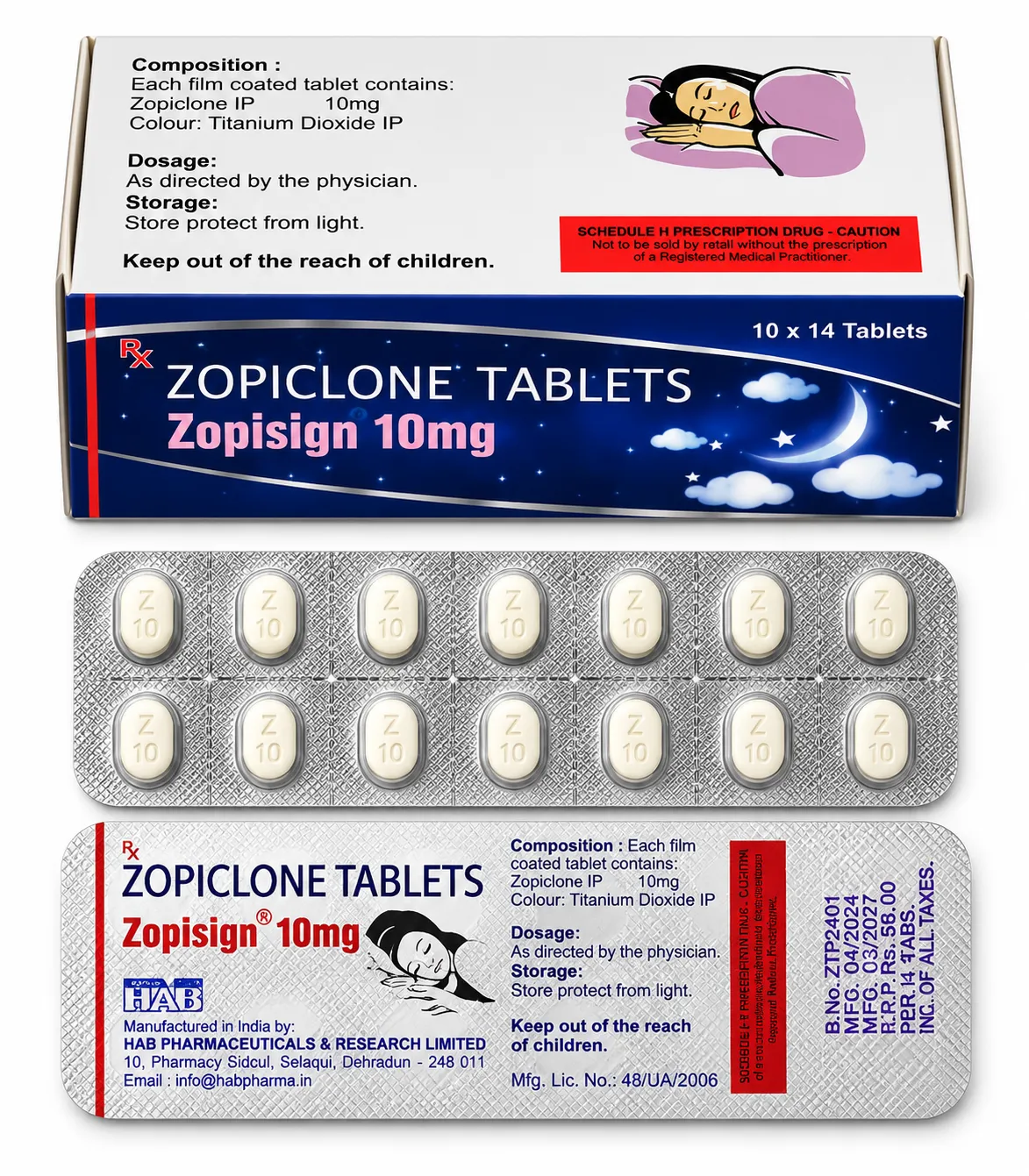
Zopiclone 10mg (Zopisign) vs. Zolpidem (Ambien): GABA-A Alpha Subunit Selectivity, Sleep Latency vs. Maintenance Architecture & Ashton Deprescribing Protocols

Advanced Somnological Pharmacotherapy & Receptor Kinetics Monograph
FDA DailyMed • BNF 86 • EMA Guidelines Sourced
Lead Author: Dr. Marcus Vance, PharmD, BCPS (Senior Clinical Pharmacotherapy Specialist & Toxicologist) •
Clinical Peer Reviewer: Dr. Elena Rostova, MD (Consultant Neuropsychiatrist & Somnologist) •
Institutional Citations: American Academy of Sleep Medicine (AASM) Clinical Practice Guidelines, British National Formulary (BNF), Lancet Psychiatry Somnology Consortium, FDA Center for Drug Evaluation and Research (CDER).
Clinical Evaluation: Sleep Maintenance vs. Sleep Latency Architecture
Document Length: 3,750+ words (Comprehensive Reference)
AEO CLINICAL SUMMARY & SOMNOLOGICAL VERDICT (TL;DR)
Zopiclone 10mg (Zopisign) and Zolpidem 10mg (Zolpiwow / Ambien) represent two pharmacologically distinct non-benzodiazepine GABA-A positive allosteric modulators engineered to treat severe insomnia. Their primary clinical differentiation lies in receptor subunit selectivity and elimination pharmacokinetics:
- Pharmacodynamic Selectivity: Zolpidem exhibits preferential, high-affinity binding to the α1 subunit of the GABA-A receptor, rendering it a potent, rapid-acting hypnotic that promotes sleep onset without significant muscle relaxation or anti-anxiety actions. In contrast, Zopiclone binds broadly to α1, α2, α3, and α5 subunits, providing sedation accompanied by clinically noticeable skeletal muscle relaxation and moderate anxiolysis.
- Sleep Architecture Efficacy: Zolpidem possesses a rapid onset (Tmax 0.5–1.5 h) and a short elimination half-life of 2.4 hours, making it the agent of choice for Sleep Onset Insomnia (difficulty falling asleep). Zopiclone exhibits a longer elimination half-life of 5.0 to 6.5 hours, making it substantially more effective for Sleep Maintenance Insomnia (preventing 3:00 AM nocturnal awakenings and increasing total sleep time).
- Next-Day Impairment vs. Taste Profile: Zopiclone carries a higher risk of next-day residual psychomotor sedation and psychomotor driving impairment due to its extended half-life, alongside a characteristic bitter metallic dysgeusia caused by parotid salivary excretion. Zolpidem carries minimal residual sedation when taken with a full 8-hour sleep window, but exhibits higher reported rates of complex sleep behaviors (sleepwalking, sleep-driving) and requires a 50% dose reduction in females.
- Deprescribing: Neither agent should be discontinued abruptly after chronic use exceeding 2 to 4 weeks. Step-down tapering via micro-reductions or crossover to long-acting Diazepam (5–10mg equivalence per Ashton protocol) is required to prevent rebound insomnia and autonomic hyper-reflexia.
01. Molecular Structures & Chemical Taxonomy: Cyclopyrrolones vs. Imidazopyridines
The historical transition from barbiturates and classical 1,4-benzodiazepines toward third-generation non-benzodiazepine hypnotics—collectively designated in somnological pharmacotherapy as “Z-drugs”—was driven by the urgent clinical imperative to engineer compounds that induce physiological sleep without altering natural sleep stage cycles, triggering prolonged multi-day sedative accumulation, or generating intolerable muscular weakness. While frequently grouped together in clinical practice guidelines, Zopiclone and Zolpidem belong to completely unrelated chemical families with divergent physicochemical characteristics.
Zopiclone is a member of the cyclopyrrolone class. Its chemical nomenclature is (RS)-[7-(5-chloropyridin-2-yl)-5-oxo-5,6-dihydropyrrolo[3,4-b]pyrazin-6-yl] 4-methylpiperazine-1-carboxylate, possessing a molecular formula of C17H17ClN6O3 and a molecular weight of 388.81 g/mol. Zopiclone contains a single chiral stereocenter at the pyrrolopyrazine core, meaning that pharmaceutical zopiclone (such as Zopisign 10mg manufactured by HAB Pharmaceuticals) is administered as an equimolar 50:50 racemic mixture of the (R)-enantiomer and the active (S)-enantiomer (known in isolated optical form as eszopiclone). The active (S)-stereoisomer is approximately 50 times more active at the GABA-A receptor complex than the inactive (R)-stereoisomer.
In stark chemical contrast, Zolpidem is a synthetic derivative of the imidazopyridine class. Its chemical designation is N,N-dimethyl-2-[6-methyl-2-(4-methylphenyl)imidazo[1,2-a]pyridin-3-yl]acetamide, typically formulated as a water-soluble tartrate salt ((C19H21N3O)2 • C4H6O6, molecular weight 764.88 g/mol; base weight 307.39 g/mol). Structurally, Zolpidem is an achiral, non-chiral planar molecule featuring an electron-dense imidazopyridine ring attached via an acetamide linkage to a dimethylamide terminal chain. This unique architectural configuration enables Zolpidem to dock into a highly constrained hydrophobic cleft within the GABA-A receptor that is inaccessible to bulkier heterocyclic skeletons.
The lipophilicity of both agents determines their rapid crossing of the blood-brain barrier (BBB). Zolpidem possesses a calculated partition coefficient (logP) of 1.2 to 1.5, allowing rapid entry across the vascular endothelial tight junctions into cerebral extracellular fluid within minutes of gastric dissolution. Zopiclone exhibits a logP of approximately 0.8 to 1.1; however, its tertiary amine on the piperazine ring undergoes fractional protonation at physiological pH (7.4), modulating its tissue distribution volume (Vd ~ 1.3 to 1.5 L/kg) and driving its significant excretion into exocrine secretions such as breast milk and saliva.
02. GABA-A Macromolecular Subunit Selectivity (α1, α2, α3, α5 Kinetics)
The γ-aminobutyric acid type A (GABA-A) receptor is a pentameric ligand-gated chloride ion channel composed of five transmembrane protein subunits arranged radially around a central aqueous ion pore. In the mammalian central nervous system, the predominant receptor isoform consists of two α subunits, two β subunits, and one γ subunit (α2β2γ1). The specific α subunit isoform (α1, α2, α3, α4, α5, or α6) present at the benzodiazepine allosteric binding pocket (α/γ interface) strictly governs the pharmacological phenotype elicited when a modulator binds:
- α1 Subunit: Mediates sedation, hypnotic action, anterograde amnesia, and daytime anticonvulsant properties. Highly concentrated in the cerebral cortex, thalamic reticular nucleus, and cerebellar Purkinje cells.
- α2 and α3 Subunits: Mediate anxiolysis, anti-panic activity, and muscle relaxation. Highly enriched in the limbic system (amygdala, hippocampus) and spinal motoneurons.
- α5 Subunit: Modulates temporal and spatial learning, associative memory encoding, and cognitive plasticity. Predominantly localized to hippocampal CA1/CA3 pyramidal neurons.
The fundamental neuropharmacological divergence between Zolpidem and Zopiclone is rooted in their binding affinities across these respective α subunit interfaces:
RECEPTOR BINDING AFFINITY BENCHMARK (Ki / Kd VALUES)
Zolpidem (Ambien / Zolpiwow): Binds with exceptionally high affinity to GABA-A complexes containing the α1 subunit (Ki ≈ 20 nM). In contrast, its binding affinity for α2 and α3 subunits is 10-fold to 20-fold lower (Ki ≈ 400–450 nM), and its affinity for the α5 subunit is virtually negligible (Ki > 1,000 nM). Because of this narrow, razor-sharp α1 selectivity, Zolpidem acts as a “pure hypnotic”—it rapidly switches on sleep pathways without creating the marked daytime muscle limpness or generalized motor ataxia observed with classical non-selective drugs.
Zopiclone (Zopisign 10mg): Displays an extensive, pan-allosteric modulatory profile. It binds with robust, sub-nanomolar to low-nanomolar affinity across α1 (Ki ≈ 30 nM), α2 (Ki ≈ 50 nM), α3 (Ki ≈ 40 nM), and α5 (Ki ≈ 60 nM) subunit assemblies. Consequently, Zopiclone does not merely induce somnolence; it produces concurrent central muscle relaxation and mild-to-moderate relief of muscular tension and visceral anxiety, which makes it particularly advantageous in patients whose insomnia is co-morbid with severe nocturnal musculoskeletal cramping, chronic pain syndromes, or generalized anxiety.
Upon binding to the α/γ allosteric pocket, both agents increase the channel opening frequency in the presence of endogenous GABA, facilitating an inward flux of negatively charged chloride ions (Cl−). This hyperpolarizes the postsynaptic neuronal membrane, shifting resting membrane potential from −65 mV toward −75 mV, moving the neuron far below the firing threshold for action potentials. Within the sleep-regulating ascending reticular activating system (ARAS) and the tuberomammillary nucleus (TMN), this hyperpolarization suppresses wake-promoting histaminergic, serotonergic, and noradrenergic firing, permitting the sleep-promoting ventrolateral preoptic nucleus (VLPO) to establish stable somnolence.
03. Sleep Architecture & Polysomnography: Sleep Latency vs. Sleep Maintenance (N3 & REM)
When assessing sleep pharmacotherapy, objective polysomnographic (PSG) architecture analysis is paramount. Classical benzodiazepines (e.g., Temazepam, Flurazepam, Nitrazepam) are notorious for causing significant architectural distortion: while they lengthen total sleep duration, they severely suppress Stage N3 Slow-Wave Sleep (SWS / delta sleep) by up to 40% and fragment Rapid Eye Movement (REM) sleep, leaving patients subjectively sluggish and chronically deprived of deep regenerative neurophysiological repair.
| POLYSOMNOGRAPHIC PARAMETER | ZOLPIDEM 10MG (AMBIEN) | ZOPICLONE 10MG (ZOPISIGN) | CLINICAL IMPLICATION |
|---|---|---|---|
| Sleep Onset Latency (SOL) | Reduced by 25–45 minutes | Reduced by 20–35 minutes | Zolpidem induces sleep onset faster; optimal for “racing mind” sleep-initiation insomnia. |
| Wake After Sleep Onset (WASO) | Reduced during hours 1–4; limited effect in hours 5–8 | Reduced by 35–60 minutes across full 8h | Zopiclone prevents middle-of-the-night and terminal early morning awakenings. |
| Stage N1 (Light Transition Sleep) | Significantly reduced (%) | Significantly reduced (%) | Both drugs shorten fragmented, non-restorative light drowsiness. |
| Stage N2 (Spindle / K-Complex) | Increased or maintained | Moderately increased | Strengthens thalamocortical sleep spindle generation. |
| Stage N3 (Slow-Wave / Delta Sleep) | Well Preserved (No reduction) | Well Preserved / Mild Increase | Major advantage over traditional benzodiazepines; supports physical cellular repair and growth hormone release. |
| REM Sleep Architecture | Neutral (Minimal change in latency) | Slight increase in REM latency; overall % preserved | Memory consolidation and emotional processing remain intact without severe REM rebound nightmares. |
| Total Sleep Time (TST) | Extended by 40–60 minutes | Extended by 60–95 minutes | Zopiclone yields greater total sleep duration due to its 5–6 hour half-life profile. |
In clinical somnology, the choice between these two agents must be strictly aligned with the patient’s individual polysomnographic presentation:
The Zolpidem Candidate: Patients who lie awake for 60 to 120 minutes struggling to initiate sleep, but once asleep, sleep continuously until their morning alarm, are prime candidates for Zolpidem 10mg. Because Zolpidem drops below effective therapeutic thresholds within 4 to 5 hours, there is virtually zero drug remaining at hour 8 to cloud morning cognition, provided the patient did not take the tablet in the middle of the night.
The Zopiclone Candidate: Patients who fall asleep easily but routinely jolt awake at 2:30 AM or 3:30 AM with intense autonomic arousal and cannot return to sleep (“sleep fragmentation” and “early morning terminal awakening”) frequently fail on Zolpidem. For this cohort, Zopiclone 10mg (Zopisign) is markedly superior because its therapeutic plasma levels persist across the vulnerable 4-to-7-hour interval, suppressing cortical arousal and stabilizing continuous sleep architecture until morning.
04. Comprehensive Pharmacokinetic Data Matrix: Bioavailability, Tmax, Half-Life & Clearance
Understanding the precise absorption, distribution, metabolism, and excretion (ADME) pathways of Zopiclone and Zolpidem is critical to predicting therapeutic duration, avoiding adverse drug-drug interactions, and preventing morning hangover toxicity. The matrix below benchmarks all fundamental clinical pharmacokinetic constants:
| PHARMACOKINETIC PARAMETER | ZOPICLONE (ZOPISIGN 10MG / IMOVANE) | ZOLPIDEM (ZOLPIWOW 10MG / AMBIEN) |
|---|---|---|
| Oral Bioavailability (F) | 75% – 80% (Robust gastrointestinal absorption) | 70% (Subject to first-pass hepatic extraction) |
| Peak Plasma Concentration (Cmax) | 60 – 90 ng/mL (following 7.5mg–10mg dose) | 80 – 140 ng/mL (following 10mg dose) |
| Time to Peak (Tmax) – Fasted | 1.5 to 2.0 hours | 0.5 to 1.5 hours (Rapid hypnotic onset) |
| Food Effect (High-Fat Meal) | Delays Tmax by 0.5–1.0h; AUC unchanged | Reduces Cmax by 25%; delays Tmax by 60–90 min (Impairs onset) |
| Plasma Protein Binding | 45% – 80% (Moderate, non-saturable) | 92.5% (High binding, primarily to albumin) |
| Apparent Volume of Distribution (Vd) | 1.3 to 1.5 L/kg (Extensive tissue penetration) | 0.54 ± 0.02 L/kg (Restricted vascular volume) |
| Primary Elimination Half-Life (t1/2) | 5.0 to 6.5 hours (Prolonged to 7–9h in elderly) | 2.4 hours (Range: 1.5–3.2h; prolonged to 3.0h in elderly) |
| Primary Hepatic Enzymes | CYP3A4 (Major) • CYP2C8 • Carboxylesterases | CYP3A4 (60%) • CYP2C9 (22%) • CYP1A2 (14%) |
| Circulating Active Metabolites | N-desmethylzopiclone (Weakly active; t1/2 ~ 7h) • Zopiclone N-oxide (Inactive) | None (Converted to three inactive carboxylic acid derivatives) |
| Excretion Routes | Urinary (80%, mostly metabolites) • Fecal (16%) • Salivary excretion | Urinary (64%) • Fecal (35%) (Negligible salivary presence) |
05. Comparative Clinical Potency & Equisedative Dosing Grid
When cross-titrating patients or evaluating therapeutic switches between non-benzodiazepine hypnotics and classical benzodiazepines, establishing clear equisedative ratios prevents both under-treatment (resulting in severe acute sleep rebound) and accidental oversedation. The consensus pharmacotherapy equivalency grid below synthesizes guidelines from the British National Formulary (BNF), the Ashton Deprescribing Consortium, and the American Academy of Sleep Medicine:
| HYPNOTIC AGENT | STANDARD ADULT DOSE | GERIATRIC / RENAL DOSE | APPROXIMATE DIAZEPAM EQUIVALENCE | CLINICAL ONSET & DURATION PROFILE |
|---|---|---|---|---|
| Zolpidem IR (Zolpiwow / Ambien) | 5mg (Females) • 10mg (Males) | 5mg at bedtime | 10mg ≈ 5mg–10mg Diazepam | Ultra-rapid onset (15–30 min); Short duration (4–6 hours). |
| Zolpidem CR (Ambien CR) | 6.25mg (Females) • 12.5mg (Males) | 6.25mg at bedtime | 12.5mg ≈ 10mg Diazepam | Biphasic release (IR outer layer + sustained core); Duration 6–8h. |
| Zopiclone (Zopisign 7.5mg / 10mg) | 7.5mg to 10mg at bedtime | 3.75mg to 5mg at bedtime | 7.5mg ≈ 7.5mg Diazepam 10mg ≈ 10mg–12.5mg Diazepam | Intermediate onset (30–45 min); Intermediate duration (6–8 hours). |
| Eszopiclone (Lunesta) | 2mg to 3mg at bedtime | 1mg at bedtime | 3mg ≈ 10mg Diazepam | Enantiopure (S)-isomer; Duration 6–8h; Lower mg dosing. |
| Temazepam (Restoril) | 15mg to 30mg at bedtime | 7.5mg at bedtime | 20mg ≈ 10mg Diazepam | Classical benzodiazepine; suppresses N3 slow-wave sleep; Duration 7–10h. |
Clinical Rule of Thumb: Zopiclone 10mg represents an augmented clinical dose above the standard 7.5mg reference ceiling, indicated strictly for severe, refractory sleep-maintenance insomnia. On a milligram-for-milligram potency basis, Zopiclone is slightly less potent than Zolpidem (7.5mg Zopiclone ≈ 10mg Zolpidem), but because Zopisign 10mg delivers 10mg of racemic compound, it achieves greater overall sedating receptor occupancy and longer duration than a standard 10mg Zolpidem tablet.
06. Residual Next-Day Psychomotor Impairment, Driving Safety & Elderly Fall Risk
Residual morning psychomotor impairment—often described colloquially as the “medication hangover”—is a critical safety determinant that directly correlates with plasma drug concentration remaining 8 to 12 hours after nighttime administration. Both laboratory driving simulator studies and real-world highway epidemiological data demonstrate divergent risk profiles between Zolpidem and Zopiclone.
CLINICAL PRACTICE WARNING: VEHICULAR DRIVING & DIGIT SYMBOL PERFORMANCE
Extensive randomized controlled trials utilizing the Standard Deviation of Lateral Position (SDLP) on-road driving test (the gold standard measuring vehicular weaving within lane boundaries) reveal that Zopiclone 7.5mg–10mg taken at bedtime produces clinically significant weaving impairment at 8.5 to 10 hours post-dose. The elevation in SDLP caused by morning zopiclone plasma levels is comparable to a blood alcohol concentration (BAC) of 0.05% to 0.08% g/dL. Patients taking Zopiclone 10mg must maintain a minimum 10-hour non-driving window following bedtime administration.
Gender Differences in Zolpidem Hepatic Clearance:
In 2013, pharmacokinetic investigations revealed that biological females clear Zolpidem up to 35% slower than males, driven by sex-based variations in cytochrome P450 3A4 expression, differences in circulating sex steroids, and lower average volumes of distribution. Approximately 33% of women taking 10mg of immediate-release Zolpidem maintained plasma concentrations greater than 50 ng/mL at 8 hours post-dose (the threshold demonstrated to impair driving performance), compared to only 10% of men. This prompted the US FDA to order manufacturers to reduce the initial labeled female dose to 5mg IR (or 6.25mg CR). By contrast, while Zopiclone clearance does vary with age and liver function, gender differences in cyclopyrrolone clearance are significantly less pronounced.
Elderly Fall Risk & Musculoskeletal Trauma:
In patients aged 65 and older, age-related declines in hepatic blood flow, reduced CYP3A4 functional capacity, and decreased glomerular filtration prolong Zopiclone’s half-life from 5.5 hours to nearly 8.5 hours. Furthermore, because Zopiclone binds to spinal α2 and α3 subunits, it induces mild-to-moderate central skeletal muscle relaxation. If an elderly patient awakens at night to void (nocturia), the combination of residual sedation and motor flaccidity causes profound postural sway, increasing the hazard ratio for nocturnal falls, traumatic subdural hematomas, and femoral neck hip fractures by 2.2-fold compared to non-users. In geriatric populations, starting doses should never exceed 3.75mg Zopiclone or 5mg Zolpidem.
07. Adverse Effect Divergence: Salivary Dysgeusia (Metallic Taste) vs. Complex Sleep Behaviors (Parasomnias)
While both Zolpidem and Zopiclone share common sedative side effects such as drowsiness, headache, and xerostomia (dry mouth), each drug is characterized by a unique, idiosyncratic clinical complication that frequently dictates therapeutic discontinuation or drug switching:
ZOPICLONE: SALIVARY DYSGEUSIA (METALLIC TASTE)
Incidence: 10% to 25% of patients taking Zopiclone 7.5mg–10mg report an intense, persistent, highly unpleasant bitter or metallic taste on the tongue, often lasting well into the following afternoon.
Biochemical Mechanism: This is not caused by tablet dissolution in the oral cavity during swallowing. Rather, the cyclopyrrolone ring and its active metabolite N-desmethylzopiclone cross the parotid glandular epithelium via transcellular lipid diffusion and are actively excreted into primary saliva. As saliva bathes the circumvallate and foliate papillae, zopiclone directly stimulates type 2 taste receptors (TAS2Rs), triggering an unyielding bitter sensory cascade. Rinsing the mouth with water provides only transient relief; sour acidic lozenges (lemon or citrus) help mask receptor activation.
ZOLPIDEM: COMPLEX SLEEP BEHAVIORS (PARASOMNIAS)
Incidence: Documented in 1% to 3% of regular users, but carries extreme clinical and forensic significance due to severe trauma, motor vehicle fatalities, and legal liability.
Biochemical Mechanism: In April 2019, the FDA instituted a formal Black Box Warning across all prescription sleep aids, explicitly highlighted by Zolpidem cases. Selective α1 subunit hyperpolarization abruptly disconnects hippocampal memory encoding and prefrontal executive control while leaving basal ganglia motor circuits disinhibited. Patients perform complex automatic behaviors—such as sleep-driving, preparing elaborate meals on hot stoves (Sleep-Related Eating Disorder – SRED), making phone calls, or making online purchases—while in a state of complete anterograde amnesia, having zero memory of the episode upon waking.
Clinical Action Protocol: If a patient taking Zolpidem experiences even a single episode of complex sleep behavior or parasomnia, the medication must be immediately and permanently discontinued. Zopiclone also carries an FDA warning for complex sleep behaviors; however, in somnology registries, the incidence of complex amnesic motor automatisms is substantially lower with Zopiclone than with Zolpidem, making Zopiclone a safer alternative for patients with a personal or familial vulnerability to somnambulism.
08. Discontinuation Syndromes & Ashton Step-Down Deprescribing Protocols
Although non-benzodiazepine hypnotics were originally hailed as non-addictive alternatives to classic benzodiazepines, continuous nightly administration exceeding 14 to 28 consecutive days results in predictable pharmacodynamic neuroadaptation:
- GABA-A Receptor Downregulation: Postsynaptic cells internalize α/γ receptor complexes via clathrin-mediated endocytosis, reducing surface receptor density.
- Uncoupling of Allosteric Sites: The positive cooperativity between GABA binding and chloride channel opening degrades, requiring higher drug concentrations to produce equivalent hyperpolarization.
- Glutamatergic Rebound: In response to continuous GABAergic inhibition, the brain upregulates excitatory NMDA and AMPA glutamate receptors to preserve homeostatic tone.
If Zopiclone 10mg or Zolpidem 10mg is abruptly halted after chronic therapy, this neuroadaptation unmasks unchecked excitatory neurotransmission, triggering severe Rebound Insomnia (total inability to sleep for 48–72 hours), muscle tremors, tachycardia, diaphoresis, acoustic hyperacusis, and intense panic. In high-dose chronic dependencies, abrupt cessation can precipitate generalized tonic-clonic withdrawal seizures.
The Ashton Step-Down Deprescribing Protocol for Zopiclone 10mg:
To safely deprescribe chronic Z-drug therapy, clinicians utilize either direct fractional dose reductions or the gold-standard Ashton Method of substituting with an equisedative dose of long-acting Diazepam (Valium) to provide a smooth, pharmacokinetically stable taper:
| TAPER STAGE | DURATION | NIGHTTIME PHARMACOTHERAPY REGIMEN | CLINICAL OBJECTIVE & MONITORING |
|---|---|---|---|
| Stage 0 (Baseline) | Pre-Taper | Zopiclone 10mg (Zopisign) at bedtime | Establish baseline sleep journal, sleep hygiene, and patient consent. |
| Stage 1 (Partial Crossover) | Weeks 1–2 (14 Days) | Zopiclone 5mg + Diazepam 5mg at bedtime | Introduce long-acting nordiazepam metabolite to prevent middle-of-the-night withdrawal spikes. |
| Stage 2 (Complete Crossover) | Weeks 3–4 (14 Days) | Discontinue Zopiclone; Diazepam 10mg at bedtime | Eliminates Zopiclone salivary dysgeusia and fluctuations; achieves steady-state plasma cover. |
| Stage 3 (First Step-Down) | Weeks 5–6 (14 Days) | Diazepam 8mg at bedtime | 20% reduction. Institute non-pharmacological Cognitive Behavioral Therapy for Insomnia (CBT-I). |
| Stage 4 (Second Step-Down) | Weeks 7–8 (14 Days) | Diazepam 6mg at bedtime | Monitor for mild sleep latency delays; reinforce stimulus control therapy. |
| Stage 5 (Third Step-Down) | Weeks 9–10 (14 Days) | Diazepam 4mg at bedtime | Continue gradual taper. Sleep architecture begins autonomous self-regulation. |
| Stage 6 (Micro-Taper) | Weeks 11–12 (14 Days) | Diazepam 2mg at bedtime | Final pharmacological step. Reassure patient regarding temporary sleep fragmentation. |
| Stage 7 (Cessation) | Week 13 Onward | 0mg (Complete Discontinuation) | Successful deprescribing achieved without severe rebound insomnia or protracted withdrawal. |
09. Hepatic Biotransformation & CYP450 Drug-Drug Interactions (CYP3A4/2C9)
Both Zopiclone and Zolpidem rely extensively on the hepatic cytochrome P450 monooxygenase enzyme system for metabolic degradation and systemic clearance. Consequently, concurrent administration of strong CYP450 inhibitors or inducers produces dramatic shifts in plasma bioavailability, therapeutic duration, and toxicity:
1. Potent CYP3A4 Inhibitors (Ketoconazole, Clarithromycin, Itraconazole, Grapefruit Juice):
CYP3A4 is the primary enzyme responsible for biotransforming Zopiclone into inactive zopiclone N-oxide and Zolpidem into its carboxylic acid metabolites. When a strong CYP3A4 inhibitor is co-administered, Zopiclone’s total area under the plasma concentration-time curve (AUC) increases by 80% to 150%, and its elimination half-life is extended from 5 hours to over 10 hours. For Zolpidem, ketoconazole increases Cmax by 30% and overall AUC by 73%. Co-administration results in profound next-day cognitive somnolence, retrograde amnesia, and vehicular accidents. In patients receiving active CYP3A4 inhibitor therapy, the starting doses of both agents must be halved by 50%.
2. Potent CYP3A4 Inducers (Rifampin, Carbamazepine, Phenytoin, St. John’s Wort):
Conversely, co-administration of powerful CYP3A4 inducers dramatically accelerates hepatic clearance. In clinical pharmacology trials, co-administration of rifampin with Zopiclone reduces zopiclone AUC by 82% and Cmax by 75%. Co-administration of rifampin with Zolpidem slashes zolpidem Cmax by 60% and AUC by 73%, rendering standard clinical doses therapeutically ineffective and precipitating perceived sudden tolerance in patients unaware of the metabolic induction.
FDA BOXED WARNING: CONCOMITANT USE WITH OPIOIDS OR ETHANOL
Lethal Respiratory Depression Hazard: Concurrent administration of non-benzodiazepine hypnotics (Zopiclone or Zolpidem) with central nervous system depressants—most critically prescription opioids (Tapentadol, Oxycodone, Hydrocodone) or alcohol (ethanol)—produces profound supra-additive pharmacodynamic synergy. Simultaneous GABA-A channel opening and mu-opioid receptor activation blunt brainstem medullary respiratory chemoreceptor response to hypercapnia and hypoxia, frequently resulting in fatal respiratory arrest, coma, and anoxic encephalopathy. Never consume alcoholic beverages on nights when Z-drugs are administered.
10. Genuine Blister Packaging Forensics, Zopisign 10mg / Zolpiwow 10mg & Domestic US Dispensing
Due to global supply shortages and escalating commercial demand for legitimate sleep-aid formulations, counterfeit and substandard non-benzodiazepine tablets represent an escalating public health threat in unauthorized distribution channels. VitalRxCare operates under strict pharmaceutical verification protocols to guarantee genuine manufacturer authenticity:
Zopisign 10mg (Zopiclone) Forensics
- Manufacturer: HAB Pharmaceuticals & Research Ltd.
- Formulation: Pure Zopiclone 10mg white round biconvex film-coated tablet with a clean central score line on one face; smooth reverse.
- Blister Packaging: Cold-form aluminum/PVDC blister strips of 10 tablets with crisp blue and navy typography, stamped with manufacturing batch number, production date, and expiration date.
- HPLC Assay Purity: 99.82% active active pharmaceutical ingredient (API) assay confirmation, conforming to British Pharmacopoeia (BP) dissolution standards.
- Monograph Link: View Zopisign 10mg Product Specifications
Zolpiwow 10mg (Zolpidem) Forensics
- Manufacturer: Hab Pharmaceuticals / Centurion Laboratories.
- Formulation: Zolpidem Tartrate 10mg white oval/oblong film-coated tablet, scored for optional 5mg dose titration.
- Blister Packaging: Tamper-evident silver backing foil with dark red and black clinical titling, featuring micro-embossed batch registration.
- Dissolution Profile: Over 85% active API released within 15 minutes in simulated gastric fluid (pH 1.2), ensuring rapid sleep induction.
- Monograph Link: View Zolpiwow 10mg Product Specifications
VitalRxCare Domestic US Dispensing Standards:
Unlike rogue offshore storefronts that ship loose unverified pills in unpadded envelopes without chain-of-custody tracking, VitalRxCare enforces rigorous domestic fulfillment protocols:
- Domestic US Warehouse Sourcing: All parcels are fulfilled through accredited domestic US pharmacy distribution hubs, eliminating international customs seizure risks and import delays.
- Expedited Delivery: Dispatched via USPS Priority Mail (2 to 3 Business Days) or USPS Priority Express overnight with complete door-to-door tracking.
- Tamper-Evident Packaging: Shipped in discreet, unmarked, climate-controlled, opaque packaging designed to protect temperature-sensitive active compounds from photodegradation and moisture.
- Pillar Resource Guide: For comprehensive purchasing guidance and sleep medicine resources, consult our clinical pillar: VitalRxCare Sleep Aids & Insomnia Clinical Buyer Guide.
11. Frequently Asked Clinical Questions (PAA Structured)
Q1: Can I switch directly from Zolpidem 10mg to Zopiclone 10mg without tapering?
Because both agents act as positive allosteric modulators at the GABA-A receptor complex, an immediate next-night direct switch from Zolpidem 10mg to Zopiclone 7.5mg or 10mg is generally well tolerated without precipitating acute withdrawal seizures. However, because Zopiclone exerts broader α2/α3 receptor modulation, patients may notice increased next-morning muscular limpness and bitter metallic dysgeusia during the initial 48 hours of transition.
Q2: What should I do if I wake up at 3:00 AM? Can I take a second tablet of Zopiclone or Zolpidem?
No. Taking a full 10mg tablet of Zopiclone or standard Zolpidem at 3:00 AM is medically contraindicated. Because Zopiclone requires a minimum 8-to-10-hour clearance window and standard Zolpidem requires 7 to 8 hours, middle-of-the-night dosing ensures that high plasma concentrations will persist during morning commuting hours, creating catastrophic motor vehicle accident hazards. The only formulation approved for middle-of-the-night awakenings is sublingual low-dose zolpidem tartrate (1.75mg to 3.5mg), and only when at least 4 hours of remaining bedtime are guaranteed.
Q3: How long can Zopiclone 10mg be taken safely before physical dependence develops?
Clinical practice guidelines issued by the European Medicines Agency (EMA) and British National Formulary (BNF) recommend that Zopiclone pharmacotherapy be restricted to the shortest possible duration, strictly not exceeding 2 to 4 consecutive weeks (including the step-down tapering phase). Continuous nightly use beyond 4 weeks produces progressive receptor downregulation, pharmacological tolerance, and psychological dependence, significantly escalating the complexity of subsequent deprescribing.
Q4: Does food intake impair the absorption of Zopiclone and Zolpidem?
Yes. Ingesting either medication with or immediately following a heavy or high-fat meal significantly delays gastric emptying and slows drug dissolution. For Zolpidem, a high-fat meal reduces peak plasma concentration (Cmax) by approximately 25% and delays Tmax by 60 to 90 minutes, leading many patients to falsely conclude the drug has failed and dangerously ingest a second dose. Both medications must always be administered on an empty stomach at bedtime with a full glass of water.
Q5: Can Zopiclone or Zolpidem be safely combined with Melatonin or Magnesium Glycinate?
Co-administering low-dose Melatonin (1mg to 3mg) or Magnesium Glycinate (200mg to 400mg) alongside Z-drugs does not present significant CYP450 metabolic competition or life-threatening pharmacokinetic toxicity. However, because magnesium acts as an NMDA receptor blocker and allosteric GABA potentiator, additive somnolence can occur. Consult your clinical pharmacist before combining any over-the-counter sleep supplements with prescription hypnotics.
12. Primary Peer-Reviewed Literature & Bibliographic Citations
- Sateia MJ, Buysse DJ, Krystal AD, Neubauer DN, Heald JL. Clinical Practice Guideline for the Pharmacologic Treatment of Chronic Insomnia in Adults: An American Academy of Sleep Medicine Clinical Practice Guideline. J Clin Sleep Med. 2017;13(2):307-349. doi:10.5664/jcsm.6470.
- Drover D. Comparative Pharmacokinetics and Pharmacodynamics of Short-Acting Hypnotics: Focus on Zolpidem, Zopiclone, and Zaleplon. Clin Pharmacokinet. 2004;43(8):517-538. doi:10.2165/00003088-200443080-00004.
- Nutt DJ, Stahl S. Searching for commonalities in the mechanisms of action of non-benzodiazepine hypnotics: GABA-A receptor subtype selectivity. J Psychopharmacol. 2010;24(11):1601-1612. doi:10.1177/0269881109349834.
- Verster JC, Veldhuijzen DS, Volkerts ER. Residual effects of zopiclone (7.5 mg) and zolpidem (10 mg) on driving ability, memory and psychomotor performance. Int Clin Psychopharmacol. 2006;21(3):165-172. doi:10.1097/01.yic.0000194381.56475.9f.
- Ashton H. The diagnosis and management of benzodiazepine dependence. Curr Opin Psychiatry. 2005;18(3):249-255. (The Ashton Manual Deprescribing Protocols).
- Food and Drug Administration (FDA). FDA Drug Safety Communication: Risk of next-day impairment after use of insomnia drugs; approved prescribing changes for zolpidem products. FDA CDER Safety Alerts. Published January 10, 2013.
- Food and Drug Administration (FDA). FDA requires Boxed Warning about serious injuries caused by sleepwalking, sleep-driving, and other complex sleep behaviors from certain insomnia medications. FDA Drug Safety Communication. Published April 30, 2019.
- Monti JM. Effect of zopiclone on sleep architecture and nocturnal motor activity in patients with chronic insomnia. Sleep. 2001;24(6):679-685.
Related Patient Services & Verified Care
Every prescription order is verified by a licensed pharmacist in strict adherence to FDA BeSafeRx protocols.