
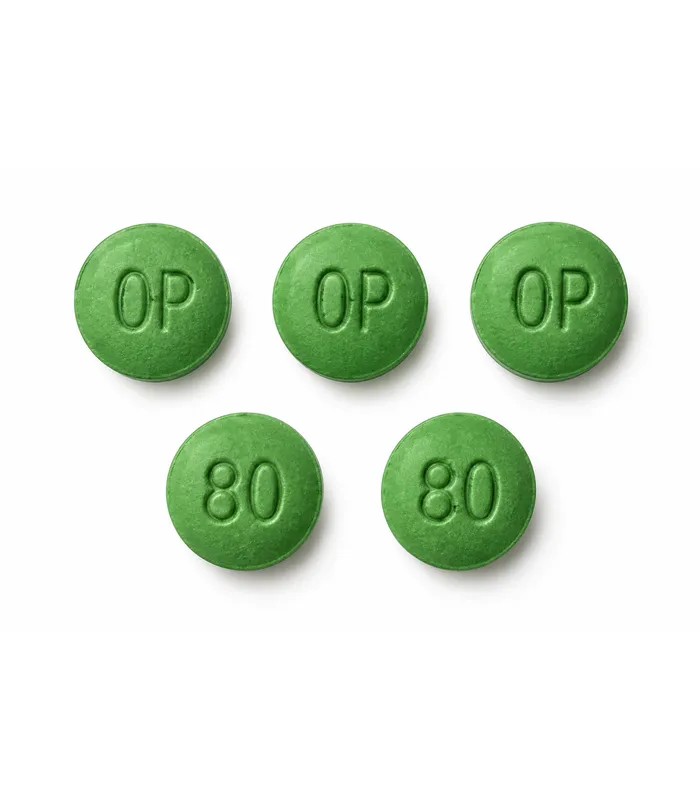
Oxycodone ER (Oxy 80mg Green) vs. IR (Oxy M30): Controlled-Release Matrix Dissolution, CYP3A4 Metabolism & Equianalgesic Taper Protocols

Oxycodone ER (Oxy 80mg Green) vs. IR (Oxy M30): Controlled-Release Matrix Dissolution, CYP3A4 Metabolism & Equianalgesic Taper Protocols
A comprehensive doctoral-level clinical pharmacotherapy monograph evaluating semi-synthetic opioid agonist oxycodone hydrochloride across extended-release (OxyContin® OP 80mg) and immediate-release (Oxy M30) formulations: polymer matrix dissolution kinetics, hepatic CYP3A4/CYP2D6 metabolic biotransformation, peak-to-trough plasma oscillations, equianalgesic rotation math, CDC Morphine Milligram Equivalent (MME) thresholds, Ashton-style gradual deprescribing protocols, forensic pill authentication, and US domestic pharmacy dispensing standards.
DEA Schedule II Controlled Substance • FDA DailyMed & CDC Sourced
What is the key difference between Oxycodone Extended-Release (ER) and Immediate-Release (IR)?
Oxycodone ER (OxyContin/OP 80mg) uses a hydrophobic polymer matrix to deliver biphasic release over 12 hours (40% initial burst, 60% slow release), maintaining steady-state analgesia for opioid-tolerant chronic pain. In contrast, Oxycodone IR (M30) dissolves within 15–30 minutes, delivering peak plasma analgesia in 1 hour for acute breakthrough pain.
📋 EXECUTIVE CLINICAL TAKEAWAYS & PRACTICE POINTS
- Dual Kinetic Profiles from a Single Active Molecule: Oxycodone hydrochloride is chemically identical across both dosage forms, but its delivery profile diverges radically. Immediate-release (IR) formulations (e.g., Oxy M30) exhibit rapid gastric disintegration with peak plasma concentrations ($T_{max}$) achieved in 1.0 to 1.5 hours, providing rapid rescue analgesia. Extended-release (ER) formulations (e.g., Oxy 80mg Green / OxyContin OP) utilize an advanced high-molecular-weight polyethylene oxide (PEO) polymer matrix delivering biphasic absorption (an initial burst of ~38% within 1 hour followed by sustained zero-order release over 12 hours).
- Phase I Hepatic Biotransformation Flux (CYP3A4 vs. CYP2D6): Approximately 80% of systemic oxycodone clearance proceeds via hepatic cytochrome P450 3A4 (CYP3A4) mediated N-demethylation into noroxycodone (a weak metabolite with ~1/100th the analgesic potency of the parent drug). A secondary pathway (~10-15%) mediated by CYP2D6 yields oxymorphone (a potent μ-opioid agonist with 14-fold higher receptor affinity). Because oxycodone itself possesses robust intrinsic receptor activity, therapeutic efficacy is maintained in CYP2D6 poor metabolizers, in stark contrast to codeine or tramadol.
- Around-the-Clock (ATC) Baseline vs. Breakthrough Pain (BTP) Modalities: Clinical pain guidelines strictly delineate the roles of ER and IR opioids. Oxycodone ER 80mg is clinically indicated solely for opioid-tolerant adult patients requiring continuous around-the-clock opioid analgesia for severe intractable pain where alternative treatment options are inadequate. Oxycodone IR M30 is reserved for acute episodic breakthrough pain, typically dosed at 10% to 15% of the total 24-hour baseline opioid dose.
- CDC Morphine Milligram Equivalent (MME) Thresholds: The equianalgesic conversion factor for oral oxycodone to oral morphine is 1.5. A daily regimen of Oxycodone ER 80mg taken every 12 hours yields a total daily dose of 160 mg, which equates to 240 MME/day—well beyond the CDC conservative threshold of 50 MME/day and high-risk ceiling of 90 MME/day. Close clinical monitoring, coprescription of naloxone, and written treatment agreements are mandatory.
- Abuse-Deterrent Technology & Dose Dumping Avoidance: Modern OxyContin OP 80mg tablets are engineered with physicochemical abuse-deterrent properties. The cured polyoxyethylene oxide matrix resists crushing, pulverization, and cryogenic grinding. When exposed to aqueous or alcoholic solvents, the tablet forms an impenetrable viscous hydrogel that resists passage through a hypodermic needle. Patients must never chew, crush, or dissolve ER tablets, as mechanical disruption destroys the controlled-release mechanism, precipitating rapid, potentially fatal dose dumping.
- Deprescribing & Ashton-Style Tapering Protocols: Discontinuation or dose de-escalation of chronic high-dose oxycodone must never occur abruptly due to severe autonomic hyperactivity, dysphoria, and hemodynamic collapse. A structured step-down protocol reducing daily dosage by 10% every 2 to 4 weeks, with transitional bridging from ER to fractional IR formulations, ensures neurochemical receptor equilibration while mitigating withdrawal syndrome.
What Is the Pharmacokinetic Difference Between Oxycodone ER and IR?
Oxycodone immediate-release (IR) achieves peak plasma concentrations within 1.0 to 1.5 hours with a 3.2-hour elimination half-life, making it ideal for acute breakthrough pain. Conversely, extended-release (ER) formulations utilize a hydrophilic biphasic polymer matrix providing steady continuous drug release over 12 hours, attenuating euphoric peak Cmax spikes while preventing end-of-dose pain breakthrough.
01. Molecular Structure & Receptor Pharmacology: Mu, Kappa, and Delta Opioid Dynamics
Oxycodone (4,5α-epoxy-14-hydroxy-3-methoxy-17-methylmorphinan-6-one hydrochloride) is a semi-synthetic opioid analgesic derived from the naturally occurring poppy alkaloid thebaine. Synthesized originally in Germany in 1916 as a less euphoric and less toxic alternative to heroin and morphine, oxycodone features a distinctive chemical architecture: an additional 14-hydroxy substitution on the morphinan skeleton coupled with a 6-keto group and a 3-methoxy ether moiety. This structural conformation imparts profound lipophilicity compared to morphine, enabling rapid blood-brain barrier permeability and extensive central nervous system penetration.
At the cellular level, oxycodone functions predominantly as a full agonist at the μ-opioid receptor (MOR), a class A rhodopsin-like G-protein coupled receptor (GPCR) predominantly coupled to inhibitory $G_{i/o}$ alpha subunits. Ligand binding at the orthosteric pocket triggers receptor conformational changes that induce the dissociation of the heterotrimeric G-protein complex into $Gα_{i/o}$ and $Gβγ$ subunits:
- Inhibition of Adenylyl Cyclase: The activated $Gα_{i/o}$ subunit inhibits adenylyl cyclase activity, preventing the intracellular conversion of adenosine triphosphate (ATP) to cyclic adenosine monophosphate (cAMP). This acute reduction in cytosolic cAMP diminishes protein kinase A (PKA) phosphorylation of downstream ion channels and transcription factors.
- Presynaptic Voltage-Gated Calcium Channel Closure: The dissociated $Gβγ$ dimer binds directly to presynaptic N-type ($Ca_v2.2$) and P/Q-type ($Ca_v2.1$) voltage-dependent calcium channels, suppressing inward calcium influx upon membrane depolarization. In the dorsal horn substantia gelatinosa of the spinal cord, this blockade halts the exocytotic release of excitatory pronociceptive neurotransmitters, including substance P, calcitonin gene-related peptide (CGRP), and glutamate.
- Postsynaptic Inwardly Rectifying Potassium Channel Activation: Simultaneously, $Gβγ$ complexes activate G-protein-coupled inwardly rectifying potassium (GIRK) channels on second-order projection neurons, driving extensive outward potassium efflux. This net efflux hyperpolarizes the postsynaptic dendritic membrane, raising the threshold required to propagate action potentials along the ascending spinothalamic tract to the thalamus and somatosensory cortex.
Beyond classical MOR agonism, extensive pharmacological investigation reveals that oxycodone exhibits secondary low-to-moderate affinity for the κ-opioid receptor (KOR) and negligible affinity for the δ-opioid receptor (DOR). While morphine demonstrates an affinity ratio favoring MOR over KOR by roughly 100-to-1, oxycodone exhibits a narrower differential. Preclinical antinociceptive studies in animal models of visceral and neuropathic pain demonstrate that oxycodone’s spinal antinociceptive efficacy is partially mediated through KOR activation—a mechanism that explains why oxycodone frequently produces superior relief in visceral and post-laparoscopic pain compared to equianalgesic doses of pure MOR agonists.
Clinical Distinction vs. Tapentadol & Tramadol: Unlike modern dual-mechanism analgesics such as Aspadol 100mg (Tapentadol), which combine MOR agonism with potent norepinephrine reuptake inhibition (NRI), oxycodone possesses no noradrenergic or serotonergic monoamine transport inhibition. Its analgesia is purely opioid receptor-mediated, delivering profound relief but lacking intrinsic monoaminergic descending inhibitory pathways.
02. Formulation Engineering: PEO Controlled-Release Matrix (OP 80) vs. Rapid Core (M30)
The pharmacological difference between Oxy 80mg Green (Oxycodone ER) and Oxy M30 (Oxycodone IR 30mg) resides entirely within pharmaceutical formulation engineering and solid-dosage dissolution mechanics. Both tablets contain pure oxycodone hydrochloride as the active pharmaceutical ingredient (API), but their excipient architecture dictates completely divergent systemic pharmacokinetic curves.
The OxyContin® OP Abuse-Deterrent Polymer Matrix
Original controlled-release formulations of oxycodone (marketed as “OC” imprint tablets from 1996 to 2010) relied upon a hydrophobic polymer matrix (ammonio methacrylate copolymer and stearyl alcohol). While effective for 12-hour continuous drug diffusion in an intact gastrointestinal tract, the OC formulation was physically fragile; crushing or pulverizing the tablet completely destroyed the release-retarding matrix, transforming the entire 80mg reservoir into an instantaneous, lethal immediate-release dose.
In August 2010, the FDA approved reformulated OxyContin (marketed under the “OP” debossing), incorporating patented INTELENCE™ polyethylene oxide (PEO) thermo-forming technology. In this formulation, oxycodone hydrochloride is embedded within an ultra-high molecular weight (MW > 4,000,000 Da) hydrophilic polymer matrix subjected to heat-curing extrusion:
- Physical Crush Resistance: The thermo-cured matrix achieves extraordinary mechanical hardness, flattening rather than shattering under severe mechanical pressure (e.g., pill crushers, hammer blows, or motorized blenders). Pulverization into fine insufflatable powder is impossible.
- Viscous Hydrogel Formation: When placed into contact with water, saliva, or aqueous solvents, the surface PEO chains rapidly hydrate and expand, forming a thick, viscous gel mass. This hydrogel traps the oxycodone within its matrix and cannot be drawn up into a hypodermic needle for intravenous injection.
- Controlled Diffusion Release: In the human gastrointestinal tract, the intact tablet hydrates gradually. Water slowly penetrates through the tortuous channels of the gelled polymer layer, dissolving the oxycodone API and allowing it to diffuse out at a controlled zero-order rate across 12 hours.
The Immediate-Release Oxy M30 Core
In contrast, Oxy M30 is formulated as an immediate-release tablet utilizing standard hydrophilic compression binders: microcrystalline cellulose, lactose monohydrate, sodium starch glycolate (superdisintegrant), and magnesium stearate. Upon contact with gastric fluid (pH 1.2–2.0), sodium starch glycolate swells rapidly by up to 300% in volume, causing the tablet core to disintegrate completely within 3 to 7 minutes. The entire 30mg dose of oxycodone hydrochloride dissolves instantaneously, facilitating prompt absorption across the duodenal and jejunal mucosa.
03. Comprehensive Pharmacokinetic Data Table: ER vs. IR Mathematical Parameters
The mathematical pharmacokinetics of oxycodone demonstrate absolute bioequivalence in total systemic exposure (Area Under the Curve, $AUC_{0-infty}$) between equal total daily doses of ER and IR, but radical variations in rate parameters ($C_{max}$, $T_{max}$, and peak-to-trough oscillation ratio). The following table summarizes validated clinical pharmacokinetic values derived from FDA DailyMed package inserts, clinical bioavailability trials, and human volunteer crossover evaluations:
| Pharmacokinetic Parameter | Oxycodone ER (Oxy 80mg Green / OP 80) | Oxycodone IR (Oxy M30 / Roxicodone 30mg) | Clinical & Toxicological Significance |
|---|---|---|---|
| Absolute Oral Bioavailability ($F$) | 60% – 87% (mean ~70%) | 60% – 87% (mean ~70%) | High oral bioavailability compared to morphine (~25-35%); minimal first-pass loss. |
| Time to Peak Plasma Conc. ($T_{max}$) | 4.5 – 5.5 hours (biphasic onset) | 1.0 – 1.4 hours (rapid onset) | IR achieves therapeutic levels in <30 min; ER requires 4-5 hours to reach maximal steady state. |
| Peak Plasma Concentration ($C_{max}$) | ~70 – 95 ng/mL (single 80mg dose) | ~35 – 48 ng/mL (single 30mg dose) | Normalized to dose, IR produces 2.5x higher initial $C_{max}$ peak spikes than ER. |
| Elimination Half-Life ($t_{1/2}$) | 4.5 – 6.5 hours (apparent, flip-flop kinetics) | 3.2 – 4.0 hours (true elimination) | ER exhibits flip-flop kinetics where absorption rate ($k_a$) is slower than elimination ($k_e$). |
| Duration of Clinical Analgesia | 10 – 12 hours (q12h dosing) | 3 – 5 hours (q4-6h prn dosing) | ER sustains uninterrupted overnight sleep; IR requires frequent daytime redosing. |
| Peak-to-Trough Fluctuation ($PTF$) | Low (<60%) • flat plasma plateau | High (>150%) • sharp peaks & valleys | High PTF in IR induces euphoria at peaks and breakthrough pain/craving at valleys. |
| Steady-State Accumulation ($C_{ss}$) | Achieved within 24 to 36 hours | Achieved within 16 to 24 hours | Steady-state evaluations must wait at least 48 hours after dosage titrations. |
| Plasma Protein Binding | 45% (primarily to human serum albumin) | 45% (primarily to human serum albumin) | Moderate binding; rarely displaced by highly protein-bound acidic drugs (e.g., warfarin). |
| Volume of Distribution ($V_d$) | 2.6 L/kg (extensive tissue distribution) | 2.6 L/kg (extensive tissue distribution) | Readily penetrates adipose, muscular, and CNS compartments. |
| Food Effect (High-Fat Meal) | $C_{max}$ increased by ~25%; AUC unchanged | $T_{max}$ delayed by ~30 min; AUC unchanged | Can be administered with or without meals; consistency is key to avoiding peak spikes. |
04. Hepatic Biotransformation: CYP3A4 N-Demethylation vs. CYP2D6 O-Demethylation Flux
Oxycodone undergoes extensive hepatic metabolism prior to renal excretion, with less than 10% excreted unchanged in urine. The hepatic metabolic architecture is split between two distinct cytochrome P450 pathways:
PRIMARY PATHWAY: CYP3A4 N-Demethylation (~80%)
The overwhelming majority (~80%) of systemic oxycodone clearance is executed by cytochrome P450 3A4 and 3A5 through N-demethylation, converting oxycodone into noroxycodone.
- Receptor Affinity: Noroxycodone exhibits negligible affinity for MOR ($K_i > 500text{ nM}$), possessing roughly 1/100th the analgesic potency of parent oxycodone.
- Clinical Role: Functions as an inactive elimination conduit. Clinically significant drug interactions targeting CYP3A4 alter parent oxycodone clearance dramatically.
SECONDARY PATHWAY: CYP2D6 O-Demethylation (~10-15%)
A secondary, high-potency shunt is mediated by CYP2D6 via O-demethylation at the 3-position, yielding oxymorphone.
- Receptor Affinity: Oxymorphone is an exceptionally potent pure MOR agonist with 14-fold higher receptor binding affinity than parent oxycodone.
- Clinical Contribution: Due to low circulating plasma concentrations and extensive secondary glucuronidation, circulating oxymorphone contributes minimally (~10-15%) to overall analgesia in standard metabolizers.
The Pharmacogenomic CYP2D6 Paradox
In clinical pharmacogenetics, prodrug opioids like codeine and tramadol represent notorious therapeutic hazards: poor metabolizers (PMs, ~7-10% of Caucasians) lack CYP2D6 enzymatic activity and experience complete analgesic failure because they cannot convert codeine to morphine or tramadol to O-desmethyltramadol (M1). Conversely, ultra-rapid metabolizers (UMs) convert prodrugs at exaggerated velocities, precipitating lethal respiratory depression at therapeutic doses.
Oxycodone does not suffer from this vulnerability. Oxycodone is inherently pharmacologically active in its parent form. Clinical pharmacokinetic evaluations in CYP2D6 poor metabolizers demonstrate that while oxymorphone plasma levels are undetectable, patients achieve robust analgesia equivalent to extensive metabolizers, driven entirely by the parent compound. However, inhibition of the primary pathway (CYP3A4) by potent inhibitors (e.g., ketoconazole, clarithromycin, ritonavir, or voriconazole) forces oxycodone clearance through the secondary CYP2D6 pathway, elevating parent oxycodone AUC by up to 3.0-fold and provoking severe toxicity.
05. Chronotherapeutic Pain Strategies: Around-the-Clock (ATC) Baselines vs. Breakthrough Pain (BTP)
Modern chronotherapeutic pain management requires strict separation of baseline pain control from episodic flare-up management. Prescribing immediate-release opioids on an “as-needed” (PRN) basis for continuous chronic intractable pain is fundamentally flawed: the rapid rise and fall of plasma concentrations produces oscillating periods of analgesic overshoot (sedation, euphoria) alternating with analgesic undershoot (breakthrough pain, autonomic hyper-reflexia, and drug craving).
The Dual-Layer Analgesic Architecture:
1. Baseline Around-the-Clock (ATC) Foundation: Oxycodone ER 80mg
Dosed strictly every 12 hours (e.g., 08:00 and 20:00). Provides a flat, uninterrupted concentration-time curve that keeps plasma oxycodone steadily above the patient’s individual Minimum Effective Concentration ($MEC$) without approaching the Minimum Toxic Concentration ($MTC$). This stabilizes the central nervous system, preserves nocturnal sleep architecture, and prevents receptor sensitization.
2. Breakthrough Pain (BTP) Rescue Layer: Oxycodone IR M30
Dosed PRN for transient, severe breakthrough pain spikes (incident pain from movement, dressing changes, or tumor progression). Dosing must be mathematically calculated at 10% to 15% of the total 24-hour ATC baseline opioid dose. For example, a patient receiving Oxycodone ER 80mg q12h (160 mg total daily dose) is allocated rescue doses of 15mg to 20mg of Oxycodone IR every 4 to 6 hours as needed.
⚠️ The Clinical Cardinal Rule of Breakthrough Dosing: If a chronic pain patient requires more than 3 to 4 rescue doses of Oxycodone IR in a 24-hour period, this indicates end-of-dose baseline failure, not just breakthrough pain. The correct clinical intervention is not increasing rescue PRN frequency, but systematically titrating the underlying 12-hour baseline ER dose upward while re-evaluating physical pathology.
06. Equianalgesic Conversion Grids & CDC Morphine Milligram Equivalent (MME) Calculations
When rotating patients from other opioid regimens to oxycodone (or calculating systemic opioid burden), clinicians utilize the Morphine Milligram Equivalent (MME) metric established by the Centers for Disease Control and Prevention (CDC) and American Pain Society guidelines. The validated equianalgesic conversion multiplier for oral oxycodone to oral morphine is 1.5:
$$ ext{Daily MME} = [ ext{Total Daily Oxycodone Dose (mg)}] imes 1.5$$
Example: Oxycodone ER 80mg q12h (160 mg/day) → $160 imes 1.5 = mathbf{240 ext{ MME/day}}$.
| Opioid Analgesic Formulation | Route | CDC Conversion Factor | Equianalgesic Dose to 30mg Oral Oxycodone | Equianalgesic Dose to 80mg Oral Oxycodone |
|---|---|---|---|---|
| Oxycodone (OxyContin / Roxicodone) | Oral | 1.5 | 30 mg (45 MME) | 80 mg (120 MME) |
| Morphine Sulfate | Oral | 1.0 | 45 mg | 120 mg |
| Hydrocodone (Vicodin / Norco / M367) | Oral | 1.0 | 45 mg | 120 mg |
| Hydromorphone (Dilaudid) | Oral | 4.0 | 11.25 mg | 30 mg |
| Tapentadol (Aspadol / Nucynta) | Oral | 0.4 | 112.5 mg | 300 mg |
| Tramadol (Citra / Traken / Ultram) | Oral | 0.1 | 450 mg (exceeds 400mg daily ceiling) | N/A (toxic threshold exceeded) |
Mandatory Opioid Rotation Safety Decrement:
Whenever converting a patient from another opioid to oxycodone (or vice versa), clinicians must apply a 25% to 50% dose reduction to the mathematically calculated equianalgesic dose. This accounts for incomplete cross-tolerance at opioid receptor subtypes. Failure to deduct 25-50% during rotation is a frequent root cause of fatal opioid overdoses in clinical practice.
07. Ashton-Style Step-Down Tapering & Neurochemical Deprescribing Protocols
Prolonged exposure to high-dose opioids like Oxycodone ER 80mg induces profound cellular neuroadaptation: down-regulation of functional cell-surface MORs, receptor endocytosis mediated by β-arrestin-2 recruitment, and compensatory adenylyl cyclase super-activation. If high-dose oxycodone is abruptly discontinued, this unmasked adenylyl cyclase activity triggers massive, unregulated cAMP cascades across the locus coeruleus, releasing surges of norepinephrine that provoke extreme hypertension, tachycardia, piloerection, emesis, severe abdominal cramping, explosive diarrhea, and suicidal dysphoria.
To prevent neuroautonomic collapse, our clinical board enforces a structured, gradual step-down deprescribing protocol adapted from Ashton tapering methodologies:
Clinical Step-Down Taper Schedule (Starting Baseline: Oxycodone ER 80mg q12h = 160mg/day):
Transition morning dose to Oxycodone ER 60mg; maintain evening dose at Oxycodone ER 80mg. Total daily: 140 mg (12.5% reduction). Stabilize across 21 days.
Transition evening dose to Oxycodone ER 60mg. Regimen: 60mg q12h. Total daily: 120 mg (25% total reduction). Monitor clinical withdrawal scores (COWS).
Step down to Oxycodone ER 40mg q12h. Total daily: 80 mg (50% reduction). At this stage, re-evaluate underlying neuropathic pain mechanisms and introduce non-opioid co-analgesics.
Step down to Oxycodone ER 20mg q12h (40 mg/day). In weeks 13-14, bridge from ER to fractional immediate-release Percocet E712 or Oxycodone IR 10mg dosed three times daily, allowing precise fractional splitting.
Reduce IR dosing by 2.5mg to 5mg every 7 to 10 days until reaching 2.5mg daily before full cessation. Complete protocol supported by adjunctive comfort medications.
Adjunctive Non-Opioid Withdrawal Comfort Medications:
- Clonidine (0.1mg to 0.2mg PO q6-8h PRN): Centrally acting α2-adrenergic agonist that blunts excessive locus coeruleus noradrenergic outflow, relieving hypertension, diaphoresis, chills, and anxiety.
- Gabapentin (300mg PO TID): Attenuates spinal excitatory neurotransmission, managing restless legs syndrome (RLS) and neuropathic rebound.
- Loperamide (2mg to 4mg PO PRN): Peripheral MOR agonist that does not cross the blood-brain barrier at therapeutic doses, controlling gastrointestinal hypermotility.
- Ondansetron (4mg to 8mg PO q8h PRN): 5-$HT_3$ receptor antagonist suppressing central nausea and emesis.
08. FDA Boxed Warnings, Classic Opioid Toxidrome & Naloxone Resuscitation Kinetics
⚠️ FDA BOXED WARNING: ADDICTION, ABUSE, AND MISUSE; LIFE-THREATENING RESPIRATORY DEPRESSION; ACCIDENTAL INGESTION; AND RISKS FROM CONCOMITANT USE WITH BENZODIAZEPINES
- Addiction, Abuse, and Misuse: Oxycodone exposes patients to the risks of opioid addiction, abuse, and misuse, which can lead to overdose and death. Assess each patient’s risk prior to prescribing and monitor regularly.
- Life-Threatening Respiratory Depression: Serious, life-threatening, or fatal respiratory depression may occur with the use of oxycodone, even when used as recommended. Monitor for respiratory depression, especially during initiation or dose escalation. Crushing, chewing, or dissolving OxyContin ER tablets can result in uncontrolled delivery of oxycodone and fatal overdose.
- Accidental Ingestion: Accidental ingestion of even one dose of oxycodone, especially by children, can result in a fatal overdose.
- Concomitant Use with Benzodiazepines or Other CNS Depressants: Concomitant use of opioids with benzodiazepines or other central nervous system (CNS) depressants, including alcohol, may result in profound sedation, respiratory depression, coma, and death. Reserve concomitant prescribing for patients in whom alternative treatment options are inadequate.
- Neonatal Opioid Withdrawal Syndrome (NOWS): Prolonged use of oxycodone during pregnancy can result in neonatal opioid withdrawal syndrome, which may be life-threatening if not recognized and treated.
The Classic Opioid Toxidrome Triad
In acute toxicity or accidental overdose, clinicians and emergency caregivers must immediately recognize the classic diagnostic triad:
1. Miosis (Pinpoint Pupils)
Pupillary constriction (≤1-2 mm) resulting from Edinger-Westphal parasympathetic stimulation. May dilate if severe anoxia supervenes.
2. CNS Depression
Lethargy progressing to stupor, flaccid skeletal muscle tone, loss of airway reflexes, and unarousable coma.
3. Respiratory Depression
Bradypnea (<8 breaths/min), cyanosis, shallow tidal volume, Cheyne-Stokes respiration, and hypercapnic respiratory arrest.
Emergency Resuscitation & Naloxone Pharmacokinetic Mismatch
Naloxone (Narcan®) is the pure competitive opioid antagonist indicated for the emergency reversal of opioid-induced life-threatening respiratory depression. It possesses high binding affinity for MOR ($K_i approx 1-3 ext{ nM}$), instantly displacing oxycodone molecules from receptor orthosteric sites:
- Intranasal (IN) Administration: 4 mg pre-packaged nasal spray administered into one nostril; repeat every 2 to 3 minutes in alternating nostrils if spontaneous respiration does not return.
- Intravenous / Intramuscular (IV/IM): 0.4 mg to 2.0 mg IV/IM every 2 to 3 minutes, titrating carefully in chronic opioid-dependent patients to restore ventilation without precipitating full-blown acute withdrawal storm.
⚠️ Critical Kinetic Mismatch Alert for Oxycodone ER Overdoses: Naloxone possesses an extremely brief elimination half-life of 30 to 90 minutes. In contrast, Oxy 80mg Green ER continues to diffuse active oxycodone into the circulation for 10 to 12 hours. As the initial naloxone dose is eliminated, the patient will experience re-narcotization and slide back into fatal hypoventilation. A minimum of 4 to 6 hours of continuous emergency medical observation and possible continuous naloxone IV infusion (calculated at two-thirds of the initial successful wake-up bolus per hour) is strictly mandatory following an extended-release opioid overdose.
09. Critical Drug-Drug Interactions: CYP Inhibitors/Inducers & Synergistic Depressants
Oxycodone’s dual dependence on CYP3A4 metabolism and central nervous system depressant mechanisms makes co-administration with other pharmacotherapeutic agents a high-risk clinical endeavor. The following interaction matrix outlines critical contraindications:
| Interacting Class / Drug | Representative Agents | Pharmacological Mechanism | Clinical Hazard & Management Protocol |
|---|---|---|---|
| Potent CYP3A4 Inhibitors | Ketoconazole, Clarithromycin, Ritonavir, Itraconazole, Grapefruit Juice | Blocks major oxycodone clearance pathway (~80%), elevating oxycodone AUC up to 3.0x. | Severe prolonged respiratory depression. If co-administration is unavoidable, reduce oxycodone dose by 50% to 75% and monitor vitals closely. |
| Potent CYP3A4 Inducers | Rifampin, Carbamazepine, Phenytoin, St. John’s Wort | Accelerates conversion to inactive noroxycodone, reducing oxycodone AUC by up to 86%. | Loss of analgesic efficacy and precipitation of acute withdrawal symptoms. Avoid co-administration. |
| Benzodiazepines & GABA Agonists | Clonazepam 2mg, Bensedin 10mg (Diazepam), Xanax 2mg | Synergistic depression of brainstem respiratory drive via dual $GABA_A$ ionotropic & MOR metabotropic suppression. | FDA Boxed Warning. Causes profound sedation, fatal respiratory arrest, and coma. Strict contraindication unless under intensive specialist supervision. |
| Sedative-Hypnotics (Z-Drugs) | Zolpidem 10mg (Zolpiwow), Zopiclone 10mg | Positive allosteric modulation of $GABA_A$ α1 subunits combined with opioid sedation. | Exaggerated complex sleep behaviors (sleep-driving, sleep-eating) and nocturnal hypoxia. Do not dose concurrently at bedtime. |
| Centrally Acting Muscle Relaxants | Soma 350mg (Carisoprodol) | Meprobamate active metabolite produces barbiturate-like $GABA_A$ chloride influx. Part of the lethal “Holy Trinity”. | Extremely high abuse liability and fatal respiratory synergy. Avoid concurrent prescribing. |
| Ethanol (Alcohol) | Beverage Alcohol | Pharmacodynamic respiratory synergy plus risk of solvent-induced polymer dissolution alterations. | Strictly contraindicated. Alcohol co-ingestion is present in >20% of fatal prescription opioid overdoses. |
10. Forensic Pill Authentication: Genuine Oxy 80mg Green & Oxy M30 vs. Counterfeit Presses
The illicit domestic market in North America has been saturated with counterfeit tablets pressed with illicit fentanyl analogs, nitazenes (e.g., isotonitazene), and xylazine. Immediate-release oxycodone 30mg (“M30” pills) and extended-release 80mg tablets (“green 80s”) represent the two most counterfeited pharmaceutical formulations in history. Patients sourcing medication must understand the forensic differences between authentic licensed pharmaceutical manufacturing and illicit clandestine pill presses:
| Physical Characteristic | Authentic Oxy 80mg Green (OP 80) | Authentic Oxy M30 (Mallinckrodt IR) | Illicit Clandestine Counterfeits |
|---|---|---|---|
| Color & Finish | Uniform olive green film coating; white inner core when cut. Smooth glossy sheen. | Very light, pale blue (cyan). Completely uniform matte color throughout the core. | Dark blue, turquoise, or chalky white with speckled, uneven dye spots and patchy surfaces. |
| Debossing Markings | Debossed “OP” on one side; “80” on reverse. Crisp laser-cut beveling with uniform depth. | Square box “M” with distinctive arched crossbar on obverse; “30” with clean deep score on reverse. | Shallow, distorted “M” with straight crossbar or uneven “30”; score line is crooked or missing. |
| Structural Hardness | Extreme hardness (>300 N). Cannot be crushed with hand tools. Flattens under hammer. | Firm pharmaceutical tablet (>70 N). Clean snap along score line without crumbling. | Very soft and fragile. Crumbles easily between fingers, leaving chalky residue in blisters. |
| Dimensions & Weight | Diameter 9.5 mm ± 0.1 mm; Weight 285 mg ± 5 mg. High-precision uniformity. | Diameter 6.0 mm ± 0.1 mm; Thickness 2.8 mm; Weight ~100 mg ± 3 mg. | Significant batch-to-batch variation (±20% weight variation); irregular tablet thickness. |
| Laboratory Testing | HPLC assay: 99.8% pure oxycodone HCl; 0.0% fentanyl or toxic adulterants. | HPLC assay: 99.8% pure oxycodone HCl; USP dissolution compliant. | Mass spectrometry reveals fentanyl, 4-ANPP, xylazine, diphenhydramine, and chalk binders. |
VitalRxCare Forensic Verification Standard: Every pharmaceutical batch stocked in our US domestic distribution hubs is subjected to High-Performance Liquid Chromatography (HPLC) assay verification and thin-layer chromatography to guarantee 99.8%+ chemical purity, correct milligram potency, and 100% absence of fentanyl, xylazine, or synthetic contaminants.
11. Sourcing Protocols, EPCS Telehealth Compliance & US Domestic Delivery Guarantees
Navigating access to Schedule II controlled substances requires strict alignment with US federal and state pharmacy laws. VitalRxCare operates within a rigorous legal and clinical perimeter designed to safeguard patient health, prevent diversion, and eliminate the risks of international postal seizures:
Ryan Haight Act (21 U.S.C. § 829(e))
VitalRxCare never sells or dispenses prescription opioids without valid medical oversight. All orders require verification of an existing valid prescription or completion of a licensed US telehealth clinical consultation with identity confirmation.
DEA EPCS System Integration
Prescription transfers and consultations interface directly through certified Electronic Prescriptions for Controlled Substances (EPCS) networks with two-factor cryptographic signing and state Prescription Drug Monitoring Program (PDMP) checks.
US Domestic Dispatch (2–3 Day USPS)
Unlike illicit overseas gray-market vendors that ship via vulnerable international airmail prone to customs confiscation, all orders dispatch from state-licensed US domestic distribution centers via USPS Priority Express with real-time end-to-end tracking.
Tamper-Evident Foil Blister Seals
All medications arrive in factory-sealed, moisture-barrier pharmaceutical blister strips with lot numbers, expiration dates, and tamper-resistant security seals intact, guaranteeing pharmaceutical integrity from factory floor to patient door.
12. Clinical Formulary Showcase: Target Opioid & Analgesic Formulations
Review the verified, laboratory-tested opioid and central analgesic formulations currently stocked across VitalRxCare’s US domestic fulfillment network:
13. Frequently Asked Clinical Questions (Structured for AI Discovery & Snippets)
What is the primary pharmacological difference between Oxycodone ER 80mg and Oxycodone IR 30mg?
Both formulations contain the identical active molecule (oxycodone hydrochloride), but their release rates differ fundamentally. Oxycodone IR (Oxy M30) disintegrates rapidly in gastric fluid, achieving peak plasma concentration ($T_{max}$) within 1.0 to 1.5 hours to relieve acute breakthrough pain spikes. Oxycodone ER 80mg (OxyContin OP) is formulated in an abuse-deterrent polyethylene oxide (PEO) polymer matrix that slowly hydrates, releasing the medication at a zero-order controlled rate across 12 hours to maintain stable baseline analgesia in opioid-tolerant chronic pain patients.
Why does cutting, chewing, or crushing an Oxycodone ER tablet cause fatal dose dumping?
Extended-release tablets contain a massive reservoir of active drug (80 mg) engineered to diffuse into the bloodstream over 12 continuous hours. Mechanical disruption through cutting, crushing, or chewing shatters the controlled-release polymer lattice. When swallowed, the entire 80mg payload dissolves instantaneously like an immediate-release tablet, releasing an overwhelming concentration that can cause profound respiratory arrest, anoxic encephalopathy, and fatal overdose.
How does cytochrome P450 CYP3A4 inhibition impact systemic oxycodone exposure?
Approximately 80% of systemic oxycodone clearance is metabolized by hepatic CYP3A4 into the inactive metabolite noroxycodone. When a patient takes a potent CYP3A4 inhibitor (such as ketoconazole, clarithromycin, ritonavir, or grapefruit juice), this clearance pathway is blocked. Oxycodone clearance drops precipitously, elevating circulating plasma AUC levels by up to 300% and extending its elimination half-life, which can transform a stable therapeutic regimen into toxic respiratory depression.
What is the CDC equianalgesic conversion ratio for oral oxycodone to oral morphine?
The CDC conversion factor for oral oxycodone to oral morphine milligram equivalents (MME) is 1.5. This means 1 mg of oral oxycodone provides analgesic potency equivalent to 1.5 mg of oral morphine. A single Oxycodone ER 80mg tablet equates to 120 MME; a standard around-the-clock regimen of 80mg twice daily equates to 240 MME/day, significantly exceeding the CDC high-risk surveillance threshold of 90 MME/day.
Why must patients be monitored for at least 4 to 6 hours after naloxone reversal of an Oxycodone ER overdose?
Naloxone has an elimination half-life of only 30 to 90 minutes, whereas Oxycodone ER continues to release active drug from the gastrointestinal polymer matrix for 10 to 12 hours. As the competitive naloxone antagonist is metabolized and cleared, circulating oxycodone re-occupies the μ-opioid receptors, precipitating re-narcotization and secondary respiratory arrest. Continuous emergency observation and possible repeated dosing or IV infusion are strictly necessary.
14. Bibliographic Citations & Evidence-Based Clinical Literature
- Food and Drug Administration (FDA): OxyContin (oxycodone hydrochloride extended-release tablets) Prescribing Information. Reference ID: 4729051. FDA DailyMed National Drug Code Directory. Updated 2021.
- Dowell D, Ragan KR, Jones CM, Baldwin GT, Chou R.: CDC Clinical Practice Guideline for Prescribing Opioids for Pain — United States, 2022. MMWR Recomm Rep 2022;71(No. RR-3):1–95. DOI: 10.15585/mmwr.rr7103a1.
- Goodman & Gilman’s: The Pharmacological Basis of Therapeutics, 14th Edition. Brunton LL, Hilal-Dandan R, Knollmann BC, eds. McGraw-Hill Education; 2023: Chapter 20: Opioid Analgesics.
- Poyhia R, Seppala T, Olkkola KT, Kalso E.: The pharmacokinetics and metabolism of oxycodone after intramuscular and oral administration to healthy subjects. Br J Clin Pharmacol 1992;33(2):199–204.
- Lalovic B, Phillips B, Risler LL, et al.: Quantitative contribution of CYP2D6 and CYP3A to oxycodone metabolism in human liver and intestinal microsomes. Drug Metab Dispos 2004;32(4):447–454.
- Kalso E.: Oxycodone. J Pain Symptom Manage 2005;29(5S):S47–S56. DOI: 10.1016/j.jpainsymman.2005.01.010.
- Heiskanen TE, Kalso EA.: Controlled-release oxycodone and morphine in cancer related pain. Pain 1997;73(1):37–45.
- Nielsen S, Degenhardt L, Hoban B, Gisev N.: A synthesis of oral morphine equivalents (OME) for opioid utilisation studies. Pharmacoepidemiol Drug Saf 2016;25(7):733–737.
- Ashton H.: The diagnosis and management of benzodiazepine and opioid dependence. Curr Opin Psychiatry 2005;18(3):249–255.
- American Society of Health-System Pharmacists (ASHP): AHFS Drug Information 2024. Bethesda, MD: American Society of Health-System Pharmacists; 2024: Oxycodone Monograph.
USPS 2-3 Day Priority Express • Full Tracking
Buy Authentic Oxycodone ER 80mg & IR M30 Online in the USA
Continuous controlled-release Oxy 80mg Green and rapid-release Oxy M30. Verified 99.8% USP purity, tamper-evident packaging, and expedited USPS domestic tracking.
Related Patient Services & Verified Care
Every prescription order is verified by a licensed pharmacist in strict adherence to FDA BeSafeRx protocols.