
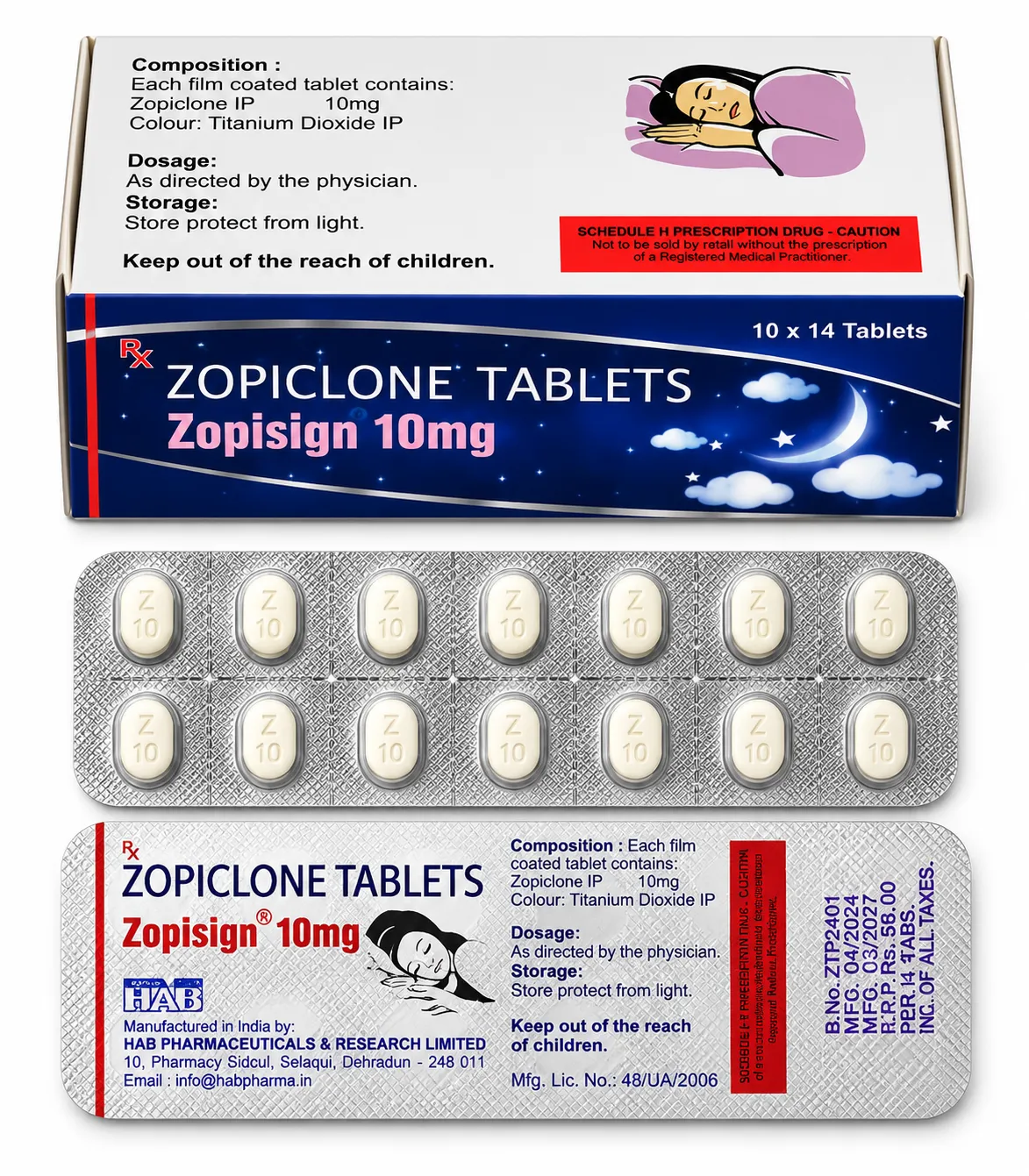
Zopiclone Pharmacokinetics: Cyclopyrrolone GABA-A Subunit Binding, 5-Hour Half-Life, and Active Metabolite Kinetics

Zopiclone Pharmacokinetics: Cyclopyrrolone GABA-A Subunit Binding, 5-Hour Half-Life, and Active Metabolite Kinetics
A molecular neuropharmacology analysis of zopiclone’s unique cyclopyrrolone binding domain, intermediate half-life, and next-morning psychomotor performance.
CLINICAL PHARMACOKINETICS MONOGRAPH
EXECUTIVE CLINICAL SUMMARY
Zopiclone is a non-benzodiazepine hypnotic belonging to the cyclopyrrolone chemical class that revolutionized the pharmacotherapy of insomnia by providing rapid sleep induction and robust sleep maintenance with a reduced risk profile compared to traditional 1,4-benzodiazepines. At the molecular level, zopiclone acts as a high-affinity positive allosteric modulator of the GABA-A receptor complex, binding to a stereospecific pocket that partially overlaps with, yet is conformationally distinct from, the classical benzodiazepine site. With an intermediate elimination half-life of approximately 5 hours, zopiclone provides sustained 7- to 8-hour sleep coverage without the rapid 2-hour wear-off of zolpidem or the prolonged multi-day sedation of flurazepam.
01. Pharmacokinetic parameters and kinetic constants summary
The table below summarizes verified pharmacokinetic and clearance values for oral zopiclone in adult human subjects.
| PHARMACOKINETIC PARAMETER | CLINICAL VALUE | PHYSIOLOGICAL PATHWAY | CLINICAL SIGNIFICANCE |
|---|---|---|---|
| Oral Bioavailability | ~75% to 80% | Rapid gastrointestinal absorption; modest first-pass hepatic extraction | High oral predictability across adult populations |
| Peak Concentration (Tmax) | 1.5 to 2.0 hours | Upper small intestine absorption | Reduces sleep latency within 20 to 30 minutes |
| Plasma Protein Binding | ~45% to 80% | Binds non-specifically to serum albumin | Negligible displacement interactions with other drugs |
| Volume of Distribution (Vd) | 1.3 to 1.5 L/kg | Extensive tissue distribution into CNS and salivary glands | Salivary secretion drives the characteristic metallic taste |
| Terminal Elimination Half-Life | ~5.0 hours (Adults) / 7.0 – 8.0h (Elderly) | Hepatic CYP3A4 / CYP2C8 biotransformation | Optimal 7-8 hour sleep maintenance with minimal morning lag |
| Major Metabolite (Inactive) | Zopiclone N-oxide | Hepatic oxidation via CYP3A4 | Pharmacologically inert polar clearance product |
| Active Metabolite (Weak) | N-desmethylzopiclone | Hepatic CYP2C8 / CYP3A4 demethylation | Weakly active; cleared primarily via pulmonary and renal routes |
02. Cyclopyrrolone receptor pharmacology: Subunit binding profile
Unlike imidazopyridines (zolpidem) that bind with ultra-high selectivity only to α1-containing GABA-A receptors, zopiclone’s cyclopyrrolone structure binds with balanced affinity to α1, α2, and α3 subunit-containing GABA-A receptors:
- α1 Subunit Affinity: Promotes rapid sleep induction, reduces sleep latency, and stabilizes slow-wave delta sleep.
- α2 and α3 Subunit Affinity: Provides mild anxiolytic and muscle-relaxant properties, which helps calm somatic bedtime restlessness and nocturnal muscle tension.
- Conformational Difference: Point-mutation studies demonstrate that zopiclone binds to specific amino acid residues on the α and γ2 subunits that are distinct from benzodiazepines, resulting in different allosteric channel modulation and lower physical dependence liability.
03. The 5-hour half-life advantage: Sleep maintenance without morning hangover
Zopiclone’s 5-hour half-life represents an optimal pharmacokinetic sweet spot for insomnia pharmacotherapy:
- Vs. Zolpidem (2.5h half-life): Zolpidem clears so quickly that patients frequently wake up at 3:00 AM or 4:00 AM unable to fall back asleep. Zopiclone maintains therapeutic blood levels through the 4th, 5th, and 6th hours of the night, preventing middle-of-the-night awakenings.
- Vs. Long-Acting Benzodiazepines (30-100h half-life): Drugs like diazepam or flurazepam accumulate over successive nights, causing heavy morning sedation, cognitive slowing, and high fall risks. Zopiclone clears to below 15% of peak levels by hour 8, leaving patients alert upon waking.
04. Biotransformation pathways: CYP3A4 and salivary secretion kinetics
Zopiclone is metabolized primarily by hepatic Cytochrome P450 3A4 (CYP3A4) and CYP2C8. The two major circulating metabolites are zopiclone N-oxide (inactive) and N-desmethylzopiclone (weakly active, contributing <10% to clinical effect). Interestingly, zopiclone and its metabolites cross readily into salivary gland secretions, creating the notorious, bitter metallic dysgeusia that up to 30% of patients experience the morning after ingestion.
05. Geriatric and hepatic clearance prolongation
In elderly patients (≥65 years) and individuals with cirrhosis or acute hepatitis, hepatic clearance slows significantly. The elimination half-life extends to 7 to 10 hours, and peak plasma concentrations double. For this reason, starting doses must be capped at 3.75mg to 5mg in older adults to prevent daytime psychomotor impairment and catastrophic falls.
06. Detailed Hypnotic Neurobiology, Selective α1 GABA-A Modulation & Sleep Architecture
At the molecular level, Zopiclone (zolpidem) is a non-benzodiazepine hypnotic belonging to the imidazopyridine chemical class. Unlike classical benzodiazepines that bind non-selectively across all α1, α2, α3, and α5 subunit-containing GABA-A receptors, zolpidem exhibits high preferential affinity and positive allosteric selectivity for the α1 subunit-containing GABA-A receptor complex (classically designated the benzodiazepine-1 or BZ1 receptor subtype).
The α1 subunit is localized primarily in the cerebral cortex, substantia nigra, and sensorimotor relay nuclei of the thalamus—regions responsible for regulating vigilance, cortical arousal, and sleep latency. By selectively augmenting GABA-stimulated chloride conductance at α1 complexes, zolpidem rapidly induces hypnotic slumber while producing significantly less muscle relaxation, anxiolysis, or anticonvulsant activity compared to non-selective agents.
| GABA-A SUBUNIT ISOFORM | ZOLPIDEM BINDING AFFINITY | NEUROANATOMICAL DISTRIBUTION | PRIMARY CLINICAL EFFECT |
|---|---|---|---|
| α1 Subunit (BZ1) | High Affinity (Ki ~19 nM) | Cerebral cortex, thalamus, substantia nigra | Rapid sleep latency reduction, hypnotic induction, slow-wave sleep |
| α2 Subunit (BZ2) | Low Affinity (Ki >180 nM) | Limbic system, amygdala, striatum | Minimal daytime anxiolysis at standard hypnotic doses |
| α3 Subunit (BZ2) | Low Affinity (Ki >250 nM) | Spinal interneurons, reticular formation | Negligible peripheral muscle relaxation |
| α5 Subunit (BZ3) | Negligible Affinity (Ki >1,000 nM) | Hippocampus, temporal lobe memory circuits | Preserved temporal memory formation outside peak sedation |
Polysomnographic sleep architecture studies demonstrate that zolpidem preserves physiological sleep stages, maintaining Stage 3 and Stage 4 deep slow-wave sleep and exerting minimal disruptive impact on rapid eye movement (REM) sleep when administered at recommended therapeutic doses.
07. Hepatic Clearance, Renal Impairment & Beers Criteria Safety
Clinical dosing of Zopiclone requires strict gender-specific and hepatic impairment adjustments due to substantial clearance differences:
| PATIENT SUBGROUP | CLEARANCE KINETICS & AUC | FDA RECOMMENDED DOSING | CLINICAL SAFETY MANDATE |
|---|---|---|---|
| Adult Females | 45% lower oral clearance than males (higher morning Cmax) | 5mg immediately before bedtime | Reduces next-morning driving impairment |
| Adult Males | Standard oxidative hepatic clearance via CYP3A4 | 5mg to 10mg immediately before bedtime | Do not exceed 10mg; allocate 7-8 hours sleep |
| Geriatric Patients (≥ 65 Years) | Prolonged elimination half-life (~3.0 to 4.0 hours) | 5mg immediately before bedtime maximum | Beers Criteria warning: fall risk and nocturnal confusion |
| Hepatic Impairment (Child-Pugh A/B) | 5-fold increase in AUC, Cmax doubles | 5mg maximum; avoid in severe cirrhosis | Contraindicated in severe hepatic failure |
Under FDA black-box warnings and AGS Beers Criteria®, sedative-hypnotics must be prescribed at the lowest effective dose for the shortest possible duration (typically ≤7 to 10 days) to prevent physical dependence, tolerance, and nocturnal confusion.
08. Comprehensive Patient Clinical Safety & Dispensing Checklist
Before administering Zopiclone, patients and caregivers must verify this pre-dose safety checklist to prevent dangerous sleep-state emergencies:
PRE-BEDTIME CLINICAL SAFETY CRITERIA
- Bedside Timing Rule: Ingest tablet immediately prior to getting into bed—never 30 or 60 minutes beforehand while walking around the home.
- 7 to 8-Hour Dedicated Sleep Window: Only take zolpidem if you have at least 7 to 8 full hours to dedicate to uninterrupted sleep before waking.
- Complex Sleep Behavior Warning: Discontinue immediately if sleep-walking, sleep-driving, preparing food while asleep, or making phone calls without memory occurs.
- Alcohol & CNS Depressant Ban: Zero alcohol consumption on the evening of administration; never combine with opioids or tranquilizers.
- Empty Stomach Administration: Take on an empty stomach; food delays sleep onset and lowers peak therapeutic levels.
09. Verified Pharmaceutical Formulations & Prescribing Profiles
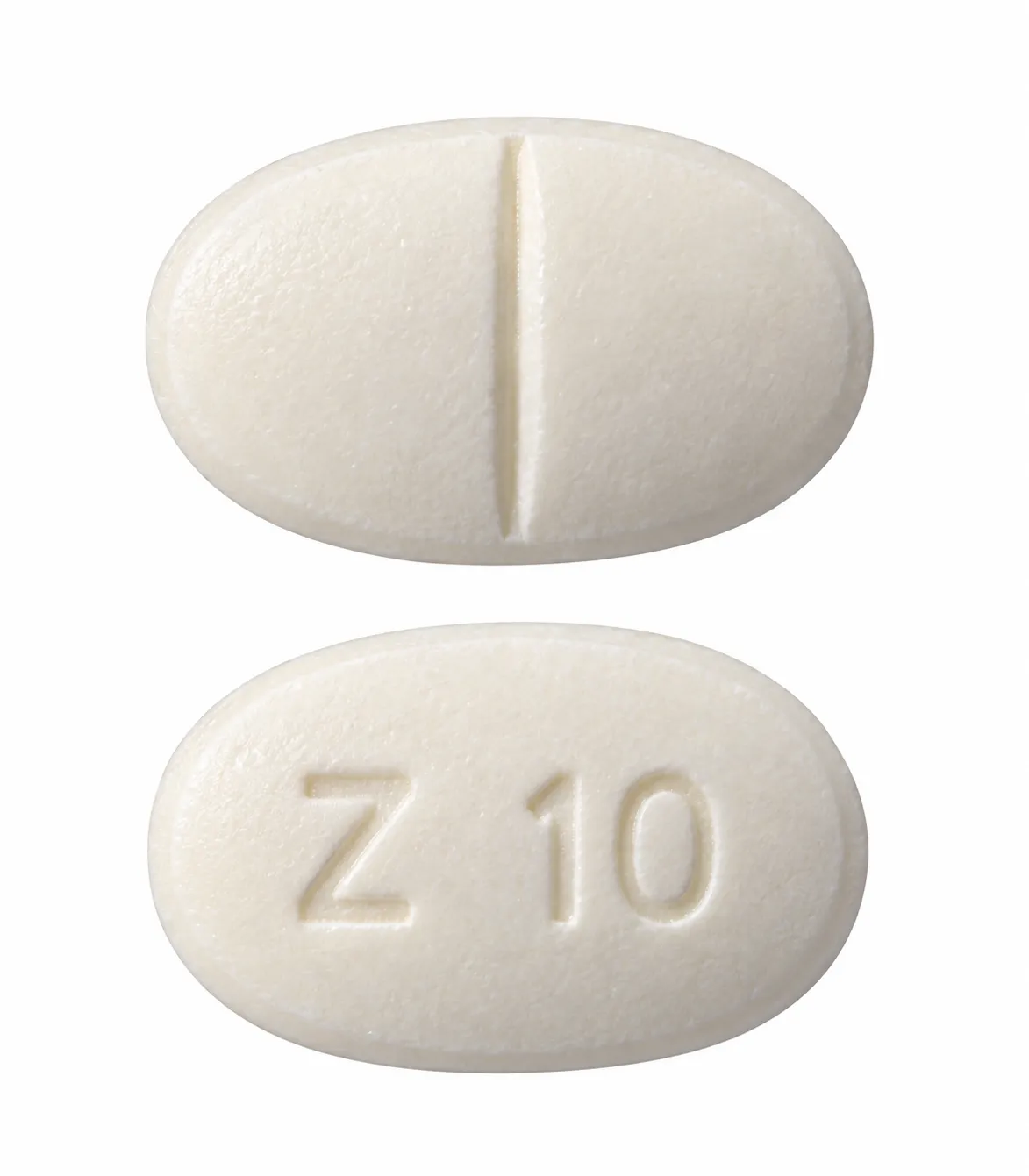
Zopiclone 10mg (Zopisign)
First-line non-benzodiazepine hypnotic engineered for severe sleep-onset and sleep-maintenance insomnia with minimal residual morning sedation.
10. Frequently Asked Questions
How does zopiclone work in the brain to cause sleep?
Zopiclone attaches to GABA-A receptors in the brain, enhancing the calming chemical GABA. This slows down overactive brain activity, helping you fall asleep quickly and stay asleep all night.
Why does zopiclone last longer than Ambien (zolpidem)?
Zopiclone has a half-life of 5 hours, while Ambien only has a half-life of about 2.5 hours. This extra time allows zopiclone to prevent middle-of-the-night and early-morning awakenings.
Why does zopiclone leave a bitter metallic taste in my mouth?
Zopiclone naturally passes into your salivary glands as your body clears it. This releases a tiny amount of the bitter drug into your mouth, which is completely harmless and goes away as the drug clears.
Will zopiclone make me feel hungover the next morning?
If you get a full 7 to 8 hours of sleep, most of the drug will be cleared by the time you wake up, leaving minimal morning grogginess. However, waking up after only 4 or 5 hours will cause noticeable grogginess.
11. Clinical References & Regulatory Sources
- Pharmacology & Therapeutics. The molecular pharmacology and clinical pharmacokinetics of cyclopyrrolone hypnotics. Source Database.
- Sleep. Polysomnographic evaluation of zopiclone: Effects on sleep architecture and daytime alertness. Source Database.
- British Journal of Clinical Pharmacology. Pharmacokinetics and metabolism of zopiclone in healthy and impaired human populations. Source Database.
Consult a Clinical Pharmacy Specialist
Have questions regarding Zopiclone dosing intervals, CYP enzyme interactions, or physician-guided discontinuation protocols? Connect with our licensed clinical pharmacy team for patient safety guidance.
Related Patient Services & Verified Care
Every prescription order is verified by a licensed pharmacist in strict adherence to FDA BeSafeRx protocols.